27 SEPT 2026 · rts.fm editorial
The Real Numbers Behind Being an Underground DJ
Just 1.6% of Resident Advisor's 134,000 DJ profiles have five or more upcoming gigs. Here's what the actual data says about DJ economics.
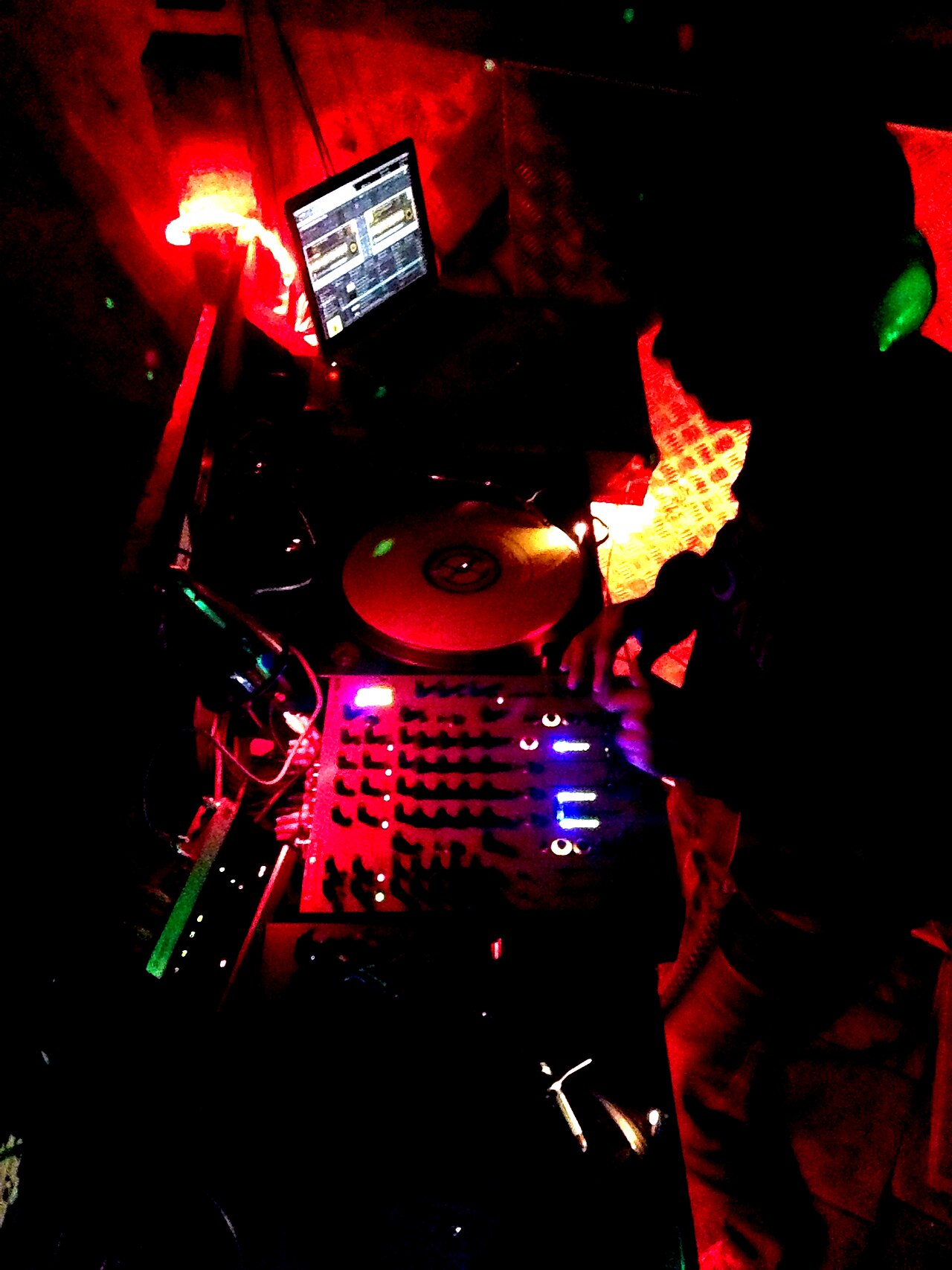
Ask most people to picture a working DJ's income and they'll picture the wrong one. They'll picture a name they've actually heard of, playing a room they've actually heard of, for a fee that sounds implausible until you remember festival headliners exist for a reason. That image isn't fake, but it's also not remotely representative, and until recently the gap between the visible top tier and everyone else was mostly anecdotal, promoters comparing notes, DJs comparing notes, nobody with a dataset big enough to say something definitive.
That's changed. Over the past couple of years, three separate organizations, working independently, with different methods and purposes, have published real numbers on DJ and electronic-musician economics. Resident Advisor's own booking database was analyzed by Attack Magazine simply to see how many profiles were actually working. GigXchange built a UK earnings report by pooling platform data with Musicians' Union rates. Toolroom Academy surveyed emerging artists about sustainability, not fees. Put the three next to each other, and they land on the same conclusion from three different angles: a very small slice of DJs are working at a frequency that could plausibly be a living, the ones who are working are often paid close to session-musician minimums, and most emerging artists don't believe the career is financially sustainable at all.
This isn't RTS.FM's own survey. We haven't polled our own DJs or listeners here. What follows is a synthesis of three published, external datasets, credited by name throughout.
How many DJs are actually working?
Start with the largest dataset of the three, because it's the one that measures scale rather than sentiment. Attack Magazine's June 2025 piece, "The 1% Reality: What the Numbers Tell Us About DJ Economics," pulled directly from Resident Advisor's own booking database, arguably the most complete public record of who's actually gigging in club and festival culture.
As of May 26, 2025, RA's database held 134,147 total DJ profiles. Of those, only 21,351, about 16 percent, had even a single future booking listed. That's already a steep drop-off: five out of six profiles in RA's system show no upcoming show at all. But the number that gives the piece its title is further down the funnel. Just 2,175 DJs, 1.6 percent of every profile in the database, had five or more upcoming shows booked.
Five-plus upcoming bookings isn't an arbitrary bar. It's roughly the frequency you'd need to be working at something resembling a touring cadence, the kind of calendar that could plausibly generate a full-time income rather than the occasional local slot. By that measure, out of the entire universe of DJs with a public RA profile, only a sliver clear the line. Everyone else, the overwhelming majority, is either between bookings, playing occasionally, or not currently gigging at a frequency the data can even register as active.
What does a working DJ actually get paid?
So say you clear that bar. You're one of the roughly 1 in 60 DJs on RA with a real booking calendar. What does that calendar actually pay?
GigXchange's report, "UK Musician Earnings 2026: The GBP 8bn Paradox, the Income Ladder and the Access Gap," is the most granular answer available for any single market. It's built from weighted percentiles across 4,191 observations pulled from nine different sources, including real GigXchange platform bookings and Musicians' Union rate data, which makes it considerably more rigorous than the usual mix of anecdote and forum posts that normally stands in for fee benchmarking in this industry.
For a standard 2 to 3 hour evening DJ slot, typical 2026 UK fees run GBP 100 to GBP 400. For context, the Musicians' Union's own recommended minimum for a casual session musician booking of 3 hours sits at GBP 145 to GBP 220, and GigXchange's live/DJ medians land close to or just above that MU floor. In plain terms: even DJs who are actively booking gigs are, for a large share of those gigs, being paid in roughly the same band as a session musician's minimum union rate, not a premium above it.
Geography compounds this. Within the same UK data, London rates run 20 to 40 percent higher than regional UK rates, meaning a DJ working the same circuit outside the capital is often clearing meaningfully less than the headline range suggests. That regional gap sits inside a UK nightlife economy that's losing venues at a rate of roughly three closures a week, fewer rooms chasing the same pool of working DJs, which is worth keeping in mind as context for where these fee ranges are likely headed rather than a separate story.
| Fee band | Range | Source |
|---|---|---|
| UK evening DJ slot (2-3 hrs) | GBP 100 - GBP 400 | GigXchange, UK Musician Earnings 2026 |
| MU minimum, casual session musician (3 hrs) | GBP 145 - GBP 220 | Musicians' Union recommended rate |
| London vs. regional UK | +20% to +40% in London | GigXchange, UK Musician Earnings 2026 |
| Major-name touring DJ, per US date (illustrative only, not from the structured datasets above) | roughly $150,000-$300,000 (e.g. Amelie Lens) up to $300,000-$500,000 (e.g. Diplo) | Industry reporting on top-tier fees |
That last row is included for scale, not as a data point to lean on. It comes from general industry reporting on top-tier touring fees, not from RA's structured booking database or GigXchange's percentile analysis, and it isn't independently verifiable the way the other rows are. Treat it as a way to visualize the width of the gap between the visible top tier and the working middle, nothing more precise than that.
Do emerging artists believe this is a sustainable career?
The third dataset answers a different question entirely: not how many people are booking, and not what they're paid, but whether the people trying to build a career actually believe it's viable.
Toolroom Academy's April 2024 report, "From Mix to Mainstage: The Blueprint for Emerging Electronic Artists," researched in partnership with Audience Strategies, surveyed more than 250 "new," emerging electronic artists and supplemented that with interviews across more established artists, educators, and industry professionals.
The headline finding is blunt: 76 percent of surveyed new artists said a career in electronic music is not financially sustainable. That's not a minority grumbling, that's more than three in four of the people actively trying to build this career telling researchers, on the record, that the economics don't currently work.
The knock-on numbers explain why. 82 percent of surveyed artists rely on a job outside music to support themselves, split between 56 percent working that job full-time and 26 percent part-time. And separate from income entirely, over 88 percent said growing an online audience is a struggle, which matters because audience size is increasingly the thing bookers and promoters use as a proxy for whether an artist can sell tickets, which in turn feeds back into who gets booked at all.
Read against RA's booking data and GigXchange's fee data, this isn't a contradiction, it's the same picture from the inside. The people in Toolroom Academy's survey are, statistically, mostly the same population sitting outside RA's 1.6 percent, not booking at a touring frequency, working day jobs to cover the gap, and telling researchers directly they don't see a sustainable path from here.
So who's actually capturing the money?
None of these three datasets were built to answer that question directly, but the shape of the answer follows from stacking them. If only 1.6 percent of DJ profiles are booking at a plausible full-time frequency, and even the working majority within that group is earning close to session-musician minimums, and 82 percent of emerging artists need a day job to make it work at all, then the revenue generated by the scene, streaming, tickets, merch, festival grosses, is being captured overwhelmingly by a small number of acts and the businesses built around them, not distributed across the base of people actually producing the culture. It's the same dynamic that shows up on the label side of the business, where "independent" doesn't automatically mean the money reaches more people, just that it's routed through different gatekeepers. Where the physical money in the wider scene does visibly flow, vinyl sales hitting a 2025 record is one of the few places it's growing rather than concentrating.
RTS.FM has broadcast underground house and techno from an artist-run, non-commercial studio network since 2006, the same DIY infrastructure this data says most working DJs are actually building their careers on. Tune into the live stream while you read.
Cross-border costs add to these margins, which we unpack in our guide to Brexit and touring for DJs in 2026.
quick wins
- Only 1.6% of Resident Advisor's 134,147 DJ profiles (2,175 DJs) had five or more upcoming bookings as of May 2025, per Attack Magazine's analysis of RA's own database.
- Just 16% of all RA profiles (21,351) had any future booking listed at all; the rest show no upcoming show.
- UK evening DJ slots typically pay GBP 100-400 for 2-3 hours, close to or just above the Musicians' Union's GBP 145-220 minimum for a casual 3-hour session booking, per GigXchange's 2026 earnings report.
- London DJ fees run 20-40% higher than regional UK rates, per the same GigXchange data.
- 76% of emerging artists surveyed by Toolroom Academy said an electronic music career isn't financially sustainable; 82% rely on a job outside music (56% full-time, 26% part-time).
- Top-tier touring fees (reportedly $150k-$500k per US date for the biggest names) come from general industry reporting, not the structured datasets above, and illustrate scale rather than typical outcomes.
Frequently Asked Questions
What percentage of DJs on Resident Advisor are actually booking gigs?
According to Attack Magazine's analysis of Resident Advisor's own booking database, only 16 percent of all 134,147 DJ profiles (21,351 DJs) had at least one future booking listed as of May 26, 2025. Just 1.6 percent, 2,175 DJs, had five or more upcoming shows, the frequency researchers used as a rough proxy for a plausible full-time touring calendar.
How much does a DJ actually get paid per gig in the UK?
Per GigXchange's "UK Musician Earnings 2026" report, a standard 2 to 3 hour evening DJ slot typically pays GBP 100 to GBP 400 in the UK. That's close to or just above the Musicians' Union's own recommended minimum of GBP 145 to GBP 220 for a casual 3-hour session musician booking. London rates run 20 to 40 percent higher than regional UK rates within that same data.
Do most emerging electronic artists have day jobs?
Yes. Toolroom Academy's "From Mix to Mainstage" report, based on a survey of more than 250 emerging electronic artists, found that 82 percent rely on a job outside music to support themselves, 56 percent working it full-time and 26 percent part-time. The same survey found 76 percent of respondents don't believe electronic music is currently a financially sustainable career.
Are the huge fees reported for headline DJs like Diplo or Amelie Lens accurate?
Reported figures in that range, roughly $150,000 to $300,000 per US date for an artist like Amelie Lens, up to $300,000 to $500,000 for Diplo, come from general industry reporting on top-tier touring fees, not from the structured, percentile-based datasets used elsewhere in this piece. They're a reasonable illustration of scale at the very top of the market, not a reliable statistic to build broader conclusions on.
Is this data based on RTS.FM's own DJs or listeners?
No. This piece synthesizes three independently published, external reports: Resident Advisor's own booking database as analyzed by Attack Magazine, GigXchange's UK earnings report, and Toolroom Academy's survey of emerging artists, researched with Audience Strategies. RTS.FM did not conduct its own survey for this article; every figure here is attributed to its original source in the text above.