DJ, Producer & Composer · Vienna, Austria
Electric Indigo
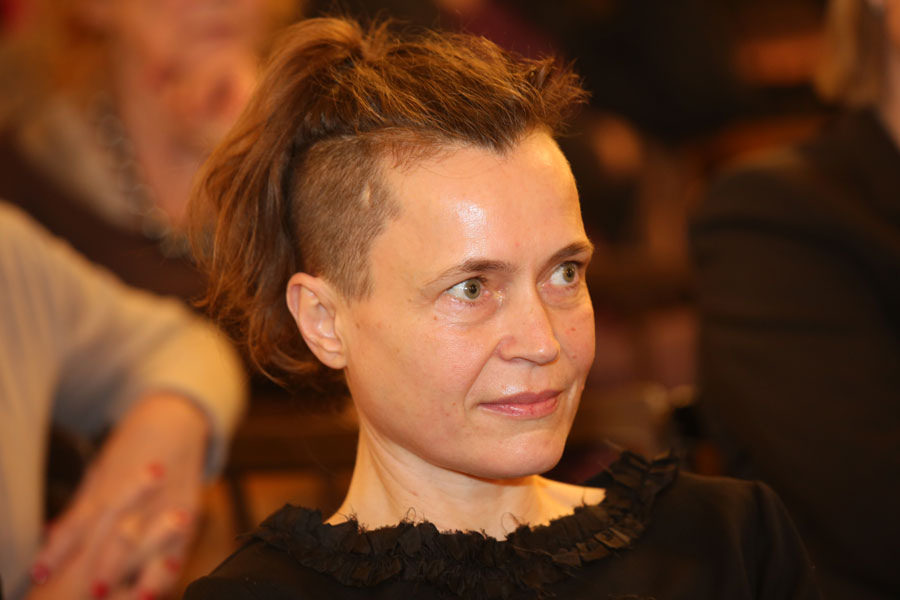
Electric Indigo is the Vienna techno DJ and composer Susanne Kirchmayr, who founded the female:pressure network in 1998 and the label indigo:inc.
quick facts
- Real name
- Susanne Kirchmayr
- Born
- 15 December 1965
- Birthplace
- Vienna, Austria
- Nationality
- Austrian
- Based in
- Vienna, Austria
- Active since
- 1989
- Labels
- indigo:inc recordings
- Genres
- Techno, Electronica, Experimental
Sources: en.wikipedia.org, de.wikipedia.org, indigo-inc.at
Electric Indigo has spent more than three decades doing two things that rarely sit together: playing techno records in clubs and composing electroacoustic music for concert halls and festivals. Behind the name is the Vienna-born Susanne Kirchmayr, who is also the person who started female:pressure, the network that has argued since 1998 for more women in electronic music. This profile traces her path from jazz radio to Hard Wax, her own label, and the archive of sets she recorded for RTS.FM.
Early Life and Path Into Music
Susanne Kirchmayr was born on 15 December 1965 in Vienna, according to English Wikipedia, and the Austrian Musiklexikon gives the same date. The stage name combines her favourite colour with her affinity for electronic music, as both German and English Wikipedia put it.
She started DJing in Vienna in 1989, according to her official site. Wikipedia describes those first years as a mix of jazz, funk and radio DJing before she moved toward Detroit techno and Chicago house. From 1993 to 1996 she lived in Berlin and worked at the record shop Hard Wax. In a 2015 interview with Stray Landings she recalled a shop that got busy whenever new records arrived, when scarce physical copies meant waiting your turn behind the VIP customers.
Sound and Style
The Austrian Musiklexikon describes her club music as techno with syncopated rhythms, strong basslines and sparing melody. Her own site separates two modes: club-oriented work, and immersive electroacoustic compositions that range from experimental ambient to broken beats. She also performs audiovisual concerts that pair her music with abstract, colourful visuals.
In the Stray Landings interview she described a method built around language: spoken recordings in many languages are transformed through granular synthesis into increasingly abstract sound. Pieces she discussed there include "Chiffres", built from recordings of the numbers zero to twenty in more than twenty languages and dialects, and "Morpheme". She said she works in Ableton Live with Max for Live devices, including one built with Robert Henke's help. That research-led side explains why her works have premiered at festivals including Wien Modern, Musikprotokoll, Heroines of Sound and CTM, according to her site.
female:pressure
In 1998 Kirchmayr launched female:pressure, an international platform and database for women working in electronic music. In a 2019 interview with Music Export Austria, she is described as co-founder alongside programmer Andrea May, with the network starting from the absence of women on festival line-ups. The network now includes female, queer, non-binary and transgender artists.
Its best-known project is the FACTS survey, which counts the share of women, trans and non-binary artists on festival line-ups. According to that interview, the 2013 and 2017 surveys found a share under 10 percent before 2015 and about 17 percent by 2017, a figure still described as very low. The network's own site lists further FACTS editions for 2020, 2022 and 2024. In 2009 female:pressure received an Honorary Mention at Prix Ars Electronica, according to Kirchmayr's site. Member counts vary by source and by what is being counted: the 2019 article cites about 2,000 database entries from more than 70 countries, while the 2015 Stray Landings piece cites over 12,000 members in 60 countries.
Labels and Releases
In 2003 she founded her own label, indigo:inc recordings, per Wikipedia. Its catalogue includes the Six-Trak EPs and reworks of 2003 and 2004. Earlier she released on Disko B, including "Wolkenkratzer" with Richard Bartz in 1993, which The Gap ranked 13th in a 2020 list of the 100 most important Austrian pop songs, according to German Wikipedia. Other credits in the Wikipedia discographies include collaborations with David Carretta on International DJ Gigolos and Pornflake.
Her album 5 1 1 5 9 3 came out in March 2018 on Imbalance Computer Music, which Music Export Austria treats as her debut album. Her site lists later releases including Registers (Ostgut Ton, 2018), Ferrum (Editions Mego, 2020), Volcanite (Gradient, 2020), Morpheme (fals.ch, 2021), Brittle (Ventil, 2022), Mod16 (Illegal Alien, 2023), One Thing (30D, 2024) and Vienna Percussion (Art Bei Ton, 2025). The site also lists a May 2026 remix of dadub on Opal Tapes.
Career Highlights
German Wikipedia says she played the main stage of the Detroit Electronic Music Festival in 2002, the event that later became Movement. She was a TV presenter in Vienna around 2000, and in 2004 she began the collaboration colophony circuit with Mia Zabelka and Dorit Chrysler.
Her recognitions include the Outstanding Artist Award for Music from Austria's culture ministry in 2012, the Frauenring-Preis in 2015 and the Austrian Kunstpreis for Music in 2020, as listed on German Wikipedia and on her site. Her site says she has performed in 46 countries since 1989.
RTS.FM Connection
RTS.FM's YouTube archive holds 17 Electric Indigo sessions, with dates in their titles running from 3 November 2010 into early 2013, all uploaded to the channel in 2013. The earliest carries the date 03.11.2010.
A later one is dated 9 March 2011:
FAQ
Who is Electric Indigo?
Electric Indigo is the stage name of Susanne Kirchmayr, an Austrian techno DJ, producer and composer from Vienna. She founded the female:pressure network in 1998 and the label indigo:inc recordings in 2003.
How old is Electric Indigo?
Electric Indigo was born on 15 December 1965, which makes her 60 (age 60 as of October 2026), turning 61 in December 2026.
Where is Electric Indigo from?
Electric Indigo is Austrian. She was born in Vienna, where she began DJing in 1989 and where her official site says she is based.
What genre does Electric Indigo play?
Electric Indigo plays techno in her DJ sets, and also composes experimental, electroacoustic and ambient music, including audiovisual live shows.
What is Electric Indigo's real name?
Her real name is Susanne Kirchmayr. Electric Indigo is a stage name that combines her favourite colour with her affinity for electronic music.
What is female:pressure?
female:pressure is an international network and database for women, queer, non-binary and transgender artists in electronic music. Susanne Kirchmayr started it in 1998 to make these artists more visible.
What awards has Electric Indigo won?
According to her site and Wikipedia, she received Austria's Outstanding Artist Award for Music in 2012, the Frauenring-Preis in 2015 and the Austrian Kunstpreis for Music in 2020.
Did Electric Indigo play at RTS.FM?
Yes. The RTS.FM archive holds 17 of her sessions, with title dates from November 2010 into early 2013.
festivals
Past appearances and announced lineups only, each checked against the festival's own records.