05 SEPT 2026 · rts.fm editorial
A Death at Burning Man 2026: What Officials Said
A participant in his mid-50s died at Black Rock City on September 3, 2026. Here is what Burning Man officials actually said, and what remains unconfirmed.
On September 3, 2026, a participant at Black Rock City experienced a medical emergency that ended in his death. He was a man in his mid-50s. His name has not been made public. The cause of his medical emergency has not been disclosed. Those are the facts, stated plainly, because plain facts are what this story deserves.
The loss arrived during a difficult week for the 2026 event. Gates into Black Rock City closed twice in a matter of days, first for high winds and blowing dust, then again after overnight rain turned the playa's clay lakebed into thick mud. Because the news broke in the same 48 hour window, a lot of headlines ran the death and the weather chaos side by side. That juxtaposition is understandable. It is also, according to everything officials have actually stated, not the same thing as a connection.
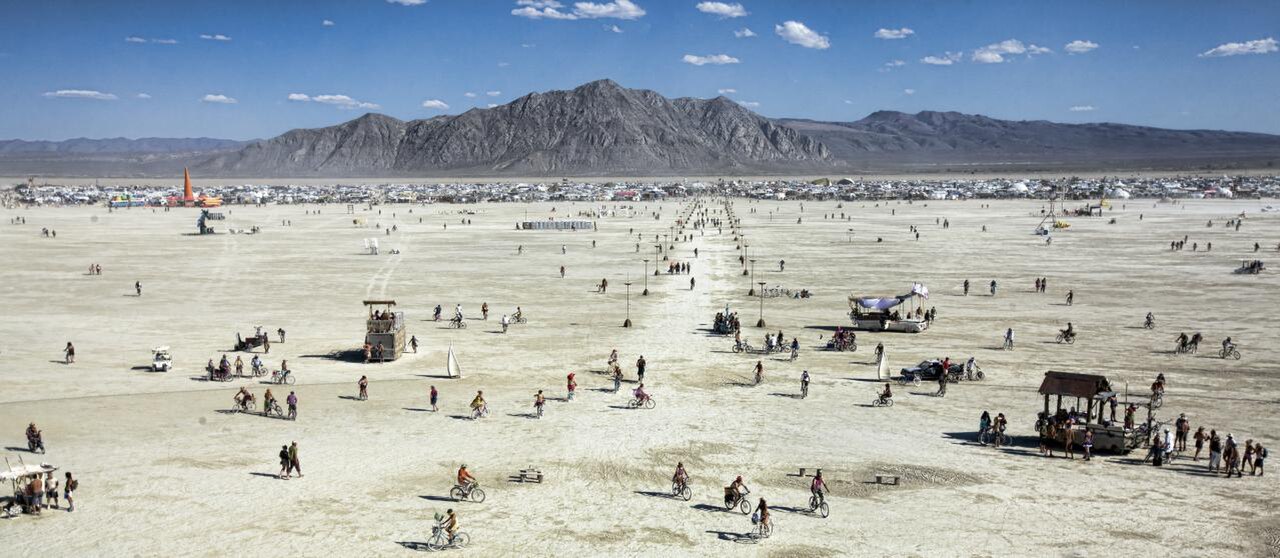
What Happened at Black Rock City on September 3?
According to the Burning Man Project's own official announcement, a participant "experienced a medical emergency, immediately received lifesaving measures, and was transported to the onsite center for emergency care where he was pronounced deceased." The statement describes him only as a participant in his mid-50s. It does not name him, and it does not speculate about what caused the emergency.
That restraint is deliberate and standard. Burning Man Project statements on deaths at the event routinely withhold identification "pending family notification," a practice followed by nearly every public agency handling a sudden death. As of this writing, no name has been released, and no cause of death has been published by the organization, local media, or the Pershing County Sheriff's Office, which holds jurisdiction over the Black Rock Desert. Coverage from NBC News and TMZ confirms the same limited set of details: mid-50s, medical emergency, lifesaving measures administered, transport to onsite care, pronounced dead. Nothing more has been confirmed publicly, and out of respect for the family, we are not going to fill that gap with guesswork.
Why Are the Death and the Weather Being Reported Together?
Because they happened in the same week, not because officials linked them. That distinction matters, and it is worth being direct about it for anyone searching for clarity rather than speculation.
The Wind, the Dust, and the Rain
The same week Black Rock City lost a participant, its gates closed twice. First came a Thursday evening dust storm with high winds strong enough to halt entry. Then, as reporting from SFist lays out, overnight rain on Friday soaked the alkaline lakebed and turned it into the kind of cement-like mud that has stranded vehicles at past events. Organizers told incoming travelers to hold in Reno and told people already on the playa to avoid driving. Our companion piece, Inside the Wet Playa Protocol: Why Burning Man 2026's Gates Closed Twice, goes deeper into how those closures actually worked and why Black Rock City treats a wet playa as a serious operational hazard, separate from any single incident.
What the Official Statement Actually Says, and Doesn't
A report from Karmactive put the distinction as plainly as it can be put: the death and the weather closures happened at the same time, and that timing does not, on its own, establish that one caused the other. Burning Man's statement calls the event "a medical emergency." It does not mention wind, dust, rain, mud, heat, or any environmental factor at all. No credible reporting has produced an official statement linking the two. Anyone claiming otherwise, at this point, is speculating past what has actually been confirmed.
How Common Are Deaths at Black Rock City?
More common than many first-time attendees might assume, and rarely tied to any single dramatic cause. Black Rock City typically sees one or two deaths in a given year, a pattern reporting on the 2026 event and prior years has repeatedly noted. With attendance regularly running past 70,000 people camped for a week or more in a remote alkaline desert, the event carries the same baseline mortality risk any temporary city of that size would, layered on top of extreme daytime heat, cold nights, dust exposure, physical exertion, and a location roughly two hours from the nearest full-service hospital in Reno.
Causes over the event's history have included cardiac events, accidents involving vehicles and art cars, falls, and, in at least one widely covered case in 2025, a homicide, which was itself the first confirmed homicide in the event's nearly four decade run. None of that history implies a pattern connecting this year's death to any single factor. It reflects, instead, what happens when a city's worth of people gathers in a harsh environment: most years bring loss of some kind, and the causes vary.
What Is Rampart, and How Does Onsite Medical Care Work?
Rampart is Black Rock City's onsite emergency medical facility, and it is a genuinely serious piece of infrastructure, not an improvised first aid tent. It is a Nevada-licensed emergency care facility staffed around the clock by emergency physicians, nurses, pharmacists, and paramedics, with on-site X-ray, a laboratory, and a full pharmacy. Contracted providers such as Royal Ambulance, which has publicly described its role supporting Black Rock City's Emergency Services Department, report handling well over a thousand patients across an eight day event, most of them treated and discharged on site rather than transported to Reno. Coverage of the event's medical operations from outlets like EMS1 describes a mass-gathering medicine operation built for exactly the scenario the official statement describes: a medical emergency, immediate lifesaving measures, and transport to definitive onsite care.
That infrastructure existing does not guarantee every outcome. It does mean the response described in Burning Man's own statement, that the participant "immediately received lifesaving measures" before being brought to onsite emergency care, fits a system built and staffed for exactly that purpose.
Why Does RTS.FM Cover a Story Like This?
RTS.FM has spent two decades as an artist-run, non-commercial radio station rooted in the same underground culture that shows up in force at events like Burning Man. Safety and care for the people inside a scene are not abstractions to us. When our community at rts.fm and in our Telegram channel talks about looking out for each other at parties, festivals, and gatherings, that ethic extends to how we write about loss. We covered a similar moment with care in Remembering Harvey McKay: A Life in Drumcode, Soma, and the Glasgow Scene, and the same standard applies here: report what is confirmed, name only what has been named, and resist turning someone's death into a hook for traffic.
If you are new to the event entirely and are trying to understand what Black Rock City actually is beyond festival headlines, our guide What Is Burning Man, Actually? A No-Nonsense Guide to Black Rock City in 2026 covers the basics without the mythology.
quick wins
- A Black Rock City participant in his mid-50s died on September 3, 2026, after a medical emergency; his name has not been publicly released.
- Burning Man's official statement calls it a "medical emergency" and states no cause of death and no link to weather.
- The same week saw Black Rock City's gates close twice, once for wind and dust, once for rain and mud, but officials have not connected either closure to the death.
- Rampart, the event's Nevada-licensed onsite emergency facility, provided immediate lifesaving measures before the participant was pronounced deceased.
- Black Rock City typically records one or two deaths per year, usually tied to accidents, medical causes, heat, or the demands of a remote, large-scale gathering, not to a single common cause.
- As of publication, no further official update, name release, or cause of death has been made public.
Frequently Asked Questions
Has the person who died at Burning Man 2026 been identified?
No. As of this article's publication, Burning Man Project has not released the participant's name, stating it is withholding identification pending family notification, a standard practice for sudden deaths at the event.
What was the cause of death?
It has not been disclosed. Burning Man's official statement describes the event only as "a medical emergency" and does not specify a cause. No subsequent official update has added a cause of death.
Was the death caused by the rain, mud, or weather at Burning Man 2026?
There is no official confirmation of that. The death and the two gate closures for weather happened in the same week, which led to overlapping media coverage, but officials have not stated any causal link between the medical emergency and the wind, dust, or rain that affected the event.
How many people die at Burning Man in a typical year?
Historically, Black Rock City has recorded roughly one or two deaths per year, generally attributed to accidents, medical emergencies, extreme heat, or the general risks of a remote desert gathering of tens of thousands of people, rather than any single recurring cause.
What medical resources are available at Black Rock City?
Rampart, the event's Nevada-licensed onsite emergency care center, operates 24 hours a day during the event with emergency physicians, nurses, paramedics, and pharmacists, along with on-site imaging and a pharmacy, so that most patients can be treated without transport to hospitals in Reno.
Our thoughts are with the participant's family and everyone in the Black Rock City community affected by this loss.