31 AUG 2026 · rts.fm editorial · updated 19 SEPT 2026
What Burning Man Actually Is, Beyond the Memes
A clear-eyed guide to what Burning Man really is: the desert, the Man, the gifting economy, the 10 Principles, and how first-timers actually prepare.
If your entire understanding of Burning Man comes from a paparazzi shot of a celebrity in a feathered headdress climbing off a private jet, you are not alone, and you are also not close to understanding what the event actually is. Burning Man is one of the most misunderstood large gatherings in American culture: part temporary city, part art experiment, part endurance test, and part social contract that tens of thousands of people voluntarily sign onto every year. It is also, despite the Instagram reputation, one of the more radical ongoing experiments in non-commercial community building anywhere in the world.
This guide strips away the meme version and lays out the facts: what Burning Man is, when and where it happens, what it costs, how the gifting economy works, why the Man burns, and what a first-timer actually needs to know before showing up in the Nevada desert.
What is Burning Man?
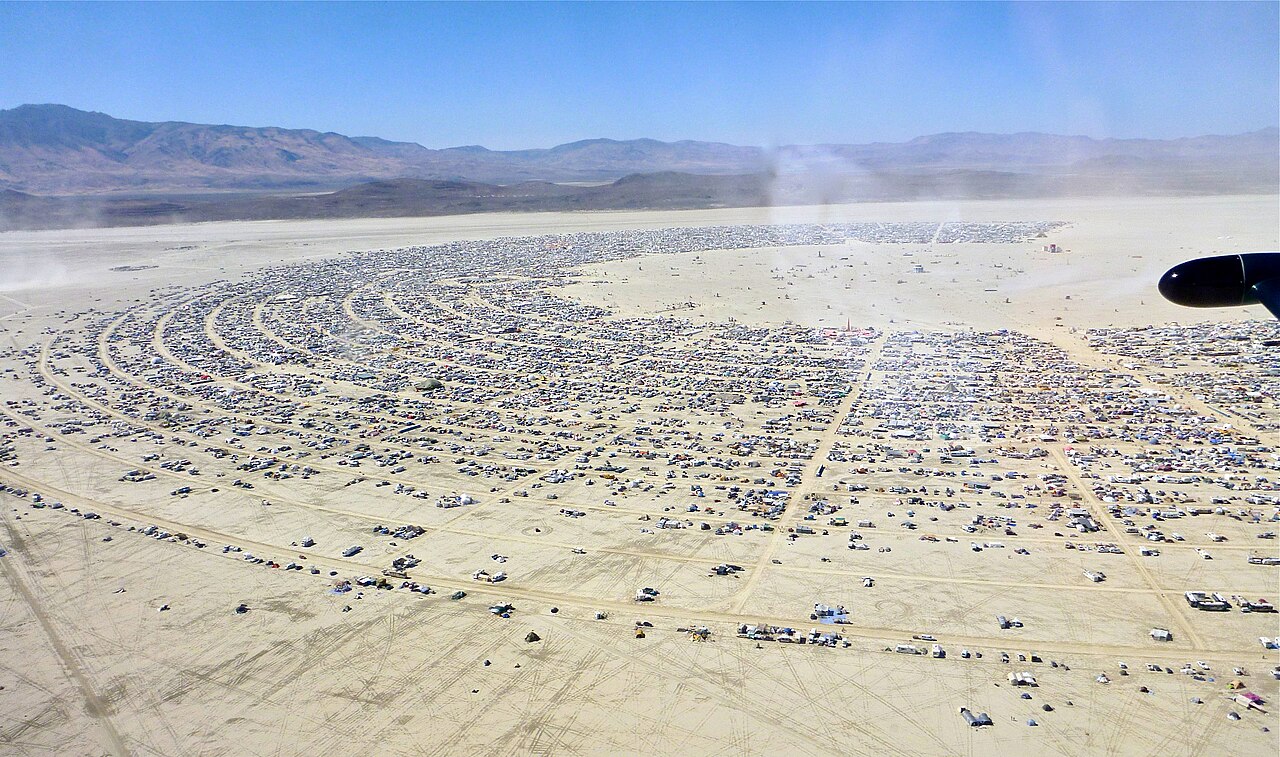
Burning Man is an annual, week-long gathering held in the Black Rock Desert of northern Nevada, where participants build a temporary city called Black Rock City from the ground up and then dismantle it completely, leaving no trace behind. It is organized around ten core values known as the 10 Principles, first articulated by co-founder Larry Harvey in 2004, which govern everything from how art is made to how commerce (or the deliberate absence of it) works on site. The event's name comes from its central ritual: the burning of a large wooden effigy known as "the Man" near the end of the week.
Burning Man is not a corporate festival, not a rave, and not a vacation resort. It is closer to a temporary autonomous city of over 70,000 people who each agree, by buying a ticket, to bring everything they need to survive, contribute something to the collective experience, and leave the desert exactly as they found it. The nonprofit Burning Man Project has managed the event since 2013, succeeding the for-profit Black Rock City LLC that ran it for over a decade before that, according to Wikipedia's detailed history of the event.
When is Burning Man?
Burning Man 2026 runs from August 30 to September 7, 2026, with the event traditionally closing on Labor Day. Gates typically open the Sunday before Labor Day weekend, and the city is fully struck and returned to open desert within weeks of the event's end. The 2026 theme is "Axis Mundi," a Latin phrase meaning "axis of the world," referring to the mythological point where earth and sky meet. According to the official Burning Man Project 2026 event page, the theme is meant to honor interconnectedness and the shared social realities that bind participants together, drawing on the same symbolic concept found across cultures, from the Norse world tree Yggdrasil to the Maya ceiba tree. As Burning Man's own journal and outlets like Billboard have reported, organizers describe the Man itself as the event's own axis mundi, a central pillar around which the entire temporary city, and its 70,000-plus participants, revolve for one week a year.
Where is Burning Man?
Burning Man takes place in the Black Rock Desert, a vast, flat, dry lakebed (a "playa") in northwestern Nevada, roughly 100 miles north-northeast of Reno. The nearest small town is Gerlach, Nevada. The site sits on federal land managed by the Bureau of Land Management, which issues the permit that caps attendance and dictates environmental protections. There is no permanent infrastructure out there: no roads, no buildings, no water source, nothing. Every structure, road marker, art installation, and shade structure that exists during the event is built by participants and removed afterward. This is a genuinely remote, harsh environment: alkaline dust, temperature swings from over 100°F in the day to near freezing at night, and sudden windstorms are all part of the deal, which is precisely why "radical self-reliance" isn't a cute slogan but a survival requirement.
The 10 Principles: the actual rulebook
Burning Man doesn't have a corporate code of conduct so much as a shared philosophy. Co-founder Larry Harvey wrote the 10 Principles in 2004, not as commandments handed down from above, but as a written reflection of values that had already organically developed within the community over nearly two decades. They remain the closest thing Burning Man has to a constitution, and they are worth listing in full because they explain almost everything else in this article:
- Radical Inclusion, anyone may be part of Burning Man; there are no prerequisites for participation.
- Gifting, the community is devoted to unconditional gift-giving, with no expectation of anything in return.
- Decommodification, the event resists commercial sponsorship, transactions, and advertising to protect the spirit of gifting.
- Radical Self-reliance, participants are encouraged to discover and rely on their own inner and physical resources.
- Radical Self-expression, individuals or collaborating groups offer their unique creative expression as a gift to others.
- Communal Effort, the community values cooperative, collaborative creation of art, infrastructure, and social spaces.
- Civic Responsibility, organizers and participants are expected to communicate and comply with civic norms and laws.
- Leaving No Trace, the community cleans up completely after itself and aims to leave the land better than it found it.
- Participation, transformative experience is believed to come only through deep personal participation, not passive observation.
- Immediacy, direct, unmediated experience is treated as the most important source of value, above ideas or representations of experience.
These aren't abstract ideals. They shape concrete rules on the ground, from what can and can't be sold, to why nobody is allowed to just watch from the sidelines, to why every last cigarette butt has to leave with you. You can read the official 10 Principles text on Burning Man's own site for the complete, unabridged descriptions.
How does the gifting economy actually work?
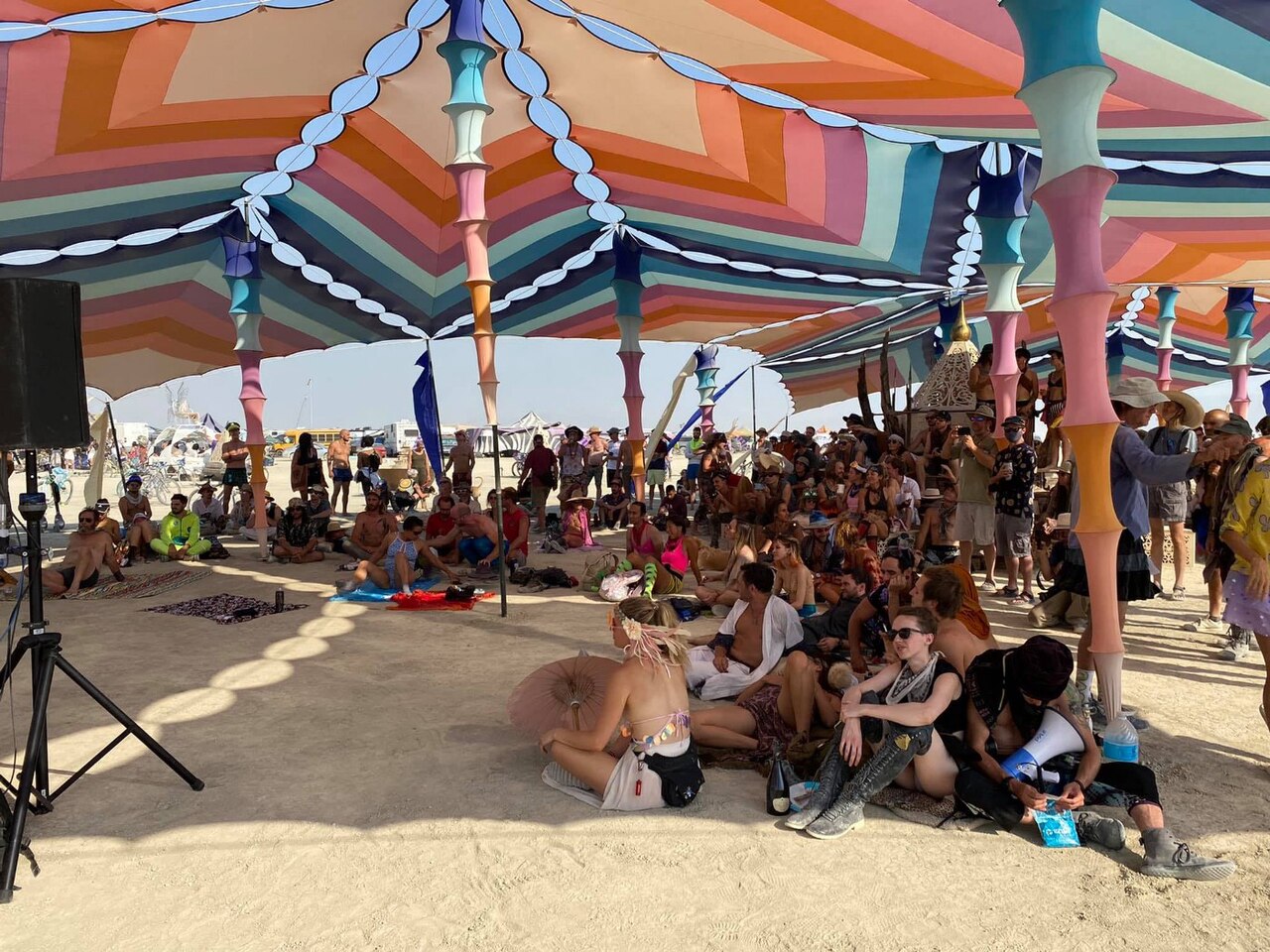
This is the detail most newcomers get wrong. Burning Man runs on a gift economy, not a barter economy. A gift, per the principle above, is unconditional: you don't give something expecting something equivalent back. Camps hand out food, drinks, workshops, haircuts, bike repairs, and art experiences purely because giving is part of the culture, not because they expect a transaction in return.
Decommodification is the flip side of gifting: to protect that ethos, Burning Man deliberately keeps commerce out of Black Rock City. There is no branded signage, no corporate sponsorship, and almost nothing for sale. For years, the only two things you could buy with money on the playa were ice and coffee at Center Camp. As of 2022, even coffee sales were discontinued for environmental and decommodification reasons, according to reporting at the time, meaning ice is now effectively the only thing sold at the event, per the official event FAQ. Everything else, food, water, alcohol, sunscreen, a place to sleep, you either bring yourself or receive as a gift from someone else's camp.
Is Burning Man a music festival?
No, and this is one of the most common misconceptions. Burning Man has no official lineup, no headliners, and no centralized stage schedule booked by the organization. Burning Man Project does not function as a promoter; it does not hire or pay a single DJ or band to perform. Instead, individual theme camps, most notably sound camps and mutant art cars, independently book and organize their own music programming, often announcing sets only days before the event, if at all.
This distinction matters culturally as much as logistically. Sound camps exist inside the same gifting and decommodification framework as everything else on the playa: nobody is charging admission to a stage, and there are no festival sponsors slapping logos on a soundsystem. That doesn't mean music is an afterthought. Some of the most elaborate sound rigs and mutant vehicles in the world roll around Black Rock City every year, powered entirely by generators and crewed by volunteers. For a deeper look at how that specific slice of the culture works, RTS.FM has covered the sound camps and art cars that define Black Rock City's music scene in more depth. If you want a sense of how a legacy dance music scene builds an identity around free, non-commercial values over decades, our piece on Movement Festival and Detroit's techno lineage is a useful parallel, even though the two events differ enormously in structure and intent.
Why does the Man burn?
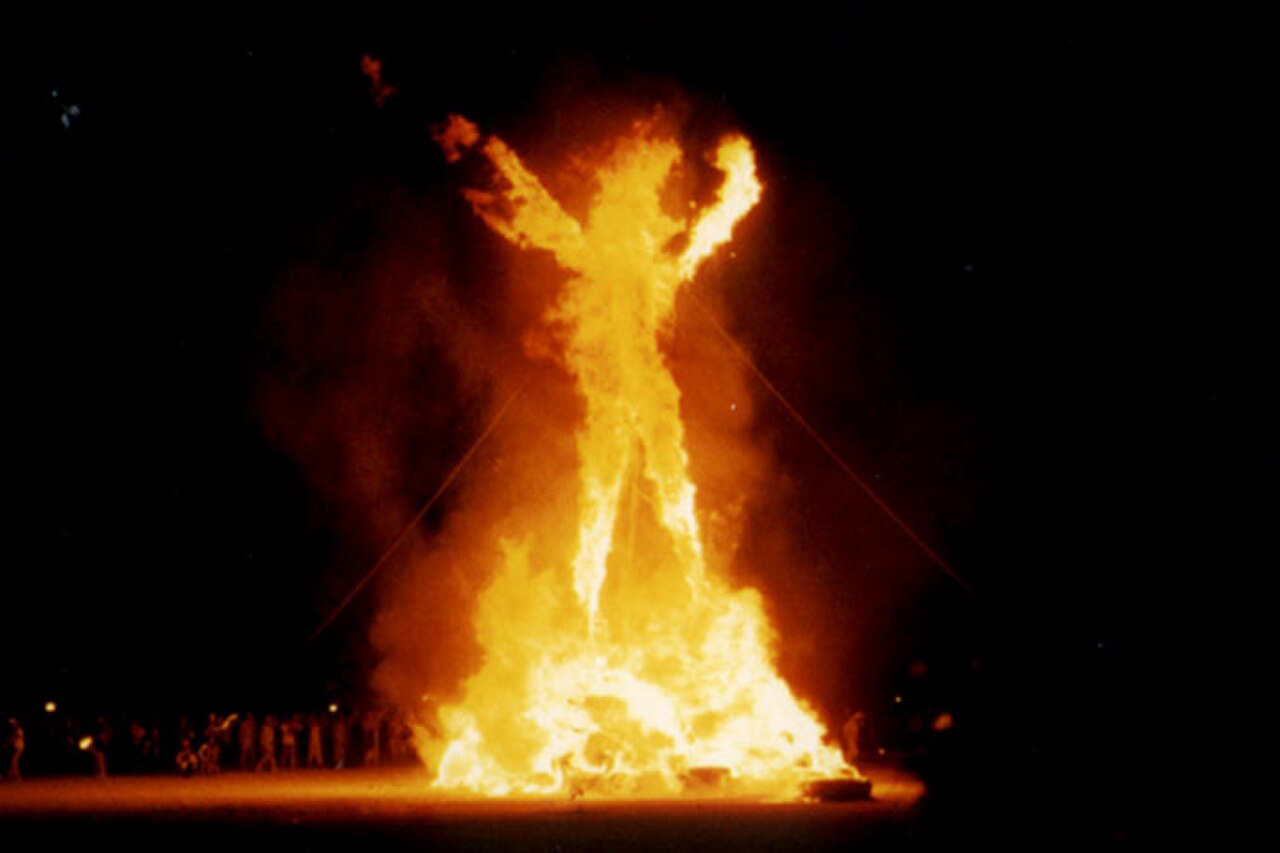
The burning of the Man is the event's namesake ritual and its emotional centerpiece. A large wooden effigy, its height has varied over the decades from around 8 feet at the very first gathering to over 100 feet in some more recent years, stands at the center of Black Rock City for most of the week. On the Saturday night before Labor Day, the Man is set on fire in front of the assembled crowd, accompanied by fireworks, music, and often elaborate performance art. It's widely described by attendees as the emotional peak of the week, a shared, unscripted moment of collective catharsis.
A day later, on the event's final night, a second and often more solemn structure called the Temple is burned. Unlike the Man, the Temple is explicitly framed as a "neutral, non-denominational spiritual space." Different artists design and build a new Temple each year (past designers include David Best, Arthur Mamou-Mani, and Miguel Arraiz), and throughout the week participants leave written notes, photographs, and personal objects inside it, often in memory of people they've lost. Its burning tends to be quieter and more reflective than the Man's, closer to a communal memorial service than a spectacle.
How much does Burning Man cost?
Tickets are not cheap, and pricing has become one of the event's most debated topics. For 2026, Burning Man Project sells tickets across six tiers, ranging from $550 to $3,000, plus Nevada's live entertainment tax and processing fees on top, according to the official ticketing information page. The mid-range $775 tier is described by organizers as covering the actual per-participant cost of running the event; higher tiers subsidize art grants and operations, while lower tiers are limited in quantity. A separate Vehicle Pass, required for any car or RV brought onto the playa, costs $165.
For people with limited income, a Ticket Aid program offers reduced-price passes around $250, plus a Resilience Program offering discounted or gifted tickets to those affected by natural disasters or geopolitical conflict. Tickets go on sale in a series of waves, starting with a Sunrise sale in early February and running through smaller sales into the summer. Beyond the ticket and vehicle pass, attendees also need to budget for gas, camp dues (many camps pool money for shared infrastructure like shade structures and kitchens), water, food, and gear, which is where the real cost of attending adds up. There is genuinely no way to buy your way into a cheaper experience once you're inside the gates: money simply doesn't work as a shortcut on the playa itself.
How do you actually prepare to go for the first time?
Because of radical self-reliance, first-timers cannot show up expecting the event to provide anything beyond a place to park and a bathroom. According to the official Burning Man FAQ, you are responsible for:
- Water: Organizers recommend well over a gallon per person per day, plus extra for washing and emergencies. Gate staff can and do turn away vehicles that appear to lack sufficient survival supplies.
- Food: Every meal for the entire week, plus contingency food in case plans change or a dust storm traps you in your tent.
- Shelter: A tent or RV secured well enough to survive sustained winds of 20 to 70 miles per hour, plus shade structures, since daytime desert heat is intense and there is no natural shade on the open playa.
- Clothing for both extremes: Triple-digit heat in the day, near-freezing temperatures before dawn.
- Transportation on-site: Personal vehicles are not allowed to drive around the city once parked; a well-lit bicycle is the standard way to get around Black Rock City's several-mile diameter.
- A full leave-no-trace plan: Every scrap of trash, gray water, and "MOOP" (matter out of place, from glitter to feathers to zip ties) has to leave with you. There are no trash cans on the playa.
Most first-timers join an established theme camp rather than showing up solo, since camps pool resources like shade structures, kitchens, and communal water for washing. Reading the official Survival Guide thoroughly, checking recent Playa Primer updates, and talking to experienced "burners" before you go will save you from most rookie mistakes. Weather has become an increasingly serious factor in recent years too. RTS.FM's companion piece on the wet playa protocol and Burning Man 2026's gate closures goes deeper into how sudden rain has forced the event to close entry gates entirely in recent editions, and why that changes how seriously you need to take contingency planning.
Where did Burning Man come from?
Burning Man's origin has nothing to do with Nevada. It began on June 22, 1986, on Baker Beach in San Francisco, when Larry Harvey and Jerry James built and burned a roughly 8-foot wooden effigy as an impromptu summer solstice ritual, an act Harvey later described simply as radical self-expression. The bonfire grew informally each year, reaching around 15 feet in 1987 and 30 feet by 1988, the year Harvey gave the event its name to distinguish it from older wicker-man burning traditions.
By 1990, growing crowds and increasing friction with San Francisco police pushed organizers to relocate. They moved the burn to the remote Black Rock Desert as part of a "Zone Trip," a road-trip-meets-happening series partly inspired by Andrei Tarkovsky's film Stalker. Figures like John Law and Michael Mikel became central to organizing the event's early desert years. What started as a beach bonfire attended by a few dozen friends is now a temporary city of tens of thousands, run since 2013 by the nonprofit Burning Man Project rather than a for-profit company, a transition explicitly designed to protect the event's non-commercial founding values as it scaled.
If you're coming from dance music culture
If you found your way to this article through techno or house culture rather than art or festival culture generally, it's worth understanding that Burning Man's relationship to music is fundamentally different from a festival like Movement, Awakenings, or Dekmantel. There's no curated stage, no artist fees, no ticketed VIP area by a mainstage. Sound camps operate more like pirate radio used to: self-funded, self-organized, and accountable only to their own crew and the desert's rules, not a promoter's brand deal. That ethos, non-commercial, artist-run, built by the people who show up rather than sold to an audience that doesn't, is one reason underground radio projects like RTS.FM feel a natural kinship with Burning Man's founding principles, even operating in a completely different context. You can hear that same spirit in our own 24/7 stream at rts.fm, browse the label's releases on Bandcamp, or follow ongoing broadcasts and release announcements on Telegram.
quick wins
- Burning Man 2026 runs August 30 to September 7, 2026, in the Black Rock Desert of northern Nevada, ending on Labor Day.
- The 2026 theme is "Axis Mundi," Latin for "axis of the world," honoring interconnectedness and shared social realities.
- Over 70,000 participants build and dismantle the temporary Black Rock City each year.
- The event runs on 10 Principles written by co-founder Larry Harvey in 2004: Radical Inclusion, Gifting, Decommodification, Radical Self-reliance, Radical Self-expression, Communal Effort, Civic Responsibility, Leaving No Trace, Participation, and Immediacy.
- 2026 tickets range from $550 to $3,000 across six tiers, plus a $165 Vehicle Pass; ice is the only thing sold on-site.
- Burning Man began as a small beach bonfire in San Francisco in 1986 and moved to the Black Rock Desert in 1990.
Frequently Asked Questions
What is Burning Man?
Burning Man is an annual week-long gathering in Nevada's Black Rock Desert where participants build a temporary city, Black Rock City, governed by 10 core Principles including gifting, decommodification, and radical self-reliance. It culminates in the ceremonial burning of a large wooden effigy called "the Man," followed by the burning of a separate structure called the Temple.
When is Burning Man?
Burning Man 2026 takes place from August 30 to September 7, 2026, traditionally ending on Labor Day. The event's theme for 2026 is "Axis Mundi," meaning "axis of the world" in Latin.
Where is Burning Man held?
Burning Man is held in the Black Rock Desert in northwestern Nevada, on Bureau of Land Management public land roughly 100 miles north-northeast of Reno, near the small town of Gerlach. The site is completely undeveloped outside of the event, with no permanent structures or infrastructure.
How much does Burning Man cost?
2026 tickets range from $550 to $3,000 across six pricing tiers, with taxes and fees added on top, plus a separate $165 Vehicle Pass for any car brought on-site. Reduced-price Ticket Aid passes (around $250) are available for those with limited income, though total costs also include gas, food, water, and camp dues for the full week.
Is Burning Man a music festival?
No. Burning Man has no official lineup and does not book or pay any performers; instead, individual theme camps and sound camps independently organize and announce their own music programming. It is better understood as a temporary, self-governing city built around art, community, and self-expression than as a curated music event.
RTS.FM has also covered other angles of the 2026 event worth reading alongside this guide, including the art of the decorated porta-potty, a small but genuinely revealing example of how far radical self-expression extends into even the most mundane corners of Black Rock City. For anyone hoping to follow along from home, our explainer on why you can't really watch Burning Man online covers the BRC Dashboard, the event's radio stations and the fake webcam sites. Celebrity attendance has its own coverage too, from the backlash over Bethenny Frankel's first Burning Man to the Diplo mud meme that resurfaces every time it rains.