05 SEPT 2026 · rts.fm editorial · updated 19 SEPT 2026
No, You Can't Really Watch Burning Man Online
Searches for a Burning Man live stream spike every time the playa floods. Here's what the BRC Dashboard, GARS, and BMIR actually are.
Every time Black Rock City makes the news, a second, quieter story plays out in search bars. This week it happened again: rain turned the playa to slop, the entrance and exit gates locked down, a death was reported, and roughly 57,000 people were told to sit tight rather than drive. Within hours, "burning man live stream," "burning man webcam," and "burning man dashboard" were climbing search trends, as they do every time the event trends for a dramatic reason instead of a joyful one.
The problem is that most of those searches are built on a wrong assumption. People want to watch the mud, the traffic, the chaos, in real time, the way you'd pull up a hurricane tracker or a traffic cam. That thing, in the form most people imagine, mostly does not exist. What does exist is stranger, more limited, and more interesting than a video feed, and it says a lot about what Burning Man actually is.
Is there a Burning Man live stream?
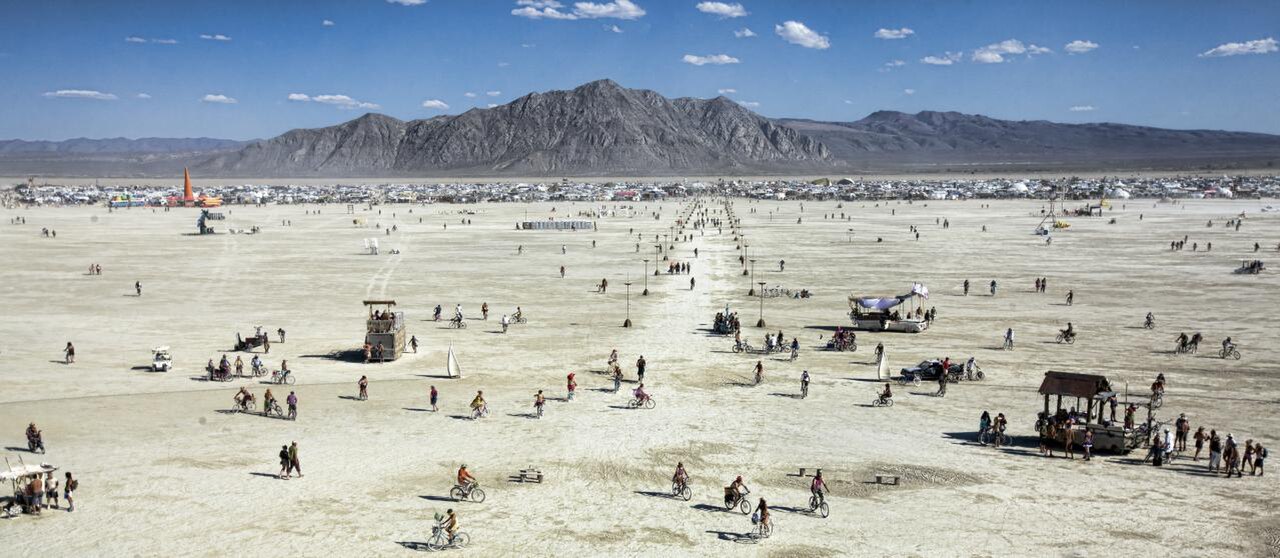
Not in the way the search implies. There is one official webcast, a single fixed camera mounted on the BMIR radio tower on the Esplanade, streamed on YouTube during event week and documented at burningman.org/news/live-webcast. It uses an Axis Communications PTZ dome camera, has run in some form since 2013 under photographer Matthew Reyes, and occasionally carries live audio commentary, especially during the Man Burn. It is not the immersive, multi-angle, always-on coverage people picture when they type "burning man live stream" into Google.
It shows a distant, wide view of the city from one fixed vantage point. You will not see individual camps, art cars, or faces. Recording and re-streaming the feed is prohibited and enforced through copyright takedowns, and embedding it commercially or behind a paywall is explicitly against Burning Man's terms. The organization frames this restriction around consent and privacy for participants, which lines up with the event's Decommodification principle: nothing about Black Rock City is built to be a spectator product, including the view of it from outside.
So the honest answer to "is there a Burning Man livestream" is: one narrow, official, non-commercial webcam exists during event week, it is not built for entertainment, and everything else claiming to be a "burning man live stream" or "burning man webcam" that you find through a random search is not that.
What is the BRC Dashboard, actually?
The BRC Dashboard is a text and data tool, not a video feed. It lives at brcdashboard.burningman.org and is linked from Burning Man's own preparation FAQ as the place to "get up-to-date weather, traffic, and other info." During the event window, roughly mid-August through mid-September, it tracks practical logistics: Gate Road travel times, weather conditions, and, critically during Exodus, how long the line out of the city currently runs.
This is the tool Burning Man's own Survival Guide points people to when it warns that Gate Road travel times during Exodus have peaked at six to nine hours just to get from the Greeters station to pavement, and that the organization recommends budgeting up to twelve hours to reach Reno during peak departure. The Gate team's volunteer page exists to manage exactly that bottleneck on the way in, credential checks, vehicle screening, and the general choreography of getting tens of thousands of vehicles through one access road.
None of that is video. It is closer to a flight-departures board than a webcam: numbers, statuses, and short updates that matter enormously if you are trying to time your drive out of the desert, and mean almost nothing if you were hoping to watch the festival unfold.
What about BMIR and GARS, Black Rock City's own radio stations?
This is where the picture gets more interesting than a flat "no." Black Rock City runs two radio stations of its own. GARS, 95.1 FM, is the Gate Advisory Radio Station, a traffic-focused signal that repeats travel times and road conditions multiple times an hour, mostly relevant to people already approaching or leaving the city. BMIR, 94.5 FM, is the real cultural institution: Burning Man Information Radio, founded by Carmen Mauk back in 2000, broadcasting a mix of music, weather, interviews with artists and participants, theme camp promos, and event announcements from a tower right on the Esplanade.
Contrary to the assumption that on-site radio is unreachable from outside the gate, BMIR does stream online, but only during a tight window around the event itself, roughly Thursday afternoon before the event through Monday evening after it closes. You can find it at bmir.org, through the iHeartRadio app and site by searching "BMIR" or "Burning Man" (with the caveat that iHeartRadio is not available outside the US), or through the DAZ Radio app on iOS and Android. It is also embedded directly in the BRC Dashboard during event week.
So the fuller, more accurate answer is: BMIR is real, it does stream online, and it is the closest thing to an authentic audio window into Black Rock City that a remote listener can access. But it is not a year-round station. Outside that roughly five-day window bracketing the event, there is nothing to tune into, and BMIR was never designed to be an on-demand or archival listen for the other 360 days of the year.
How can I watch Burning Man online, then?
You mostly can't, and that's a feature of the event rather than a bug. Burning Man is built around ten principles, and Decommodification, the idea that the event resists commercial sponsorship and the transformation of participation into a spectator product, sits near the center of them. A slick, always-on multi-camera livestream would run directly against that principle, and it would also conflict with Radical Self-Reliance and the culture's general wariness about turning attendees into unconsenting content for people who never bought a ticket or packed a single gallon of water.
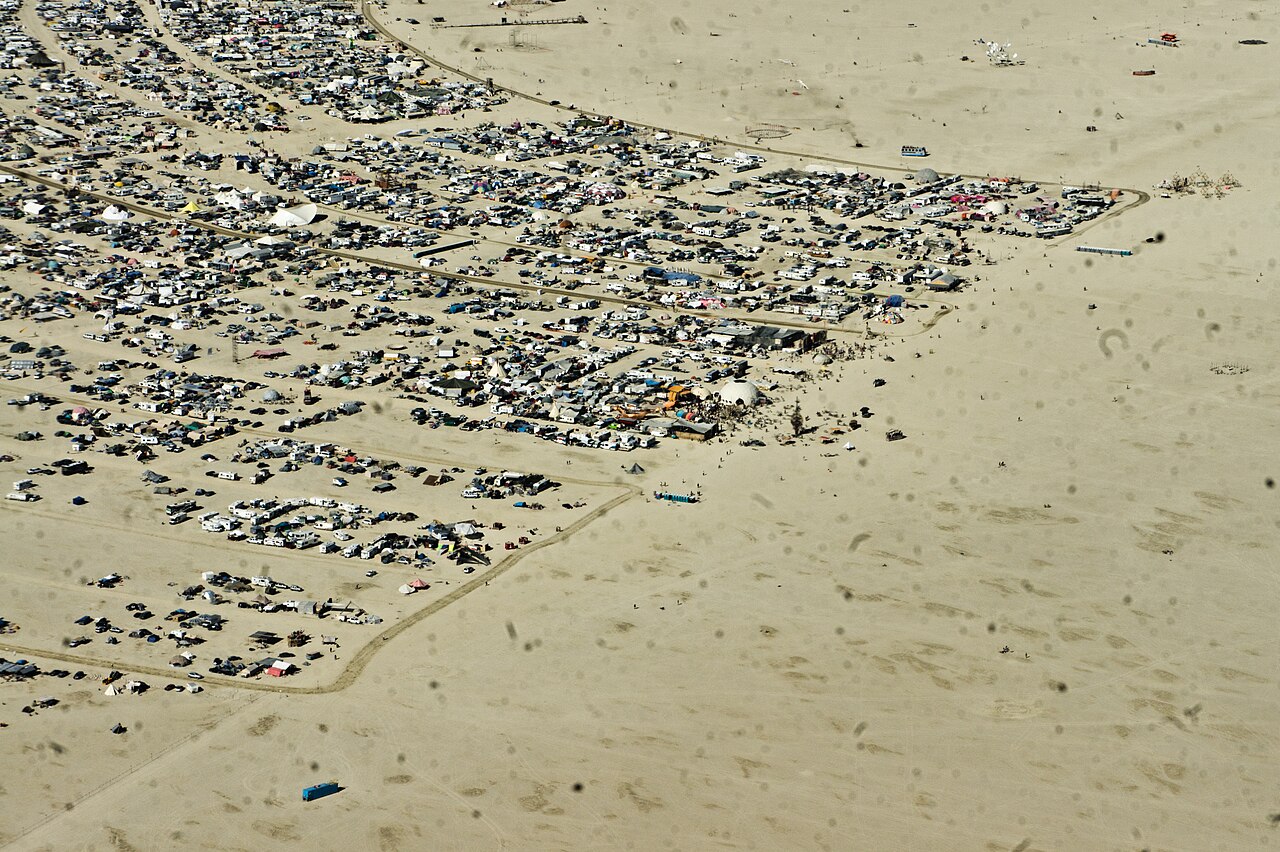
There's also a blunt infrastructure reason. Black Rock City sits on a dry lake bed roughly a hundred miles north of Reno, with limited cell coverage, generator power, and dust that ruins electronics that aren't sealed for it. Running a professional broadcast operation capable of covering a temporary city of tens of thousands the way a stadium or arena show gets covered simply is not something the event's infrastructure, or its values, are built to support.
If you're weighing this against our companion piece on what Burning Man actually is, this absence of spectacle-for-spectators is consistent with everything else about the event: it's built to be participated in, not watched. A small but telling example is an artist who has spent roughly a decade decorating the playa's portable toilets.
Why are there so many fake Burning Man webcam sites?
Because the demand is real even when the supply isn't. A quick search for "burning man webcam" or "burning man live stream" turns up a scattering of third-party sites and apps promising exactly that, and the honest read is that most of them fall into one of three buckets: outdated pages recycling an old embed of the official YouTube webcast (which is only live during event week to begin with), ad-heavy pages designed purely to catch search traffic during news spikes, or outright bait with no real feed behind the promise at all. None of them are affiliated with Burning Man Project.
During a week like this one, with gates closed and a genuine news story unfolding, that traffic spike is exactly when low-quality and scam-adjacent pages proliferate. If a site is asking you to download something, sign up with an email before you can "watch," or looks like it hasn't been updated since a previous decade's event, treat it as exactly that. Our related piece on this year's gate closures and the Wet Playa Protocol covers what was actually happening on the ground during this week's shutdown, sourced from official channels rather than a mystery embed.
The honest alternative: a real, live connection to underground music culture
Here's the thing worth sitting with. The impulse behind "burning man live stream" isn't really about surveillance of a desert festival. It's usually about wanting a live, real-time thread to a culture built around underground electronic music, art, and a community that operates outside the mainstream commercial machine. That impulse is completely legitimate. It's just aimed at the wrong kind of feed. The music that gives the event its reputation lives in the sound camps and art cars that run Burning Man's real lineup, booked by the camps themselves rather than through an official stage schedule.
That's the gap RTS.FM has been built to fill since 2006. We're an independent, artist-run, non-commercial internet radio station and label broadcasting a genuine 24/7 live stream of underground techno and house DJ sets, not a seasonal window, not an event-week embed, but an always-on signal you can drop into any hour of any day. If what you actually wanted from a "burning man dashboard" search was a live pulse of the culture rather than footage of a mud pit, tune into RTS.FM directly. It's the same spirit of Decommodification that Burning Man itself claims to protect: no ads interrupting the set, no algorithm deciding what you hear next, just DJs and a stream.
If you want to dig further into where that culture is actually headed right now, our earlier piece on how electronic music became the fastest-growing genre in the US lays out the data behind why so many people are searching for a live connection to this sound in the first place. And if you want to take a set home with you rather than just leave it playing in a tab, our Bandcamp carries releases from the artists who've come through the station, while our Telegram is where we post what's live, what's coming, and what's worth your ears next.
quick wins
- There is no official, general-audience video livestream of Burning Man designed for entertainment. One narrow official webcam exists at burningman.org/live-webcast during event week only, showing a wide, distant, fixed-camera view with no close-up detail of camps or people.
- The BRC Dashboard, at brcdashboard.burningman.org, is a text and data tool for weather, Gate Road travel times, and Exodus wait times. It is not a webcam.
- GARS (95.1 FM) broadcasts traffic and travel-time updates; BMIR (94.5 FM) is Black Rock City's community radio station, founded in 2000, covering music, news, and event info.
- BMIR does stream online, at bmir.org, via iHeartRadio, and via the DAZ Radio app, but only roughly from the Thursday before the event through the Monday after it closes. It is not a year-round stream.
- Exodus wait times have historically run three to nine hours depending on conditions and population, per Burning Man's own Survival Guide.
- Sites and apps advertising a "Burning Man webcam" or "live stream" outside official channels are typically outdated, ad-driven, or unaffiliated with Burning Man Project.
Frequently Asked Questions
Is there an official Burning Man live stream?
There is one official webcast, a fixed camera on the BMIR radio tower streamed via YouTube during event week, documented at burningman.org/news/live-webcast. It shows a wide, distant view of Black Rock City, not close-up or multi-angle footage, and recording or re-streaming it is prohibited.
What is the BRC Dashboard?
The BRC Dashboard is a real-time text and data tool at brcdashboard.burningman.org that tracks weather, Gate Road traffic times, and Exodus wait times during the event. It contains no video or webcam feed.
Can I listen to BMIR (Black Rock City's radio station) from home?
Yes, but only during a narrow window. BMIR streams online at bmir.org, through iHeartRadio, and via the DAZ Radio app, roughly from the Thursday before the event through the Monday after it ends. Outside that window, there is nothing to stream.
Why doesn't Burning Man have a real live stream for the public?
Burning Man's Decommodification principle discourages turning the event into a spectator product, and its remote desert location has limited connectivity and infrastructure for professional broadcasting. The absence of a public livestream is a deliberate reflection of the event's values, not an oversight.
Are third-party "Burning Man webcam" sites legitimate?
Generally no. Since no official general-audience video feed exists, most third-party sites and apps claiming to offer one are outdated, ad-driven, or unaffiliated with Burning Man Project. Treat any site asking for downloads, email sign-ups, or payment to "watch live" with strong skepticism.