16 SEPT 2026 · rts.fm editorial
Kompakt Records: Inside Cologne's Minimal Techno Institution
From a Cologne record shop in 1993 to 500 releases and counting, here is the real history of Kompakt, the label that built minimal techno's sound.
Cologne is not Berlin, and Kompakt has spent three decades making that distinction matter. While the capital built its reputation on Tresor's concrete severity, a smaller scene forming around a record shop on Gladbacher Strasse was quietly assembling a different template: minimal, melodic, unmistakably pop at its core, and run by the same handful of people from the first day to the five hundredth release. That label is Kompakt, and its story starts not with a business plan but with four friends and a shop called Delirium.
From a Record Shop Called Delirium
Wolfgang Voigt, his brother Reinhard Voigt, Jörg Burger and Jürgen Paape opened Delirium at Gladbacher Strasse 36 in Cologne on March 1, 1993, conceived as the local outpost of a Frankfurt shop of the same name. Michael Mayer showed up on opening day as a customer, started buying records there, then working there, and eventually became a partner after putting in roughly 1,000 Deutschmarks he had inherited from his grandmother. It is a small, almost accidental origin story for what would become one of German electronic music's most consequential institutions.
The shop moved to Brabanter Strasse 42 in Cologne's Belgian Quarter in June 1995, and for the rest of the decade it doubled as a listening post for whatever Voigt and his circle were producing under labels like Profan, the imprint Voigt founded the same year as Delirium, mostly releasing his own and his brother's material. Profan also carried Studio 1, a run of ten untitled, color-coded 12 inch records of stripped-back, ultra-minimal techno that started with the Green record in 1995 and became a quiet reference point for the sound the label would later formalize.
The Kompakt Name Arrives in 1998
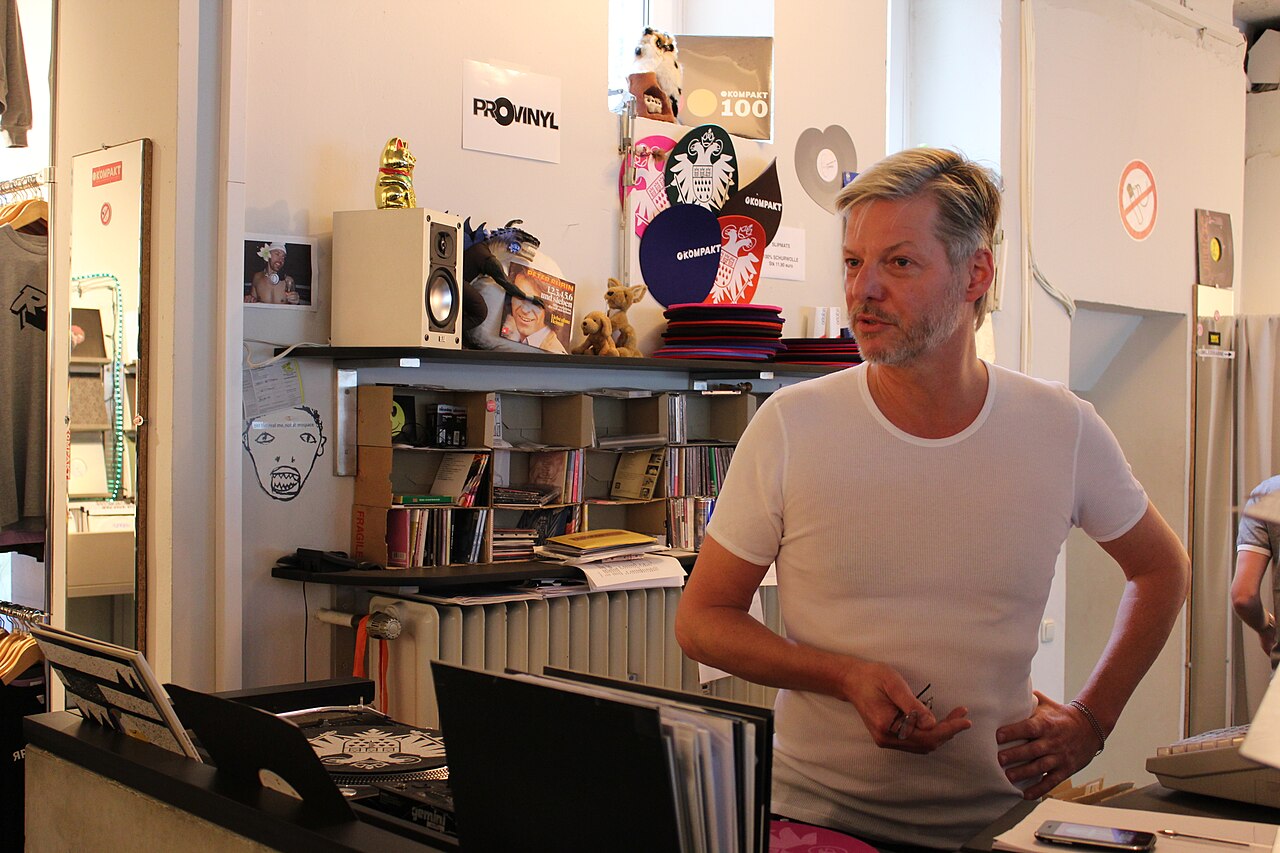
Kompakt as a formal label and company name dates to 1998, when the four founders folded the shop, Profan, Studio 1, a distribution arm and their event-organizing work under one brand. Kompakt Distribution was established that same year, and it remains one of the things that makes the label structurally unusual among its peers: most labels of Kompakt's stature do not also run a physical record shop and a full-scale distributor handling other people's releases. By 2001 the whole operation had moved into a five-story building on Werderstrasse in Cologne, with a ground-floor store, basement studios and offices above. The shop is still there today, at Werderstrasse 15 to 19, open to the public Wednesday through Saturday.
That structure, shop, label, distributor and studio under one roof, is part of why Kompakt has never really had to chase trends. Voigt's own stated motto for the label, "Forward ever, backwards never," reads as much like a description of how it survived as a slogan.
A Sound Built on Restraint
Kompakt's early catalog sat inside what critics at the time called microhouse and the clicks and cuts aesthetic, house music stripped down until the drums were mostly implication, its low-fidelity digital artifacts, tiny skips and static bursts standing in for percussion the way glitch and IDM producers were doing in parallel. It read, as one contemporary description put it, closer to graphic design than to music: warmer than techno, but threaded through with sharp, inhuman detail.
Underneath the minimalism was something the label's own commentators have been unusually candid about: Kompakt is fundamentally a pop label. That throughline runs from Justus Köhncke's self-described schlager techno to the ambient works Voigt has released for decades, all carrying what one retrospective piece called an undeniable pop edge. Köhncke, who had already scored a 1996 European club hit as one third of Whirlpool Productions with "From Disco to Disco," signed to Kompakt in 1999 and became one of the clearest examples of that sensibility in practice.
The Artists Who Built the Catalog
Voigt himself is the label's most prolific and hardest to summarize figure, credited with more than 30 recording aliases over a DJ and production career stretching back to 1988. His most significant is Gas, the project under which he built a run of ambient techno albums, starting with Gas in 1996 and continuing through Zauberberg, Königsforst and Pop by 2000, then returning after nearly two decades of silence with Narkopop in 2017, Rausch in 2018 and Der Lange Marsch in 2021.

Michael Mayer became the label's most visible ambassador behind the decks, and his Immer mix series, starting with Immer in March 2002, then Immer 2 in 2006 and Immer 3 in 2010, functioned as an unofficial audio history of the label's sound at each stage of the 2000s. Jürgen Paape's own production work produced one of Kompakt's most enduring singles, "So Weit Wie Noch Nie," which first appeared on the Total 3 compilation in 2001 before getting its own 12 inch release the following year and multiple reissues since. Reinhard Voigt, releasing under aliases including Klar and Sweet Reinhard, is credited alongside his brother as one of the architects of the Cologne minimal sound itself.
Further down the roster, Superpitcher, the alias of Aksel Schaufler, arrived on the Total 2 compilation in 2000 and released the Heroin EP the following year, home to "Tomorrow," a track that still shows up in retrospectives of the label's early 2000s run. He later formed Supermayer with Mayer for a 2007 album, and Pachanga Boys with Rebolledo. DJ Koze also passed through Kompakt's catalog early on, contributing to the Speicher 11 EP in 2003, before founding his own label, Pampa Records, in 2010 and building the solo career that followed largely outside Kompakt's roster.
The Shift Toward Melodic Techno
By the mid-2000s, Kompakt's sound was visibly moving past its minimalist roots toward something more emotionally direct. Two 2007 debut albums mark that turn clearly. The Field, the project of Swedish producer Axel Willner, who had joined the label two years earlier, released From Here We Go Sublime in March 2007, a record that layered shoegaze-influenced texture over techno structure and drew explicit comparisons to Voigt's own Gas project. The same year, Brazilian producer Gui Boratto released his debut album Chromophobia, which Mixmag named its Album of the Month and which Resident Advisor later placed among its best albums of the decade. Both records did more to define what people mean by "the Kompakt sound" in the years since than almost anything from the label's minimal-era catalog.
Compilations That Never Stopped
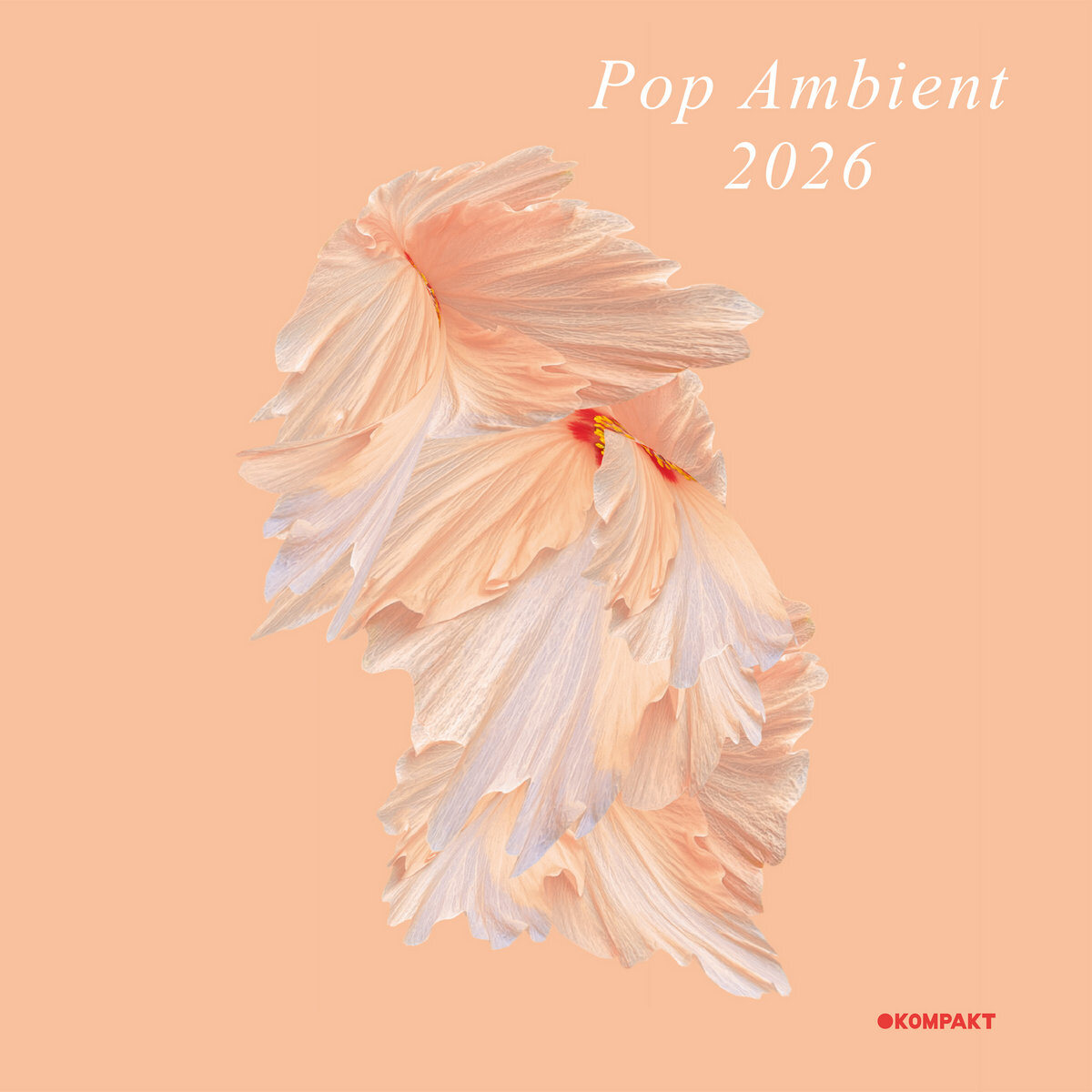
Three ongoing series have carried Kompakt's identity forward year after year. Total, launched in 1999, has run annually for over two decades as the label's flagship various-artists showcase. Pop Ambient, launched in 2001 and curated for most of its run by Voigt himself, is now up to its 26th edition, Pop Ambient 2026, released in December 2025 and featuring both returning names and debut artists. And the Kompakt Extra series, better known by its Speicher branding and instantly recognizable two-headed eagle logo, a reference to Cologne's own historical coat of arms, traces back to 1999 and 2001 and has pushed well past its 140th numbered release.
500 Releases and Counting
The clearest recent marker of where Kompakt stands came in May 2025, when the label marked its 500th release with a compilation spanning 50 tracks pulled from more than 33 years of catalog, featuring names from Laurent Garnier and The Orb to DJ Koze, Terranova and the founders' own aliases. It shipped as both a digital release and a five LP vinyl box set on May 23, 2025, packaged with a 144 page hardcover photobook tracing the label's history back to 1993 and a bonus picture disc carrying locked grooves recorded by the five founders, looping endlessly at 133 and a third beats per minute. Cologne's Kölnischer Kunstverein hosted an accompanying exhibition and opening party the same day.
A Family Business That Never Sold Out
What makes Kompakt worth writing about in 2026 is not just longevity, plenty of labels last three decades, but the fact that its structure never really changed. Voigt, Mayer and Paape still own it. The shop that started the whole thing is still open on the same street it moved to in 2001. That kind of continuity is increasingly rare in a landscape shaped by consolidation and turnover, and it tracks with a wider pattern documented elsewhere: independent labels now hold 44 percent of the US recorded music market, the highest share on record, built by exactly the kind of founder-owned operation Kompakt represents. Running a physical shop and a distribution arm alongside the label also means Kompakt has a direct stake in the vinyl pressing capacity crunch squeezing independent labels, since its own releases and the third-party labels it distributes both compete for the same limited pressing slots. For a sense of how another founder-led German label of similar vintage has handled its own milestones, Cocoon Recordings' full history from 2000 to today makes a useful companion read, as does our own deep dive into Rawax Records, a younger label built on a similar shop-plus-distributor foundation in Frankfurt.
RTS.FM has streamed underground house and techno from studios worldwide since 2006. Tune into the live broadcast while you read.
FAQ
Who founded Kompakt Records?
Kompakt grew out of a Cologne record shop called Delirium, opened on March 1, 1993 by Wolfgang Voigt, Reinhard Voigt, Jorg Burger and Jürgen Paape. Michael Mayer joined as an early employee and became a partner soon after. The Kompakt name and formal label structure date to 1998.
Is Kompakt still owned by its founders?
Yes. Wolfgang Voigt, Michael Mayer and Jürgen Paape own and run Kompakt today, more than three decades after the original Delirium shop opened.
What is Kompakt's record shop and where is it?
Kompakt operates a physical record store at Werderstrasse 15 to 19 in Cologne, Germany, open Wednesday through Saturday, alongside its label and a distribution arm, Kompakt Distribution, that handles releases for other labels as well as its own.
What is Pop Ambient?
Pop Ambient is Kompakt's long-running annual ambient music compilation series, launched in 2001 and curated for most of its history by Wolfgang Voigt. The 2026 edition, released in December 2025, is its 26th installment.
What was Kompakt 500?
Kompakt 500 marked the label's 500th release in May 2025 with a 50-track compilation spanning over 33 years of catalog, released as a five-LP vinyl box set with a 144-page hardcover photobook, alongside an exhibition at Cologne's Kölnischer Kunstverein.
quick wins
- Kompakt grew out of the Delirium record shop, opened in Cologne on March 1, 1993 by Wolfgang Voigt, Reinhard Voigt, Jorg Burger and Jürgen Paape, with Michael Mayer joining soon after as a partner.
- The Kompakt name and formal label structure date to 1998, consolidating the shop, Voigt's earlier label Profan, and a new distribution arm under one brand.
- Wolfgang Voigt, Michael Mayer and Jürgen Paape still own and run the label today.
- Flagship 2007 debut albums from The Field and Gui Boratto marked Kompakt's shift from minimal techno toward the emotive, melodic sound it's now best known for.
- In May 2025, Kompakt marked its 500th release with a 50-track compilation, a five-LP box set, and an exhibition in Cologne spanning more than 33 years of catalog.