27 SEPT 2026 · rts.fm editorial
How Long Do Independent Electronic Labels Actually Last?
From R&S in 1983 to Ninja Tune's sale to Concord this year, we tracked 16 labels to see how many independents actually stay independent.
Every electronic music label that survives long enough gets asked some version of the same question: are you still independent, or did that quietly stop being true a few years ago without anyone outside the office noticing? It's a fair question, because "independent" gets used as a badge long after the ownership behind it has changed. So we built a small study to actually test it, tracking 16 electronic music companies, 15 of them record labels founded between 1983 and 2005, a 22-year span, plus one non-label outlier included purely for contrast, and checked who owns each one today.
The headline finding cuts against the industry's periodic panic about consolidation. Of the 15 labels in the study, 11 are still run entirely by the people who founded them, in a few cases more than 30 years later. Only four have had anything resembling a real ownership break, and one of those four is genuinely arguable rather than clean. That is a stronger survival rate than most narratives about major-label encroachment would predict.
But the piece isn't really about the 11 that held. It's about the one that just broke the pattern in the most visible way possible: Ninja Tune, 36 years old, selling to Concord earlier this year. That is the freshest, highest-profile crack in a run of founder ownership that, for most of this list, never cracked at all. Sample size caveats apply throughout, and we say so plainly before the data, not after it.
What did we actually track?
Sixteen electronic music companies, chosen for having a clear, documented founding story and a traceable ownership history: R&S Records, Underground Resistance, Warp Records, Planet E Communications, Tresor, Ministry of Sound Recordings, Drumcode, Hospital Records, Kompakt, Defected, Cocoon, Ninja Tune, Innervisions, Rawax, and XL Recordings, 15 labels in total, plus Boiler Room, a livestreaming and events platform rather than a record label, included as a contrast case rather than counted toward the label statistics below.
This is not a scientific census of the industry. Fifteen labels is a curated, illustrative set, not a random sample, and it skews toward names significant enough to have documented ownership histories in the first place, which almost certainly biases it toward survivors. A label that folded quietly in 1994 without ever building a public profile isn't in this dataset, because there's no clean paper trail to check. Treat what follows as a close look at a specific, named group, not a market-wide survival rate.
The founders who never left
Start with the labels where nothing changed at the ownership level, which is most of the list. R&S Records, founded in Ghent, Belgium in 1983 by Renaat Vandepapeliere and Sabine Maes, is still run by its founders today, having paused operations in 2000 and relaunched in 2008 alongside its Apollo Records sublabel in 2009. Underground Resistance, founded in Detroit in 1989, still has "Mad" Mike Banks as co-owner, still moving its records through the independent Submerge Distribution rather than a major's pipeline. Planet E Communications, Carl Craig's Detroit label founded in 1991 explicitly to secure, in Craig's own framing, "complete creative independence from the major label industry," is still run by Craig, who has since added a subsidiary called Community Projects for releases outside electronic genres.
Drumcode tells a similar story on a different continent. Adam Beyer started the Stockholm label in 1996 with 3,000 British pounds of his own money, and 30 years later, marked with a global anniversary event series in 2026, he still owns and runs it. Hospital Records, founded the same year in South East London by Tony Colman and Chris Goss, remains independent and has grown outward rather than being absorbed, adding a publishing arm, a festival and events brand, and a booking agency. Innervisions, the youngest label in this set, founded in Berlin in 2005 by Dixon and the Ame duo of Kristian Beyer and Frank Wiedemann, spent its first year as a Sonar Kollektiv sublabel before going fully independent in 2006, and has stayed that way since.
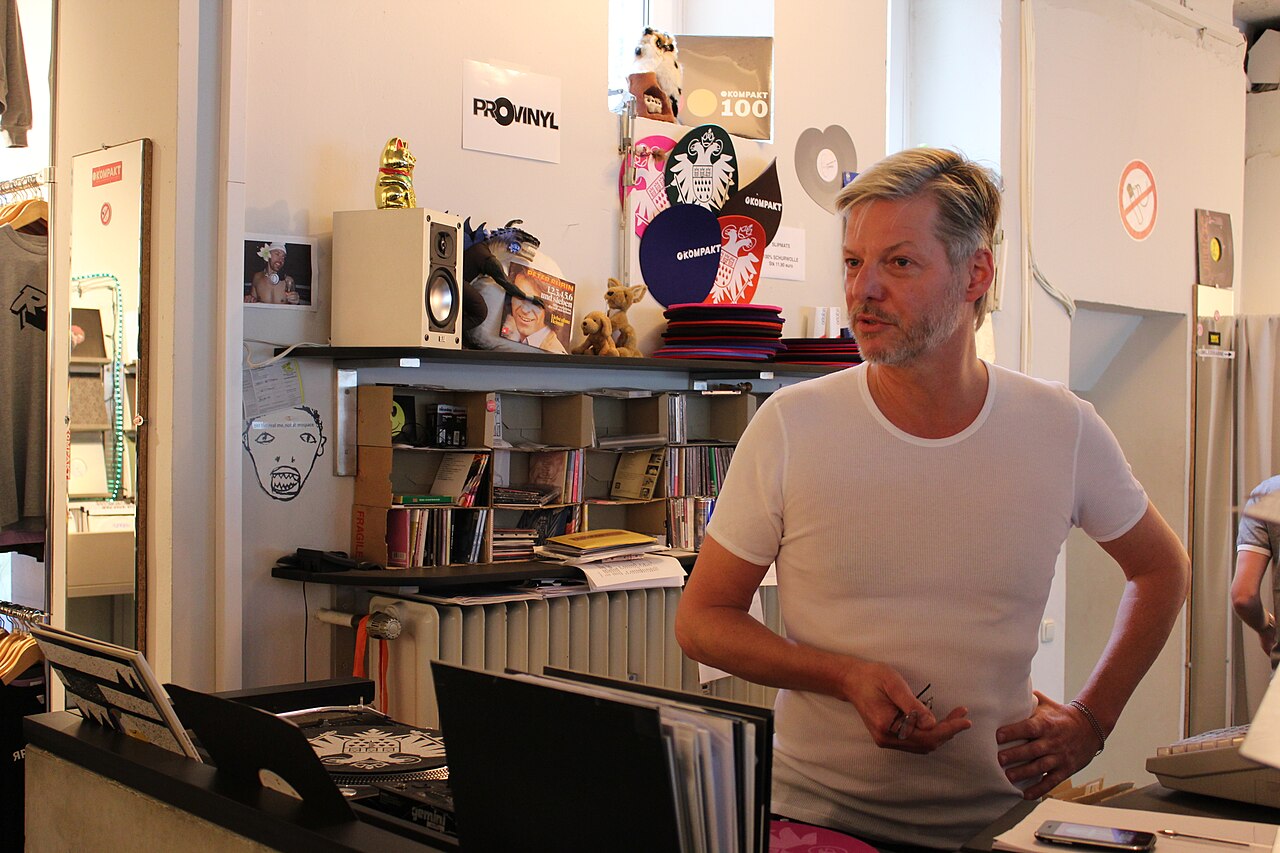
Three more names here have already gotten the long-form treatment on RTS.FM, so we won't repeat the full histories, just the founder-continuity facts relevant to this study. Kompakt, formalized in Cologne in 1998 out of the Delirium record shop, is still owned by the same founders who opened that shop. Cocoon, founded in Frankfurt in 2000 by Sven Väth, is still independent. Rawax, Robert Drewek's Frankfurt label, is likewise still independent. Tresor, founded in Berlin in 1991, also remains independent, though its fuller story lives elsewhere on the site.
Where the pattern actually broke
Four names on this list complicate the founder-forever story, and they're worth taking one at a time, because they broke in different ways and at different speeds.
Ministry of Sound Recordings is the cleanest case. Launched in London in 1993 as an extension of the nightclub of the same name, it was acquired outright by Sony Music UK in August 2016 for 67 million British pounds, taking its artist roster, back catalogue, and compilations business with it. No ambiguity here: that's a major label owning a label that used to be independent, full stop.
Defected is messier. Simon Dunmore founded the London label in 1999, and ownership changed hands twice from there. In September 2022, Dunmore sold to investor Stephen Devonshire and then-CEO Wez Saunders through a takeover vehicle called Optimum Defected Holdings. Then, in a deal that closed on July 29, 2025, Saunders completed a full buyout to become sole owner, with Dunmore staying on only as an A&R consultant. Defected today isn't major-owned, which is a meaningful distinction, but it's also no longer run by the person who started it. Whether that counts as a broken independent streak or just a changing of the guard within an independent structure is a genuine judgment call, and reasonable people could land on either side of it.
XL Recordings is the case that resists a clean yes-or-no label entirely. Founded in London in 1989, XL saw Beggars Group, the UK independent-label conglomerate, take a 51 percent majority stake as of October 2024, paying 2.6 million British pounds to buy out XL's other shareholder. XL's net assets were carried at a fair value of 210.7 million British pounds in the accounts tied to that deal. Beggars has publicly framed the move as preserving XL's independence "for future generations," and there's a real argument for that framing: Beggars is not a major, and the deal keeps XL inside an independent ownership structure rather than folding it into Universal, Sony, or Warner. But it's also, unambiguously, majority ownership by an outside group rather than by XL's own founders. We're treating XL as its own category here, genuinely independent in the sense that matters to most listeners, but no longer founder-owned in the original sense either.
Which brings us to the freshest break of them all.
Ninja Tune's sale to Concord is the real story here
Ninja Tune, founded in London in 1990 by Coldcut, is the label whose ownership change actually happened this year. Concord, the US music company, announced and closed its acquisition of Ninja Tune around March 12, 2026. Existing leadership stays in place, and the label keeps operating out of its UK and US offices exactly as before, day to day, almost nothing visibly changes. But structurally, everything did: a 36-year-old label that had run independently since the tail end of the 1980s is, as of this year, no longer independently owned.
That's what makes Ninja Tune the anchor of this study rather than just one more row in a table. R&S paused for eight years and came back under its own name. Drumcode is marking three decades under the same owner it started with. Kompakt, Cocoon, and Rawax haven't changed hands once. Against that backdrop, Ninja Tune's sale is the exception proving how rare an actual ownership break still is among labels this size and age, and the most recent, highest-profile one in this dataset.
What about Boiler Room?
A brief aside, since it's a related but structurally different story. Boiler Room isn't a record label, it's a livestreaming and events platform, so it sits outside the 15-label count above. But its ownership history rhymes with Ninja Tune and Ministry of Sound: it was sold to Superstruct Entertainment, a KKR-backed events conglomerate, in a deal reported in January 2025. RTS.FM covered the fallout and the boycott response already, and it's a reminder that "independent institution gets absorbed by outside capital" isn't a pattern confined to record labels.
The full list
Founding years span 1983 to 2005. Status reflects ownership as of this year, based on the ownership events described above.
| Label | Founded | Location | Current status |
|---|---|---|---|
| R&S Records | 1983 | Ghent, Belgium | Independent, founder-run |
| Underground Resistance | 1989 | Detroit | Independent, founder-run |
| Warp Records | 1989 | UK (London/NY/LA/Sheffield) | Independent, not major-owned |
| Ministry of Sound Recordings | 1993 | London | Sony-owned since 2016, no longer independent |
| Planet E Communications | 1991 | Detroit | Independent, founder-run |
| Tresor | 1991 | Berlin | Independent |
| Drumcode | 1996 | Stockholm | Independent, founder-run |
| Hospital Records | 1996 | South East London | Independent |
| Kompakt | 1998 | Cologne | Independent, founder-run |
| Defected | 1999 | London | Independent, no longer founder-owned |
| Cocoon | 2000 | Frankfurt | Independent |
| Ninja Tune | 1990 | London / US offices | Concord-owned since 2026, no longer independent |
| Innervisions | 2005 | Berlin | Independent, founder-run |
| Rawax | founded by Robert Drewek | Frankfurt | Independent |
| XL Recordings | 1989 | London | 51% owned by Beggars Group since 2024, nuanced case |
That's 11 of 15 labels still fully founder-run, against four with a genuine ownership change: Ministry of Sound, Ninja Tune, XL, and Defected. Don't count Defected as a real break, since Saunders' buyout kept it outside major ownership, and that moves to 12 of 15. Either way, the majority holds. For more on what "independent" actually measures at the industry level, see our breakdown of the 44 percent independent market share stat.
RTS.FM has broadcast underground house and techno from an artist-run, non-commercial studio network since 2006, the same kind of structural independence this study spent 15 labels measuring. Tune into the live stream while you read.
quick wins
- Of 15 tracked labels founded between 1983 and 2005, 11 are still run entirely by their original founders, some more than 30 years later.
- Only four had a genuine ownership change: Ministry of Sound (Sony, 2016), Defected (ending in a 2025 non-founder buyout), XL Recordings (51% Beggars Group stake, 2024), and Ninja Tune (Concord, 2026).
- Ninja Tune's sale to Concord, closed around March 12, 2026, is the freshest and highest-profile break in the dataset, a 36-year-old label changing hands for the first time.
- XL Recordings resists a clean label: Beggars Group's majority stake keeps it out of major ownership but ends its founder-owned status.
- Boiler Room's 2025 sale to KKR-backed Superstruct isn't part of the label count, but it's the same consolidation pattern playing out one layer over.
- 15 labels is an illustrative sample, not an industry census: read the survival rate as specific to this named group, not a market-wide statistic.
Frequently Asked Questions
How many labels in this study are still independent?
All but one of the 15 tracked labels remain outside major-label ownership. Ministry of Sound is the only one now owned by a major, Sony Music UK, since August 2016. Ninja Tune (Concord, 2026) and XL Recordings (Beggars Group, 2024) moved to outside ownership too, but neither Concord nor Beggars is a major. Defected changed hands twice but stayed outside major ownership throughout.
Is Ninja Tune still independent after the Concord deal?
Not in the ownership sense. Concord, a US music company, announced and closed its acquisition of Ninja Tune around March 12, 2026. Leadership and the UK and US offices continue as before, so releases and A&R look unchanged day to day, but Ninja Tune is no longer independently owned after 36 years of being so.
Why is XL Recordings treated as a special case?
Because the facts don't sort cleanly into either bucket. As of October 2024, Beggars Group, itself a UK independent-label conglomerate rather than a major, holds a 51 percent majority stake in XL, having paid 2.6 million British pounds for the position. Beggars has said this preserves XL's independence for future generations, and it's true XL isn't major-owned. But it's also no longer controlled by its own founders, which is why we treat it as an ambiguous middle case rather than a flat verdict.
Does Defected count as a label that "changed hands"?
That depends how strictly you define the term, and it's a judgment call rather than a settled fact. Simon Dunmore sold Defected in September 2022 to Stephen Devonshire and then-CEO Wez Saunders, and Saunders completed a full buyout in a deal that closed July 29, 2025, becoming sole owner while Dunmore stayed on only as an A&R consultant. Defected was never major-owned, which supports calling it still independent. But it's no longer run by the person who founded it, which supports counting it as a real break. Our headline count uses the stricter reading; the looser one moves the founder-run tally from 11 of 15 to 12.
Is a 15-label sample big enough to say anything about the industry?
Not as a statistical claim. These labels were chosen because each has a documented founding story and a traceable ownership record, which skews the sample toward institutions significant enough to have survived and been written about. What it supports is an accurate read of what happened to these specific, named labels, not an estimate of what share of all electronic music labels stay independent industry-wide.