31 OCT 2026 · rts.fm editorial
Channel 5's Berlin Club Scene Film, Fact-Checked
Andrew Callaghan's 32-minute Berlin Club Scene film took on Berghain, no-phone rules and two rival parades. What it shows, and which claims hold up.
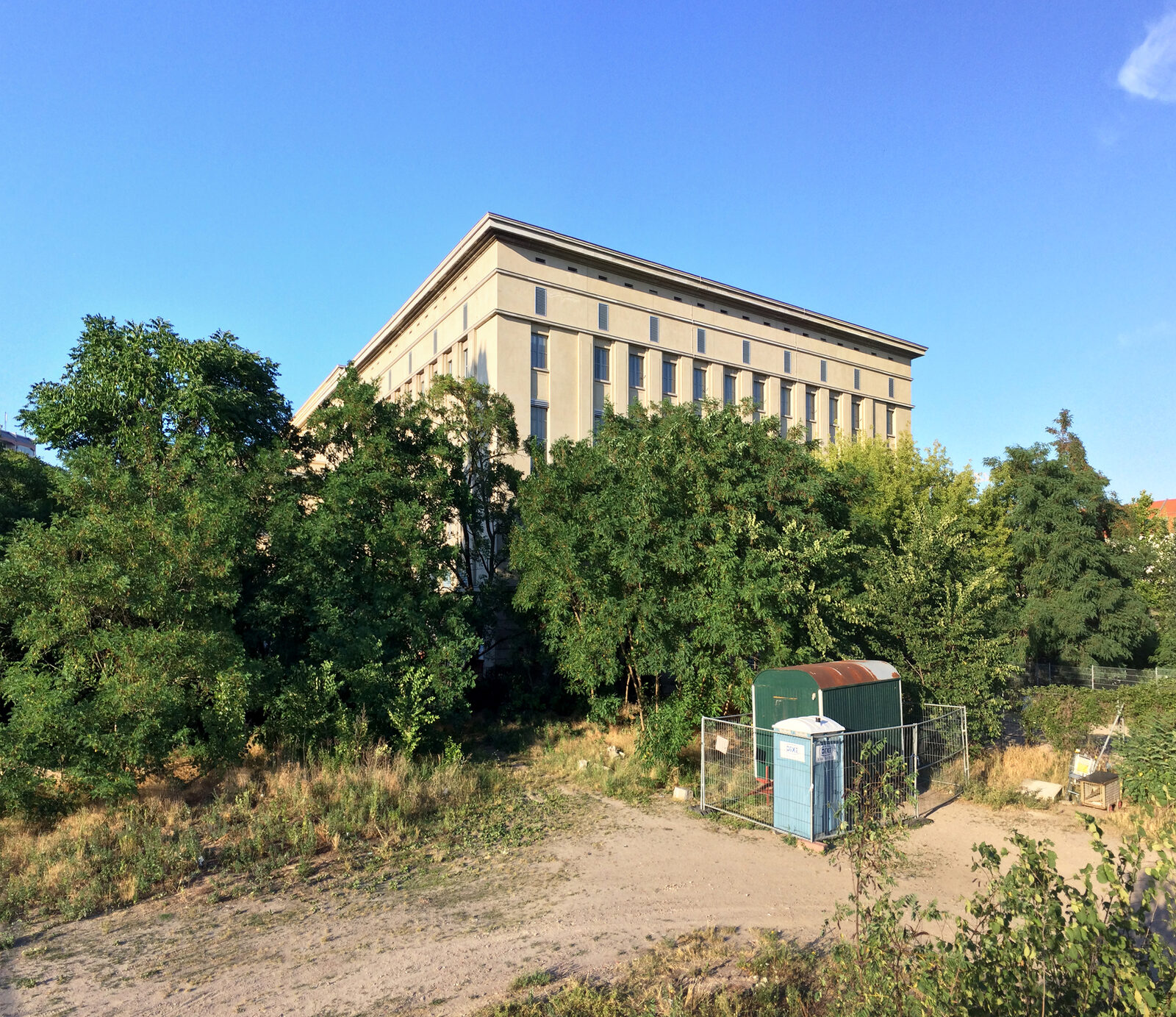
On 30 October 2026 the YouTube news channel Channel 5 with Andrew Callaghan published "Berlin Club Scene", a documentary of about 32 minutes. Its host spent several days in Berlin that took in two street parades, a long run of club talk and two attempts to get into Berghain, and the video had passed 670,000 views less than a day after it went up, when we looked on 31 October. It is a YouTube film, not a cinema release, but it is the Berlin film people are sending each other this week, so it is worth setting out what it shows and which of its claims stand up.
We read YouTube's automatic English transcript, the video page and its description, and we checked the film's factual claims against other sources. We did not review the picture frame by frame, and automatic captions garble words, so we avoid quoting them. Where the film gives an explanation and we cannot confirm it, we say it is the film's own account.
The short version: the film is a tourist-eyed tour of Berlin club culture, lively and sometimes crude, built on interviews with clubgoers and with Rave the Planet's Dr. Motte. Its core facts are sound: Berlin techno's 2024 heritage recognition, the post-Wall club origin story and Berghain's phone-sticker rule. It leaves out the economics, since it says almost nothing about the closures and rents that now define the scene. Its own interviewees contradict each other on how to get past the Berghain door.
What is the film, and who made it?
"Berlin Club Scene" is the third part of what the host calls Channel 5's German culture series. In the narration, the first two parts took viewers to an AfD rally and to the last living speakers of Texas German. The YouTube description names four interviewees in the longer cut, Brutalismus3000, HorsegiirL, Miss Bashful and Alli Logout, and says a longer "supercut" is on the channel's Patreon. The film runs 31 minutes 49 seconds, and the description promotes the channel's own streaming service, C5.NOW. You can watch it here:
What does the film show?
In order, from the transcript:
- A cold open of people who have partied for days, asked when the party stops. Berlin, one says, is unlike anywhere else in Germany.
- A short history from the fall of the Wall: empty factories, bunkers, department stores and power stations in the east, techno arriving from Detroit and Chicago, and a line on Berlin's techno culture being officially recognised as intangible cultural heritage in 2024.
- Two parades on one day. The host contrasts a smaller, anti-commercial parade, whose name the captions bleep, with Rave the Planet, which he describes as the more corporate, polished version for outsiders. Dr. Motte explains why dancing together matters.
- Drugs and exhaustion. Interviewees talk about long weekends, and the narration says a stimulant sold as mephedrone is the new favourite and that some pills and ketamine are not what they are sold as.
- The phone ban. The film explains the no-camera rule and says it grew out of a reaction to East German surveillance, and why guests say it makes the dance floor freer.
- The dark rooms and the kinkier clubs, with interviewees describing KitKat and Berghain from word of mouth.
- Berghain's door. Interviewees trade theories, and the host is turned away once before getting in on a second attempt, in the morning. Inside, he says, he and his colleague did not film. Their recollection of the night is rendered in animation, which the narration says was drawn by human animators.
- A closing note in which the host says the US has no legal, full-weekend, clothing-optional, post-industrial rave venues in its major cities and invites corrections by email.
The film describes nudity and sexual activity in clubs in a frank tone, and we leave that to the video.
Which claims hold up?
| Claim in the film | What we found |
|---|---|
| Berlin's techno culture was officially recognised as intangible cultural heritage in 2024. | True, with one correction. It was added on 13 March 2024 to Germany's national inventory of intangible cultural heritage, as one of six new entries, per the Conference of Ministers of Culture. Many outlets called it a UNESCO listing, and it is the German UNESCO Commission's expert committee that recommends entries, but it is a national list, not UNESCO's global one. |
| Berlin's clubs grew from empty spaces in the former East after 1989. | Consistent with the standard account, including Berghain's home in a former heating plant, as described in our guide to who runs Berghain. |
| Two parades ran on the same day. | True: Rave the Planet and the Fuckparade both took place on Saturday 15 August 2026, according to Techno Airlines and event listings. The Fuckparade began in 1997 as the Hateparade and is a registered political demonstration. We did not find an official source for its 2026 details, only the Techno Airlines write-up. |
| The Rave the Planet crowd was around 500,000. | Higher than the only post-event figure we found. We Rave You reported an organiser estimate of about 400,000 across the day, for a free event with no ticketing, so neither is an independent count. |
| Phones are covered with stickers at the door and photos are banned. | True of Berghain's stickers, per Wikipedia and i-D, as we summarised in our ownership guide. The film's explanation that the culture grew out of the collapse of the East German surveillance state is its own causal account, which we did not verify. |
| Berghain's door is selective and its logic is knowable. | Its interviewees disagree, and so do the sources. Wikipedia describes the door as strict and opaque, and the club publishes no criteria, so dress and attitude advice is folklore. Our report on the Hollywood comedy about being rejected at Berghain covers how far the myth has travelled. |
| A new stimulant is spreading and drugs are often not what they are sold as. | The film's narration and interviewees say so. We did not verify it, and it is not a sourced statistic. |
What does the film leave out?
The strongest absence is money. One interviewee says Berlin used to be poor and sexy and that it became overpriced, and a line on developers squeezing creatives is cut short. The film does not return to it. The same heritage recognition the film cites came after reports that about 100 Berlin clubs had closed in a decade, which was why campaigners pushed for it, according to MusicTech. For the numbers behind that, see our Europe club closures tracker, why people go out less and our history of Wilde Renate, a Berlin club that has itself been through the squeeze. For where to go, see our guide to the best Berlin clubs of 2026.
Berghain's own standing is another thread the film skips: it fell to 21st in DJ Mag's Top 100 Clubs poll while the Ibiza venue UNVRS topped it, as our report on Berghain and UNVRS explains.
What we could not confirm
- The picture. We read the transcript and page text, not the footage, so we cannot describe what is on screen beyond what the narration says.
- The drug claims, the figure of 100,000 expats that the narration cites, and a news clip the film plays about a public figure's visit to Berghain.
- The Fuckparade's 2026 details, beyond one write-up, and any independent count of either parade.
- The film's account of how the phone ban arose.
- Who the interviewees are, beyond the four names in the description.
- View counts, which were rising when we checked.
If you have first-hand knowledge or a correction, contact us through our about page.
quick wins
- Channel 5 with Andrew Callaghan published "Berlin Club Scene" on YouTube on 30 October 2026: a 31 minute 49 second documentary that passed 670,000 views within a day.
- The film covers Berlin's club history, two parades on 15 August 2026, drug use, the phone ban, dark rooms and the Berghain door; its host says he did not film inside and used animation instead.
- Its claim that Berlin techno was recognised as intangible cultural heritage in 2024 is right, but the listing is Germany's national inventory, dated 13 March 2024, not UNESCO's global list.
- Rave the Planet and the Fuckparade both ran on 15 August 2026; the film's 500,000 figure is higher than the one organiser estimate we found, about 400,000.
- The film says almost nothing about club closures and rising costs, which are central to the current Berlin scene.
- We read the automatic transcript, not the footage, and could not verify its drug claims.
Frequently Asked Questions
What is the Channel 5 Berlin Club Scene film?
A 31 minute 49 second YouTube documentary, "Berlin Club Scene", published on 30 October 2026 by Channel 5 with Andrew Callaghan. It is the third part of a German culture series and follows the host through Berlin's clubs, two parades and an attempt to get into Berghain.
Does the film show the inside of Berghain?
No. The host says he and his colleague did not film inside, out of respect for the club's no-camera culture, and that their recollections were turned into animation drawn by human animators.
Is Berlin techno on the UNESCO list?
Not UNESCO's global list. Berlin's techno culture was added on 13 March 2024 to Germany's national inventory of intangible cultural heritage, as one of six new entries, which is overseen by the Conference of Ministers of Culture and recommended by the German UNESCO Commission's expert committee.
Why does Berghain ban phones?
Berghain covers phone cameras with stickers at the door and bans photography, according to Wikipedia and i-D. The reason given in the film, that the culture grew out of a rejection of East German surveillance, is the film's account and we could not verify it.
What were the two parades in the film?
Rave the Planet, the successor to the Love Parade, which ran along Straße des 17. Juni on 15 August 2026, and the Fuckparade, a political counter-parade started in 1997 as the Hateparade. Organisers reported about 400,000 people at Rave the Planet, a figure we could not verify independently.
Is it hard to get into Berghain?
Berghain publishes no entry criteria, and the door is described as strict and opaque, so advice about what to wear is folklore. The film's interviewees give conflicting theories, and our own reporting on the club is in our guide to who runs Berghain.
Sources
Main sources, by claim. Pages were read on 31 October 2026.
- The film: Channel 5 with Andrew Callaghan, "Berlin Club Scene", YouTube, 30 October 2026, https://www.youtube.com/watch?v=YFe8LFCgT68 (page, description and automatic transcript)
- Heritage recognition: Conference of Ministers of Culture, "Sechs Neuzugänge auf Deutschlands Liste des Immateriellen Kulturerbes", https://www.kmk.org/aktuelles/pressearchiv/mitteilung/sechs-neuzugaenge-auf-deutschlands-liste-des-immateriellen-kulturerbes.html ; MusicTech, 15 March 2024, https://musictech.com/news/music/techno-in-berlin-officially-joins-the-unesco-cultural-heritage-list ; Exclaim!, 14 March 2024, https://exclaim.ca/music/article/berlin-techno-awarded-unesco-cultural-heritage-designation ; Rave the Planet, https://www.ravetheplanet.com/en/techno-culture-in-berlin-unesco-heritage/
- The parades of 15 August 2026: We Rave You, 23 August 2026, https://weraveyou.com/2026/08/rave-the-planet-parade-2026-review-400000-attendance-berlin-34-floats/ ; Techno Airlines on the Fuckparade, https://www.technoairlines.com/blog/fuckparade-2026-berlin ; Rave the Planet, https://www.ravetheplanet.com/en/events/rave-the-planet-parade-2026/
- Berghain, the door and the phone rule: our own reporting, who runs Berghain, citing Wikipedia and i-D
- Photo: Gunnar Klack, CC BY-SA 4.0, https://commons.wikimedia.org/wiki/File:Heizkraftwerk-Ruedersdorfer-Str-Berlin-Friedrichshain-Berghain-Panorama-Bar-Lab-Oratory-06-2018a.jpg
