27 SEPT 2026 · rts.fm editorial · updated 11 OCT 2026
Tracking Europe's Club Closures, City by City
Only 61% of Berlin clubs broke even in 2025, down from 79% in 2017. We pulled the real closure numbers from five cities into one tracker.
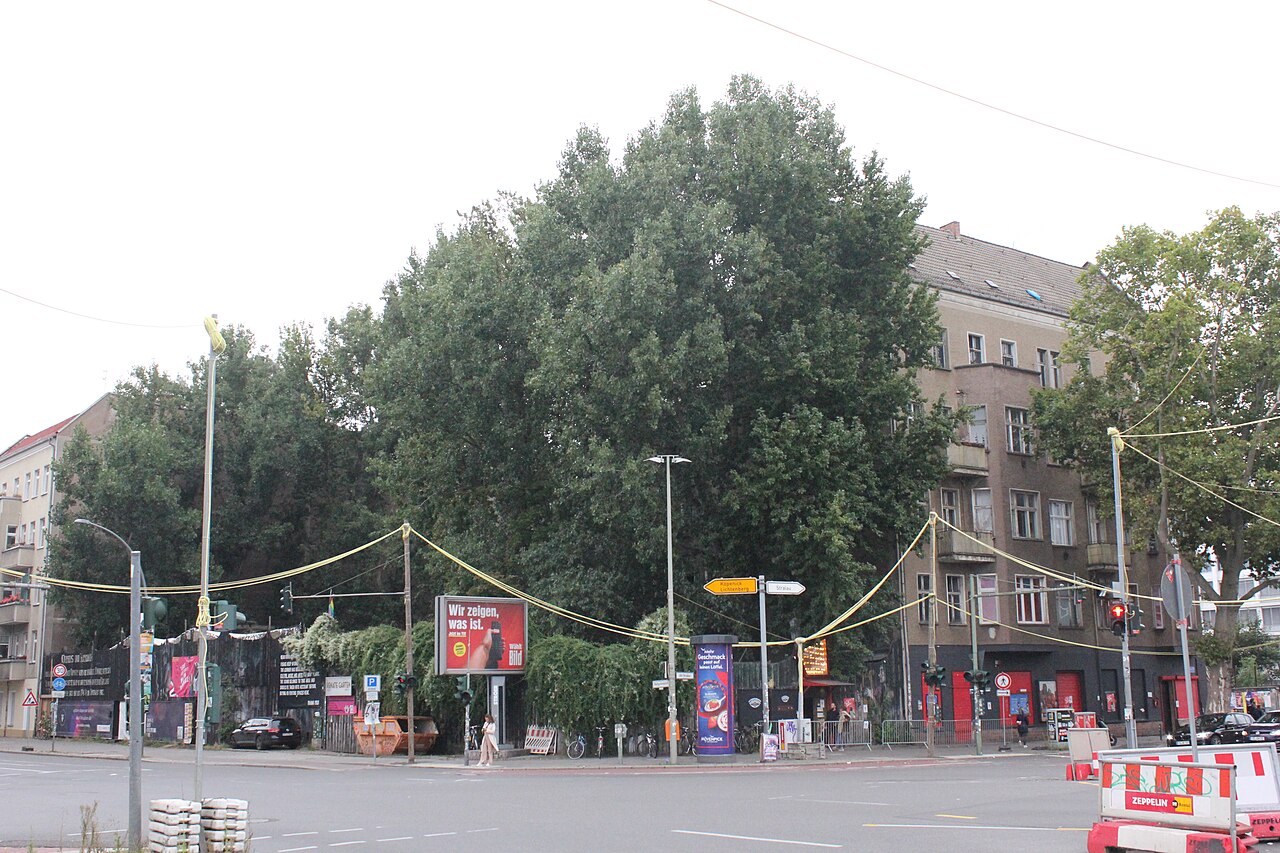
Ask ten people in dance music whether clubs are closing faster than they used to, and you'll get ten confident answers and roughly zero comparable numbers behind them. Part of the problem is real: most cities don't measure this. There's no EU-wide registry of nightclub openings and closures, no standardized reporting requirement, and no single body whose job it is to count. What exists instead is a patchwork, a serious annual survey in one city, a scattered pile of press clippings in another, and nothing at all in most.
This piece is an attempt to put what's actually documented in one place. We've already covered why the UK keeps losing its nightclubs in depth, business rates, licensing policy and the Agent of Change gap, and separately the wave of European festival cancellations hitting outdoor events for a related but distinct set of reasons. Neither of those pieces set out to be a cross-city club tracker, so this one does: five cities, the real published numbers where they exist, and an honest account of where they don't.
Berlin comes first, because it has the only data here that actually deserves the word rigorous.
Berlin: a scene under financial pressure, backed by an actual survey
The Clubcommission's study "Clubkultur Berlin 2026", presented on 7 August 2026 and fielded by Goldmedia, drew 102 completed questionnaires from Berlin clubs and promoters. Its closure count is more measured than the "club death" headlines: at least 24 club and cultural venues have closed since 2020, and about 25 have opened in the same period. The authors themselves say this is not a "Clubsterben".
The financial numbers underneath explain why the mood is still tense. Only 61 percent of Berlin clubs and promoters at least covered their costs in 2025, down from 79 percent in 2017, which means 39 percent made a loss, up from 21 percent. And looking forward, 23 percent of respondents said they were considering giving up within the next 12 months, while 95 percent said many clubs are at risk without structural improvements. That last figure is the one worth sitting with: this isn't only a count of what already happened, it is a signal of how fragile the economics have become. (A separate Clubcommission member survey in autumn 2024 found 46 percent of members considering closing; that was a different survey and should not be read as a trend line with the 2026 study.)
Some of the closures behind these statistics have names attached. Watergate, one of Berlin's most internationally recognized rooms, ended club operations at the end of 2024 after more than two decades. SchwuZ, the city's oldest queer club, closed its Rollbergstrasse venue on 1 November 2025 after insolvency. And Wilde Renate, one of the city's most distinctive DIY clubs, came within months of losing its building entirely before securing a new ten-year lease, a genuine reversal in a scene where most stories run the other direction. For a dated guide to the clubs that are open now, see our Berlin clubs guide, and for how Berghain's ranking sits against this background, our look at its fall in DJ Mag's 2026 poll.
The pattern isn't confined to Berlin, either. Munich lost BLITZ, one of Germany's most respected small-capacity techno rooms, in 2026, a club with no direct lease dispute or redevelopment plan cited publicly, just "reasons beyond our control" after a lease signed nearly a decade earlier ran up against today's rental market. Local media in Germany has taken to calling the broader trend Clubsterben, club death, though the Berlin study's own authors reject that label, and the Clubcommission's survey is currently the place in Europe where you can see the trend measured with anything close to rigor.
What about the UK?
We're deliberately keeping this section short, because our UK piece already covers the club-specific story there in full: business rates relief that excludes nightclubs, Cumulative Impact Policies freezing new licenses in specific boroughs, and the Agent of Change gap between planning law and licensing law. What belongs here is the adjacent context. The Association of Independent Festivals recorded 78 UK festivals cancelled, postponed or permanently closed in 2024, 43 in 2025, and 20 more by June 10, 2026, a partial-year count. That's festival data, not club data, but it points at the same underlying cost squeeze on live electronic music showing up on a different calendar. Not every UK venue story runs one direction, either: Printworks in London closed in 2023 and is reopening in 2026, a rare closure-to-reopening arc worth remembering whenever the wider trend starts to feel inevitable.
Netherlands: a festival permit story with a club-adjacent twist
The Netherlands doesn't have a citywide club closure count in this tracker either, and we're not going to invent one. What we do have, again from festival-side reporting, is that roughly 50 of the more than 100 global festival cancellations in 2025 happened in the Netherlands alone, a striking number for a country that built some of dance music's most important stages over the past two decades.
The one genuinely new data point for this piece is Music On. Its Amsterdam festival was cancelled at the gate in May 2026 after the permit was revoked over structural safety concerns, a regulatory shutdown rather than a financial one. The same year, the same brand's residency at Pacha Ibiza ran a thriving two-part Grand Closing Weekend, business as usual for one of the island's flagship club nights. Same name, same year, opposite outcomes, a clean illustration of how differently a club residency and an outdoor festival permit are weathering risk right now. Our festival cancellations piece covers the Music On story in full; it's mentioned here only for that contrast.
Paris: no citywide count, but a landmark closure
Here's where we have to be honest about a real gap. No comprehensive citywide closure count for Paris turned up in our research, and we're not going to paper over that with an invented aggregate. What is documented: Paris and greater Ile-de-France have around 350 clubs and discos total, with roughly 200 of those inside Paris proper. That's the denominator. Nobody appears to be publishing the numerator, the way Clubcommission does for Berlin.
What we can report with confidence is one specific, significant loss. Gibus, a club on Faubourg-du-Temple that had been a cornerstone of the city's LGBTQIA+ and music nightlife since 1967, permanently closed in summer 2026. The venue cited operating costs, noise tensions with neighbors, and falling attendance, the same trio of pressures showing up in Berlin and London under different regulatory names. Fifty-nine years is a long run for any club anywhere, and its closure is a real marker even without a citywide count to place it against.
Worth a brief aside, a different category entirely: Parisian gaming clubs faced a closure threat starting January 1, 2025, after a finance bill that would have made their authorization permanent for 2026 was rejected and the Prime Minister resigned. It's a reminder of the regulatory instability the city's licensed nightlife sector has had to absorb, not a data point for this tracker.
The United States: named closures, no national count
If Paris has a thin data picture, the US has essentially none. There is no single comprehensive nationwide closure count for American nightclubs, so we won't invent one. What exists instead is a pile of individually reported closures that made 2025 a widely reported rough year for clubs and live venues across the country.
The named cases span coasts and scales. Yolo in San Francisco was one of two SF clubs that announced closing in 2025. Brooklyn and Los Angeles both saw venue losses, including the Mayan Theater in LA, a legendary former movie palace. Milwaukee lost Victor's after 60 years in business. Further closures were reported in Chicago, Cleveland, San Diego, and Neptune, New Jersey.
The National Independent Venue Association, NIVA, which represents roughly 1,500 US clubs, concert halls, performing arts centers and festivals, has become the main industry voice tracking the pressure on this list, citing rising rents, rising insurance costs, and declining alcohol consumption as the core drivers. That last factor, falling alcohol sales, doesn't show up as prominently in the European reporting above, and it's worth flagging as a possible US-specific wrinkle rather than assuming every market is under exactly the same pressure for exactly the same reasons.
The numbers, side by side
| City / Region | Headline 2025 figure | Source | Notable named closure |
|---|---|---|---|
| Berlin | 61% at least covered costs in 2025 (79% in 2017); at least 24 venues closed and about 25 opened since 2020 | Clubcommission Berlin, Clubkultur Berlin 2026 study | Watergate (end of 2024, after 22 years) |
| UK | 78 festivals cancelled/postponed/closed in 2024, 43 in 2025 (festival data; see our UK club piece for the club-specific story) | Association of Independent Festivals | See UK nightclub closures piece |
| Netherlands | ~50 of 100+ global festival cancellations in 2025 were Dutch | AIF-sourced festival tracker | Music On Amsterdam (permit revoked, May 2026) |
| Paris | No citywide count available; ~350 clubs in Ile-de-France, ~200 in Paris proper | No structured annual survey found | Gibus (closed summer 2026, open since 1967) |
| United States | No national count available; multiple named closures across at least 7 cities | NIVA (represents ~1,500 venues) | Victor's, Milwaukee (60 years); Yolo, San Francisco; Mayan Theater, LA |
RTS.FM has broadcast underground house and techno since 2006, artist-run and non-commercial the whole way through. Tune into the live stream while you read.
quick wins
- Berlin: at least 24 club and cultural venues closed and about 25 opened since 2020, per the Clubcommission's 102-response Clubkultur Berlin 2026 study, whose authors say this is not a club die-off.
- Only 61 percent of Berlin clubs and promoters broke even in 2025 (down from 79 percent in 2017), and 23 percent said they're considering giving up within 12 months.
- The UK and Netherlands numbers here are festival data, not club data; see our dedicated pieces on UK club closures and European festival cancellations for those stories in full.
- Paris has no comprehensive citywide club closure count, but lost Gibus, a 59-year-old LGBTQIA+ nightlife cornerstone, in summer 2026.
- The US has no national closure count at all, just named individual losses (Yolo in SF, Victor's in Milwaukee after 60 years, the Mayan Theater in LA) and NIVA's warning about rents, insurance and falling alcohol sales.
- Berlin's structured Clubcommission survey is currently the only city-level dataset here rigorous enough to actually call a "tracker."
Frequently Asked Questions
Which city has the most reliable club closure data?
Berlin, by a clear margin. Clubcommission Berlin's Club Culture Berlin 2026 report gathered 102 completed questionnaires from venues and promoters, producing both a closure and opening count since 2020 (at least 24 closed, about 25 opened) and financial detail (break-even rates, share operating at a loss) that no other city in this tracker has published. It's the only dataset here built from a structured survey rather than press monitoring.
Is this the same story as the UK's nightclub closures?
Related, but this piece deliberately doesn't repeat it. Our UK piece covers the specific mechanics there, business rates relief that excludes nightclubs, Cumulative Impact Policies, and the Agent of Change gap between planning and licensing law. This tracker cites the UK's festival cancellation numbers only as brief context for the country's wider live-music cost squeeze.
How is a club closure different from a festival cancellation?
They're different formats with different pressure points. A club is a fixed venue facing rent, business rates, licensing renewal and noise complaints over years or decades. A festival is a temporary event facing insurance costs, weather exposure and one-off permitting for a single edition. Our festival cancellations piece covers that side in depth, including cases like Music On's Amsterdam permit revocation, which sits closer to the festival category even though it shares a brand name with a thriving club residency at Pacha Ibiza.
Why isn't there a single Europe-wide club closure number?
Because nobody is currently measuring it at that scale. Berlin has Clubcommission's structured survey. Paris has a rough total venue count (around 350 across Ile-de-France) but no published annual closure tally. The Netherlands and UK numbers cited here come from festival trackers, not club-specific ones. The US has NIVA's advocacy but no comprehensive national count either. Aggregating those into one continent-wide figure would mean averaging real data with gaps, which is exactly the kind of number this tracker is trying not to invent.
Will this tracker get updated as more data comes in?
That's the intent. A tracker like this is only as good as what gets publicly reported and measured, and right now that's wildly uneven, one rigorous annual survey in Berlin, a handful of named closures everywhere else. If more cities start publishing Clubcommission-style structured data, this is the piece we'd update first.