14 SEPT 2026 · rts.fm editorial · updated 16 OCT 2026
Wilde Renate Berlin: History, Entry, Address and Lease
Wilde Renate is a maze-like club on Alt-Stralau in Friedrichshain, Berlin. Open since 2007, it won a new ten-year lease in 2025. Facts and history.
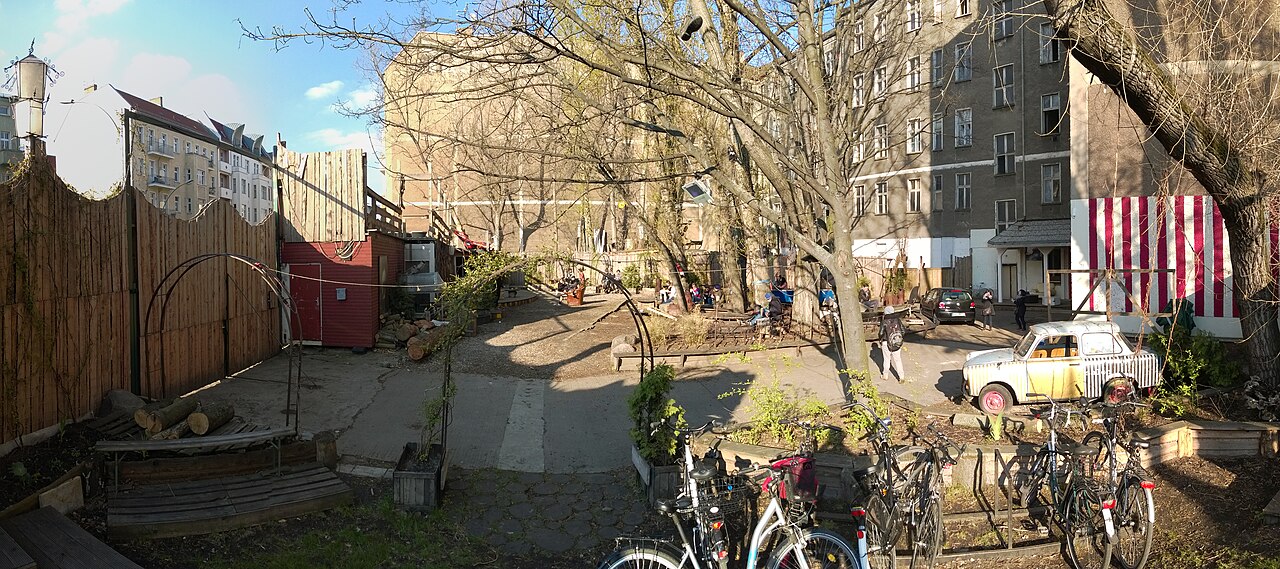
Wilde Renate Quick Facts
| Full name | Salon zur wilden Renate, usually shortened to Wilde Renate or Renate (Mixmag) |
| Address | Alt-Stralau 70, 10245 Berlin, in Friedrichshain; nearest S-Bahn stations are Ostkreuz and Treptower Park (official site) |
| Opened | 2007, in an abandoned apartment block (Mixmag) |
| The building | A multi-storey former apartment building with many rooms, corridors and hidden corners, plus a labyrinth installation in the basement until 2014 (Time Out) |
| Floors and areas | Green, Red and Black floors, a garden, and a Renate Live space on Thursdays (official site) |
| Capacity | Not stated on the club's site, by Time Out or by Mixmag |
| Residents | Ady Toledano, Amy Dabbs, Frozilla, Johannes Albert, Juan Ramos and VIO PRG (official site) |
| Operator | Else Event GmbH, per the site imprint (official site) |
| Opening hours | Thursday to Saturday, 23:00 to 09:00; the garden opens Friday at 16:00 and Saturday at 14:00 (official site) |
| Status in 2026 | Open. A new ten-year lease was signed in December 2025 and the club reopened in 2026 (official site) |
| Website | renate.cc |
Most clubs mark an anniversary with a lineup poster and a door charge. Wilde Renate marked its 19th, this September, with a party that runs 66 hours straight across seven floors. That kind of scale only makes sense once you know what almost didn't happen a year earlier: Berlin's most theatrical DIY club came within months of losing its building entirely when its landlord declined to renew the lease.
What Is Wilde Renate, and Where Is It?
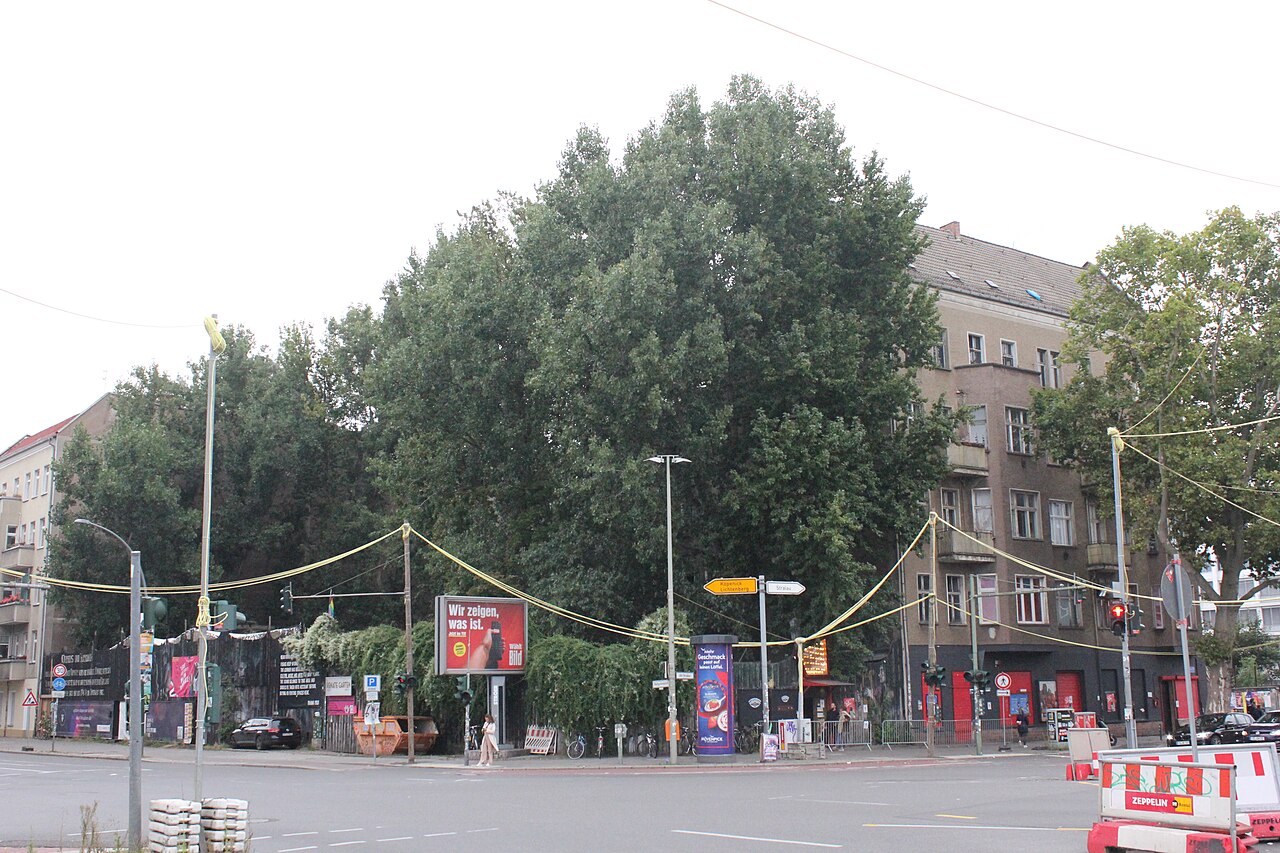
Wilde Renate, formally Salon zur wilden Renate, is a Berlin nightclub in a former apartment building at Alt-Stralau 70 in Friedrichshain, close to Ostkreuz and across the Spree from Treptower Park. It opened in 2007, runs several differently themed floors and a summer garden, and is open Thursday to Saturday, according to its official site. People also search for it as "Die Wilde Renate" or simply "Renate". For how it compares with the rest of the city, see our dated guide to the best Berlin clubs in 2026.
Why Is Wilde Renate Called a Maze Club?
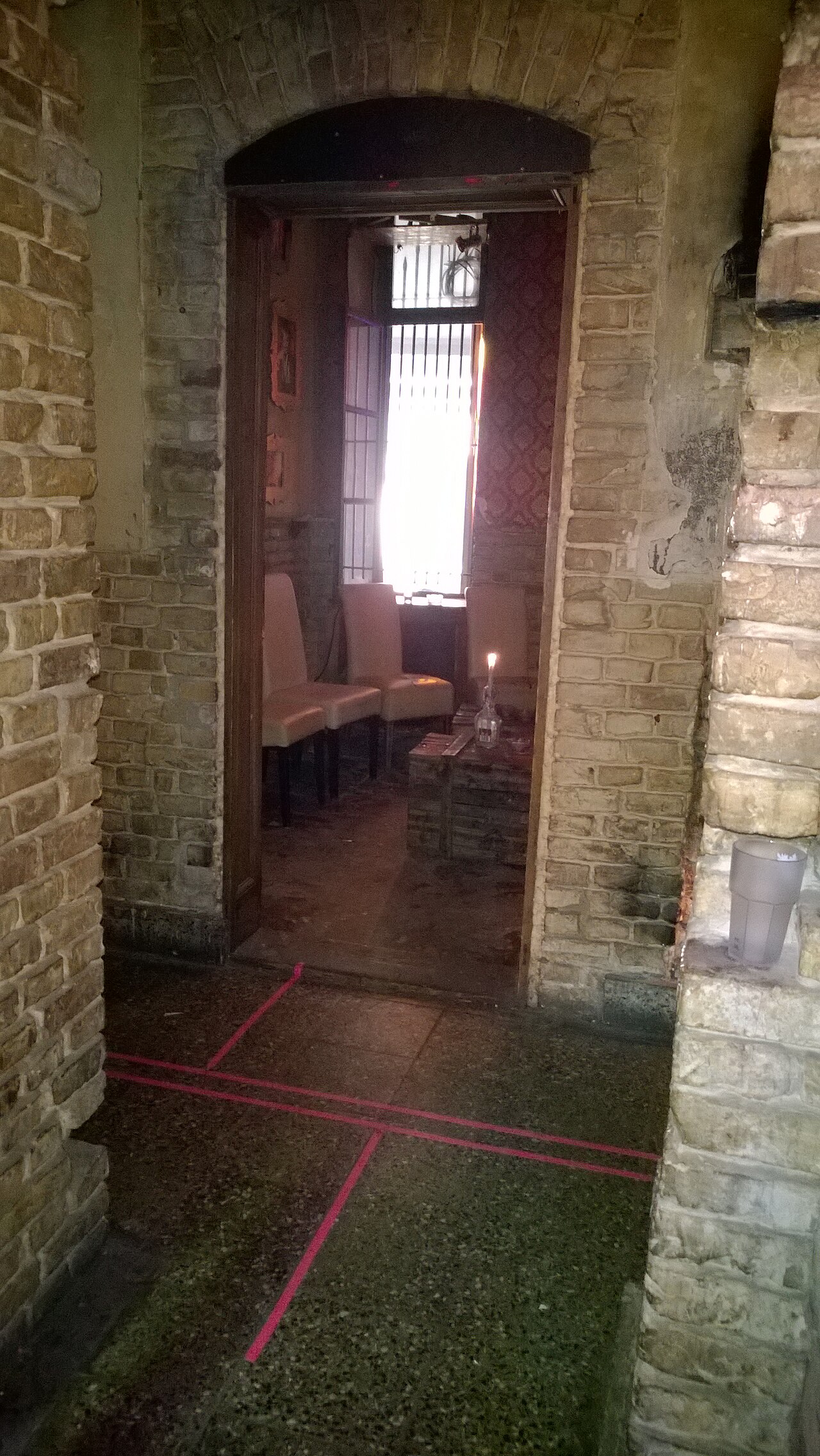
"Maze club" is a description of the layout, not an official title. Time Out describes a multi-storey building with "a multitude of rooms, corridors and hidden corners", and notes that one or all floors may be open depending on the night. The label also owes something to Peristal Signum, the hand-built labyrinth that filled the basement until March 2014 (more below). Rooms that do not match, hallways that double back and a plain facade hiding it all are what regulars mean by the word.
From Derelict Tenement to DIY Institution
Wilde Renate opened in 2007 inside a genuinely unrenovated apartment building on Alt-Stralau, a quiet peninsula in Friedrichshain across the Spree from Treptower Park. The building had sat mostly derelict since German reunification before a group of Berlin creatives started using it for studio and storage space, a use that gradually tipped over into parties, and then into a club that never bothered to strip out the domestic character of the place it took over. Cracked plaster, mismatched found furniture, and torn wallpaper weren't a design brief. They were just what was already there.
That refusal to renovate is the whole identity. Where a club like Berghain trades on industrial scale and a former power plant's severity, Renate built its reputation on the opposite instinct: rooms that still look like somebody's apartment, if that somebody had wildly eclectic taste and no intention of ever moving out.
Three Floors, One Vanished Labyrinth
The club runs several differently themed rooms under one roof; the best known are the Schwarzer Raum, a black-walled techno room on the ground floor; the Grüner Raum upstairs, given over to house; and the Roter Raum, described by regulars as slow, weird, and trippy disco territory. A large courtyard and garden opens in summer, complete with its own bar and a boat hanging improbably from the trees.
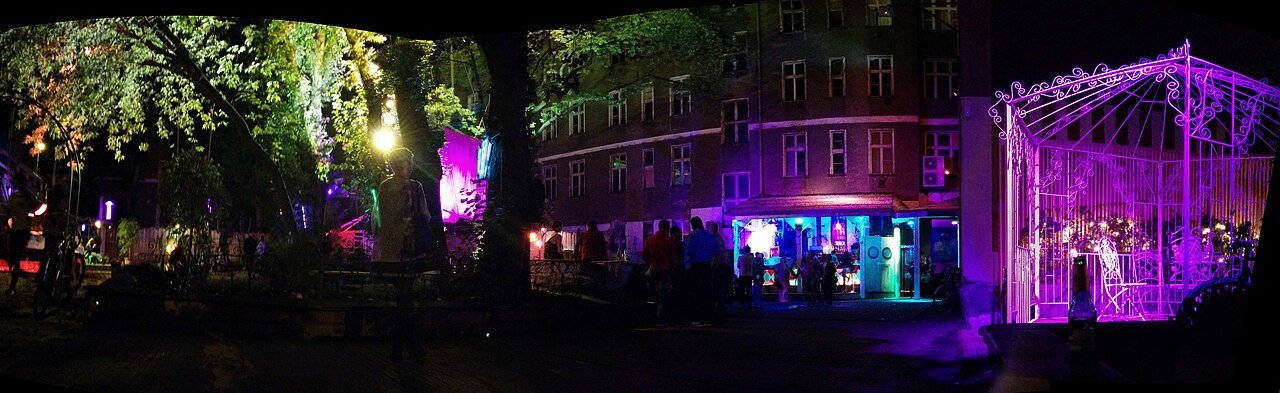
Travel and nightlife writers who've covered the club tend to reach for the same word: theatrical. It gets described less as a venue than as a party labyrinth with living-room flair, a description that holds up once you're actually inside: no two rooms match, hallways double back on themselves, and the grey, unassuming 1980s facade behind the club's high wooden fence gives away almost nothing about what's on the other side of it. That mismatch between the building's exterior and its interior is deliberate, or at least it's been left standing long enough to become part of the point.
For four years, the club's basement held something no longer there to see: Peristal Signum, a scrap-material psychedelic labyrinth built entirely by hand by the artist collective Karmanoia over roughly nine months around 2010. It was the kind of structure that could only exist in a club willing to hand a basement over to artists for the better part of a year with no clear plan for what would come out of it. The installation closed permanently in March 2014, and nothing has replaced it since, but its reputation still shows up in how people describe the club's corridors even now: less a hallway than a passage you navigate rather than simply walk through.
Is Wilde Renate Closing? The Landlord Problem
No. In August 2024 Renate announced it would close at the end of 2025, but it secured a new ten-year lease in December 2025 and is open in 2026. The full sequence follows.
In August 2024, Renate announced it would close permanently at the end of 2025. The building's landlord, the Padovicz Group, headed by the Berlin property investor Gijora Padovicz, declined to renew the lease, amid what press reports described as steep rent increases. Renate's own statement pointed to the planned A100 motorway extension as an added pressure on the site, and framed its situation as part of a broader pattern rather than an isolated dispute.
The story could easily have ended there. It didn't. In December 2025, Renate announced it had secured a new ten-year lease, avoiding closure entirely, and apologized for how emotionally charged its original announcement had read. The club went dark briefly after New Year's, then reopened gradually: a soft reopening in late January 2026, followed by a fuller relaunch around Easter with a renovated L-shaped dancefloor and a new Kirsch Audio sound system built around 21-inch bass. Earlier, in June 2025, a fire had damaged the garden entrance, its ticket booth, fence, and photo booth, though the main building itself came through unaffected.
Residents and a Growing Family
Renate's resident roster, as Mixmag listed it in April 2023, included Ady Toledano, Amy Dabbs, Frozilla, and Vio PRG, alongside longer-standing names Johannes Albert, Juan Ramos, and S Ruston; the booking team has changed since, so check the club's site for the current line-up. The club also runs its own small releases operation through Bandcamp, including a two-part compilation marking its tenth anniversary in 2017 and later releases such as Yoga At The Dream Haus and Universal Worldwide Weekend, featuring Oskar Szafraniec and Michal Zietara among others.
In 2023, the same team behind Renate opened a second, smaller venue on the north side of the same building on Markgrafendamm: M01 (the club's site now calls it BABY01), a smaller room with a more experimental, less predictable booking policy than its neighbor. It reads as a pressure valve for the parent club, a space where the operators can take bigger risks without staking the main room's reputation on every night.
Entry, Dress Code and Photos at Wilde Renate
Only what the club itself states is covered here. Renate's site says admission is from age 21 with valid government-issued ID, that entry is typically around 20 euros including coat check, and that the club is cashless, card only. Tickets bought through Resident Advisor do not guarantee entry, and refunds are issued if entry is denied.
On dress, the club says to feel free to wear unique or unconventional clothing that represents your personal style, and that the atmosphere is not suited to a conservative or formal business attitude. Its House of Lunacy nights have stricter costume rules. The club also states a strict no-photography rule, with cameras and phones with cameras generally not allowed inside. Our Berlin club guide compares door and photo policies across the city.
66 Hours, Seven Floors
This year's anniversary party, running September 11 through 14, was billed as 7 Floors, 66 Hours, spanning both the Renate and M01 buildings. According to DJ Mag's coverage of the announcement, the lineup pairs international names Angel D'lite, Mary Lake, and Daniel Avery with local Berlin talent Handmade, Camilla Rae, Organza, and Madalba, alongside live sets from Schatz, Das Beat, Fritz Ernst, and Dornika. It's a genuinely large undertaking for a club that, a year earlier, wasn't sure it would still have a lease to throw a party on at all.
Renate's own history in polls has been modest by Berlin standards. It placed 94th in DJ Mag's Top 100 Clubs in 2019, its only confirmed appearance in that ranking, and it doesn't chase the metric the way some bigger rooms do. What it has instead is duration: nineteen years in the same unrenovated building, run largely by the same community that started using it for storage before anyone called it a club.
Berlin's Club Squeeze Isn't Unique to Renate
Renate's standoff with its landlord fits a pattern that's shown up across Europe over the past two years, tracked in our Europe club closures tracker. Munich's BLITZ closed for good in 2026 after nine years as one of Germany's most respected small techno rooms, a closure with no reprieve attached. London's Printworks went the opposite direction, securing council approval to reopen its Press Halls after a redevelopment fight, a rare case of a major closed room actually coming back. And the pressures aren't confined to Germany: UK nightclubs have been closing at a rate of roughly three a week, driven by many of the same forces, rising costs, redevelopment pressure, licensing friction, that nearly took Renate down. Even Berlin's most famous room isn't immune to the wider churn: Berghain itself fell to 21st in DJ Mag's 2026 poll, a reminder that no single club's standing is guaranteed, reputation or not. Renate's reprieve is the exception worth paying attention to precisely because so many of these stories don't end that way. For the wider data on Berlin floors, margins and closures, see what the numbers say about people going out less.
RTS.FM has streamed underground house and techno from studios worldwide since 2006. Tune into the live broadcast while you read.
FAQ
When did Wilde Renate open?
Wilde Renate opened in 2007 inside a formerly derelict apartment building on Alt-Stralau in Berlin's Friedrichshain district, across the Spree from Treptower Park.
Is Wilde Renate closing?
No. The club announced a planned closure for the end of 2025 after its landlord, the Padovicz Group, declined to renew its lease, but secured a new ten-year lease in December 2025 and reopened fully by Easter 2026 after a renovation.
Where is Wilde Renate?
Wilde Renate is at Alt-Stralau 70, 10245 Berlin, in the Friedrichshain district. The nearest S-Bahn stations are Ostkreuz and Treptower Park, according to the club's site.
Why is Wilde Renate called a maze club?
The label describes the building, not an official title. Time Out describes a multi-storey building with a multitude of rooms, corridors and hidden corners, and the club's basement held the Peristal Signum labyrinth installation until March 2014.
What is the dress code at Wilde Renate?
The club says you can wear unique or unconventional clothing that represents your personal style, and that its atmosphere is not suitable for a conservative or formal business attitude. Its House of Lunacy events have stricter costume rules. Entry is not guaranteed even with a ticket.
Can you take photos at Wilde Renate?
No. The club states a strict no-photography policy, and cameras and phones with cameras are generally not allowed inside.
What are the opening hours and entry price at Wilde Renate?
Regular hours are Thursday to Saturday, 23:00 to 09:00, with the garden opening Friday at 16:00 and Saturday at 14:00. The club says admission is from age 21 and typically costs around 20 euros including coat check. Hours and prices vary by event.
What is the full name of Wilde Renate?
The club's full name is Salon zur wilden Renate. It is also called Wilde Renate, Die Wilde Renate or simply Renate, and its operator is listed as Else Event GmbH in the site imprint.
What is the Peristal Signum labyrinth?
Peristal Signum was a scrap-material psychedelic labyrinth built by hand in Wilde Renate's basement by the artist collective Karmanoia, constructed over roughly nine months around 2010. It closed permanently in March 2014.
Who are Wilde Renate's resident DJs?
Residents listed in a 2023 Mixmag profile included Ady Toledano, Amy Dabbs, Frozilla, and Vio PRG, alongside longer-standing residents Johannes Albert, Juan Ramos, and S Ruston. The roster has changed since, so check the club's site for the current line-up.
What is M01?
M01 is a smaller sister venue opened in 2023 by the team behind Wilde Renate, in the same building on Markgrafendamm (the club's site now calls it BABY01), with a more experimental booking policy than the main club.
quick wins
- Wilde Renate opened in 2007 in a derelict Friedrichshain apartment building and turns 19 in September 2026.
- The club faced permanent closure in 2024 when landlord Padovicz Group declined to renew its lease.
- A new ten-year lease secured in December 2025 saved the club, followed by a renovation and full reopening by Easter 2026.
- Its basement once held Peristal Signum, a hand-built scrap-material labyrinth that closed permanently in 2014.
- The club runs several themed rooms (Schwarzer, Grüner, and Roter Raum, plus a "Top Secret" floor listed in 2026), a garden, and a 2023-opened sister venue, M01, in the same building.