15 OCT 2026 · rts.fm editorial
Why Are People Going Out Less? What the Data Says
UK nightclubs are down 36.1% since 2020, yet Berlin's floors are full and the model has flipped. What the primary data says about going out less.
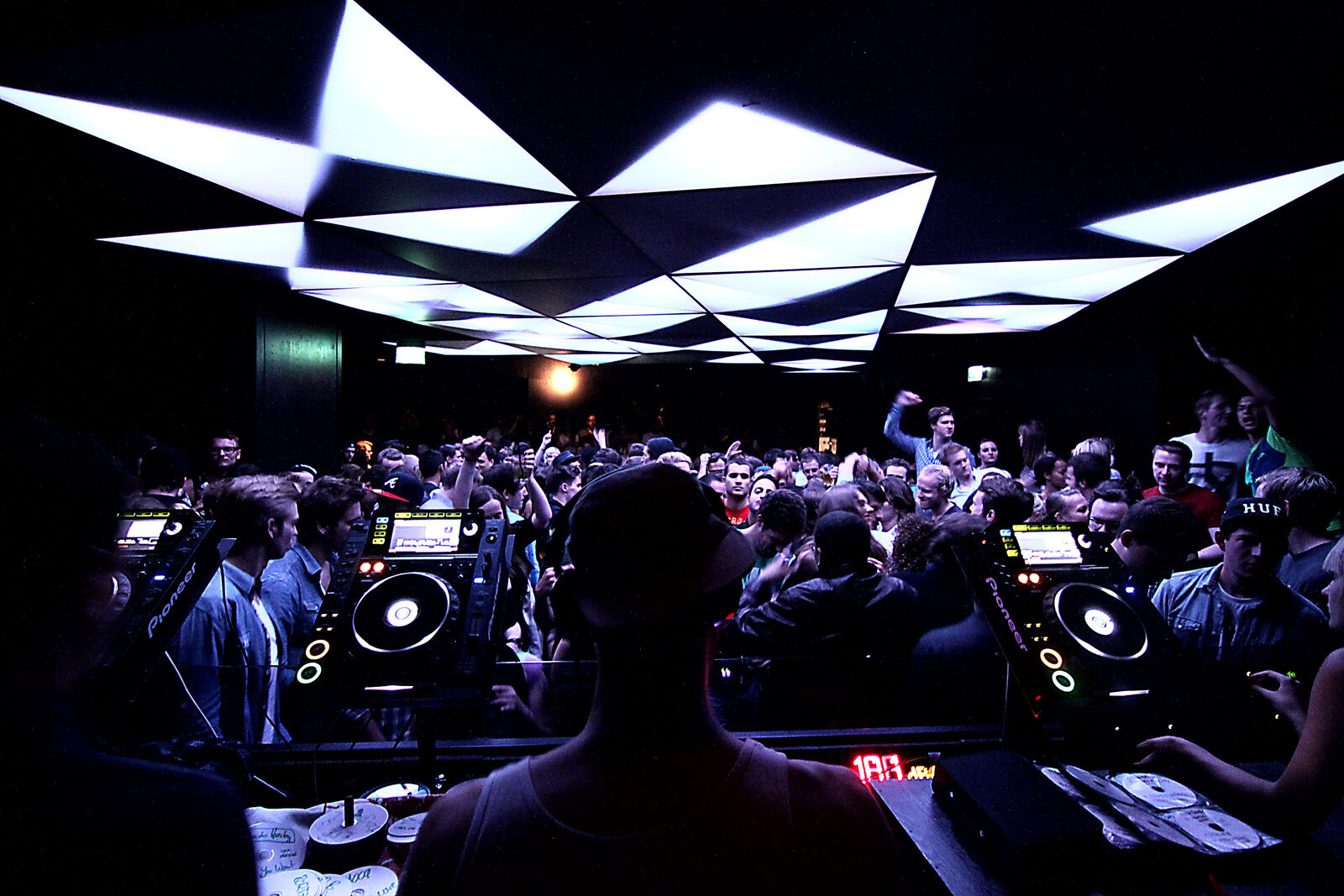
Yes, in some places and in some ways, but not wholesale. Great Britain's nightclubs are 36.1% fewer than in March 2020 according to NIQ and the NTIA (22 September 2026), and the London Nightlife Taskforce reports that 61% of 18 to 30 year olds went out after 10pm less often in 2025 than in 2024. Yet Berlin's 2026 industry survey found 83% of clubs at half capacity or better while only 61% broke even, because door income rose from 21% to 59% of revenue as bar and food income fell from 60% to 20%. Our reading is that people are going out earlier, less often and drinking less, and that independent late-night clubs are taking the hit because their costs rose while their revenue mix shifted.
Researched and written by the RTS.FM editorial desk on 15 October 2026. Every figure below carries its source, year and limits. The method, the conflicts between sources and the items we could not verify are set out near the end.
Are people really going out less?
In some places and by some measures, yes. Venue counts and surveys of young people point down in the UK and, on some measures, in the Netherlands and the United States, while operators in Berlin and Italy report busy rooms. The table puts the strongest evidence side by side, and the sections after it explain how far each figure can be trusted.
| Place and topic | Year | Figure | Measured by | Caveat |
|---|---|---|---|---|
| Great Britain, nightclubs | Mar 2020 to Jun 2026 | Nightclubs down 36.1%; all late-night venues down 28.7% but up 0.4% between March and June 2026 | NIQ and NTIA monitor, release of 22 Sep 2026 | Percentages only; method and sample not published in the release |
| UK, nightclub count | Mar 2020 to Nov 2024 | 1,240 falling to 835 (down 32.7%) | NTIA, using CGA by NIQ data | Trade body; no definition of "nightclub"; baseline differs between NTIA releases |
| UK, 18 to 30 year olds | Feb 2025 | 61% go out less often than a year earlier; 68% blame the economy; 53% spend less (n=2,001) | Obsurvant for the NTIA | Commissioned by a lobbying body; self-reported |
| London | 2025 | 61% of 18 to 30s went out after 10pm less often than in 2024; average of 0.91 nights out a week | London Nightlife Taskforce report, 2026 | Same 61% as the NTIA survey; no club count |
| Berlin | 2025 data, published 7 Aug 2026 | 61% at least broke even (79% in 2017); 83% at 50% capacity or better; at least 24 closures and about 25 openings since 2020 | Clubcommission Berlin and Goldmedia | n=102, self-selected; commercial discos excluded |
| Netherlands | 2025 | Club-night visits down 14%; sold-out club nights 19% (about 25% in 2024); 52% of venues lost money | VNPF | 55 subsidised venues, not commercial clubs |
| United States, drinking | Jul 2025 | 54% of adults drink, a record low; 50% of 18 to 34s (59% in 2023) | Gallup | n=1,002; self-reported; wide margin for the age subgroup |
| United States, socialising | 2015 to 2025 | Share socialising on an average day fell from 38% to 30% | BLS American Time Use Survey | Includes phone calls; 2025 fieldwork disrupted by a federal shutdown |
| England and Wales, drug use | Year to Mar 2025 | Any drug use by 16 to 24s 15.1% (31.8% peak in 1997); cocaine 2.3% (4.7% in 2015); ecstasy 1.9% (5.3% in 2015) | ONS, Crime Survey for England and Wales | Household survey; self-reported; measures drug use, not attendance |
| Italy | 2024 | About 2,000 discos; more than 34 million admissions; entry revenue about €500m (€490m a year earlier) | SILB-Fipe via Il Sole 24 Ore | Trade body self-report |
| Global electronic music | 2025 | $15.1bn, up 7% | IMS Business Report (MIDiA Research) | Whole industry including recorded music and publishing; 2024 baseline restated |
The UK: the clearest decline in venue numbers
The newest British numbers come from the NIQ and NTIA Night Time Economy Market Monitor, summarised in a press release of 22 September 2026. It says nightclubs are 36.1% below their March 2020 level, late-night bars are down 23.9%, and late-night venues as a group are 28.7% below March 2020 after growing 0.4% between March and June 2026, the first quarterly rise in two years. We have the release, not the full report, so we use the national percentages and leave out the regional ones, which may cover all licensed premises.
The older absolute count is the NTIA's figure of 1,240 nightclubs in March 2020 falling to 835 in November 2024, a loss of 405 or 32.7%, reported by the Morning Advertiser and published by the NTIA. Wales and Yorkshire were down by more than 40% and Birmingham by 38.5%, while London and the North East ticked up slightly in late 2024. The NTIA puts operating costs at 30 to 40% above pre-pandemic levels.
What the same data show is that the evening economy did not vanish. NIQ's December 2024 reading found nightclub sites down 33.2% on March 2020 while evening-led venues grew 3.9% in 2024 to 16,004, with themed bars up 24.4% and cocktail bars up 17.4% (Morning Advertiser, 10 February 2025). The latest release says bars grew 1.3% year on year and that the share of sales after 7pm fell 1.4 percentage points. NIQ's 2026 state-of-play analysis adds three points: 28% of British consumers say they go out earlier than they used to, the 5pm to 7pm slot now earns more than 7pm to 10pm, and late-night venues fell 4.1% in 2025, with Greater London down 7.0% while the Central Activities Zone rose 2.7%. NTIA chief executive Michael Kill put it in May 2026 as "Demand is changing rather than disappearing" (Morning Advertiser). He is an advocate, but the numbers do not contradict him.
London: young people say they go out less, and nobody counts the clubs
The London Nightlife Taskforce's 2026 report (PDF on london.gov.uk) is the most detailed official-adjacent picture. It found that 61% of 18 to 30 year olds went out after 10pm less often in 2025 than in 2024, that 68% said the economy made them go out less, that 39% of 18 to 24 year olds do not drink at all, and that the average Londoner goes out 0.91 nights a week and spends about £1,885 a year. For the first time, it says, Londoners go out less and spend less on nightlife than people in the rest of the UK.
Two cautions apply. The 61% and 68% match the headline figures of a February 2025 NTIA survey of 2,001 UK 18 to 30 year olds by Obsurvant, so we treat them as one finding reported twice, not two independent confirmations. And the Taskforce report was produced with advocacy partners including VibeLab. More awkwardly, the Greater London Authority told a freedom of information request in April 2026 that it holds no "accurate or consistent data" on nightclub openings and closures. Nightclubs were first mapped in 2019 inside a broad music category and got their own category only in 2023, compiled by Nordicity from Music Venue Trust, CGA and Resident Advisor data.
Berlin: full floors, thinner margins
Berlin has the best club-level evidence in Europe, as our European closures tracker also found. Clubcommission Berlin presented its Club Culture Berlin 2026 study on 7 August 2026, based on a Goldmedia survey of 102 completed questionnaires gathered between 19 March and 24 April 2026 and commissioned by the Berlin Senate's economics department. It excludes pure event locations, gastronomy without programming and commercial discos. Within those limits it reports that 83% of clubs ran at half capacity or better, with about a third above 75%, and that at least 24 clubs and cultural venues closed and about 25 opened since 2020. The authors reject the label "Clubsterben". Marcel Weber, chair of the Clubcommission, said "Berlin's club dance floors are full" while adding that running them sustainably is getting harder (Resident Advisor DE).
The money is the problem. Only 61% of respondents at least covered their costs in 2025, against 79% in 2017, and 39% made a loss, up from 21%. The revenue mix inverted: entry made up 59% of income in 2025 against 21% in 2017, while food and drink fell from 60% to about 20% (MIZ summary, Pollstar). On behaviour, 73% of clubs said guests drink less, 60% sell more soft drinks and 57% said guests stay for a shorter time. In response, 67% had raised drink prices and 47% ticket prices. The biggest burdens named were personnel (64%), operating costs (62%), falling audience purchasing power (60%) and rent (54%).
A floor full of people who drink less, stay less long and pay at the door is a different business from one full of people buying rounds until morning. An earlier Clubcommission monitor from autumn 2024 painted a darker picture, with 46% of clubs considering closure and 52% reporting fewer guests than the year before. That was a different survey with a different sample, so we do not read the drop from 46% to 23% considering closure in 2026 as a recovery. For the clubs themselves, see our Berlin clubs guide and the story of Wilde Renate.
The Netherlands: two datasets, two directions
The Dutch evidence conflicts. The VNPF, which represents Dutch pop venues and festivals, reported in July 2026 that club-night visits at its 55 subsidised venues fell 14% in 2025, that the share of club nights that sold out dropped to 19% from about 25%, and that 52% of venues ended the year in the red, with income of €247m against spending of €251m (DutchNews, NL Times). VNPF's Arne Dee linked it to younger people going out less and to squeezed budgets. Separately, Locatus and ABN AMRO data presented by the hospitality body KHN show a net loss of 11 discotheques in 2025 (KHN presentation), a small number with no denominator.
Against that, ticketing firm Weeztix reportedly found club-night ticket sales up 7% in the first half of 2025 compared with 2023. We saw that figure only in a search snippet, so we do not rely on it. Event Industry News on the same dataset does confirm that it covers more than 2,500 events in the Netherlands and Belgium and that early and late buyers have converged in age.
These are not the same measurement. VNPF counts subsidised venues against 2024, while Weeztix counts its own platform's events against 2023. We lean on VNPF for what it covers because we could open it and because it is an annual survey of a stable group, but we would not call it a national club figure. Amsterdam's resident survey for the city found that more than 90% of residents took part in night culture in 2025, a participation snapshot with no trend line. Co-author Mirik Milan used it to urge people to "abandon the negative narrative that nightlife is dying"; his company VibeLab advises cities on nightlife and co-wrote the London report, so the framing is advocacy.
The United States: less drinking, less socialising, no club count
The US has no national nightclub count. Official categories lump bars and clubs together, and a broker's database puts that category at about 70,000 businesses and roughly $39bn in revenue in 2025, which tells us only that it is too broad to read. What exists is demand-side data. Gallup found in July 2025 that 54% of US adults drink, the lowest in its trend of roughly 90 years and down from 62% in 2023, and that 50% of 18 to 34 year olds drink, against 59% in 2023. About two thirds of that age group said moderate drinking is harmful. The poll surveyed 1,002 adults, so the age subgroup carries a wide margin of error. A 2026 Gallup poll, as relayed by a trade outlet, found the rate unchanged at 54%.
On time use, the BLS American Time Use Survey for 2025 found that 30% of people socialised and communicated on an average day, against 38% in 2015, and that daily time fell from 41 to 35 minutes. The category includes phone calls, and BLS says a federal shutdown suspended interviews from 1 October to 12 November 2025 in ways it cannot quantify. The same release shows time on games and leisure computer use rising from 25 to 37 minutes a day. For venues, the National Independent Venue Association reported that 64% of independent stages were unprofitable on 2024 data and that 80% saw their lowest ticket sales since the 2008 recession (Pollstar). A June 2026 NIVA and Bandsintown survey found 56% of respondents reporting lower advance sales year on year, with walk-up buyers averaging 65% of sales (Hypebot). Both cover independent live venues generally, not clubs, and the pattern of closures is anecdotal, as NPR's 2025 round-up of named clubs shows.
Beyond Europe and the US: the same pattern, mostly in bars
Elsewhere the evidence is thinner and mostly covers bars. Australia's capital cities lost 112 drink-led establishments in 2024/25, the second yearly fall, to 9,301, while leisure and entertainment businesses grew by 868 (Council of Capital City Lord Mayors). In New South Wales, in-person night-time spending was A$15.5bn in FY25, down 6.0% on FY23, while online spending rose 17.8% (NSW Government). South Korea's neighbourhood pubs fell from 52,302 in 2018 to 28,178 in March 2026, down 46%, per tax registrations (Vinetur). Those are pubs, not clubs, and none of these sources isolates nightclubs.
How many nightclubs does the UK actually have?
Nobody can say exactly. The NTIA's best recent count is 835 in November 2024, and NIQ now says nightclubs are 36.1% below March 2020, but the starting count for those percentages has been published as 1,418, 1,266 and 1,240 depending on the release.
Three releases show the problem. In August 2022 the NTIA, via Statista, put Great Britain's clubs at 1,418 in March 2020 and 1,130 in June 2022. In August 2023 it said the count was 1,266 in June 2020, 1,095 in June 2021, 994 in June 2022 and 873 in June 2023. In January 2025 it said 1,240 in March 2020 and 835 in November 2024. The June 2022 figure is 1,130 in one release and 994 in another, and none of them explains why. We therefore name the release whenever we quote a count and never join them into one line.
Older history is no easier. The ALMR, a licensed-trade body, counted 3,144 UK clubs in 2005 and 1,733 in 2015, a fall of about 45%, defining clubs as venues for late-night entertainment, usually music and dancing, with no collection method described. It cannot be spliced onto the NTIA series. A figure that circulates in the press, Time Out's claim that UK clubs fell from 1,700 in 2023 to 787 in 2024, has no source and conflicts with both, so we do not use it.
Official statistics do not fill the gap. We found no ONS business-count series for nightclubs that we could open, and the GLA has just admitted it has no consistent London data. The practical rule we follow is to use NIQ percentages for direction and the NTIA's count for scale, and to expect both to change.
What are the causes, side by side?
The evidence points to a squeeze from both ends: young customers with less money, less alcohol and different habits on the demand side, and higher costs, a changed revenue mix and land pressure on the supply side. The table grades each cause by its strongest evidence and its biggest weakness.
| Cause | Side | Strongest evidence | Main weakness |
|---|---|---|---|
| Drinking less | Demand | Gallup: 54% of US adults drink, a record low; Berlin: 73% of clubs say guests drink less | IWSR and CGA data show Gen Z drinking participation up; participation is not volume |
| Less money | Demand | Resolution Foundation: nearly two thirds of early-20s live with parents; HEPI: 68% of full-time undergraduates work in term time; 68% of 18 to 30s in the NTIA poll blame the economy | No source links these directly to club attendance; the poll was commissioned by a trade body |
| Fewer drugs | Demand | ONS: cocaine use by 16 to 24s 2.3% against 4.7% in 2015; ecstasy 1.9% against 5.3% | Household survey; shows changed behaviour, not changed attendance |
| Earlier evenings | Demand | NIQ: 5pm to 7pm now earns more than 7pm to 10pm; 28% of consumers say they go out earlier | All-consumer data, not young people; venue-level trading data not published |
| Less socialising | Demand | BLS: share socialising on an average day 38% in 2015, 30% in 2025 | Includes phone calls; US only; shutdown gap |
| Phones | Demand | Brand-commissioned surveys; spread of phone-free rules | No attendance evidence; Hall and Liu find the decline predates social media |
| Rates, wages, energy | Supply | VOA data: average nightclub rateable value £35,725 rising to £56,000; NTIA: costs 30 to 40% above 2020 | Period of the rates rise not stated; trade-body data |
| Revenue mix | Supply | Berlin: entry 59% of revenue against 21% in 2017; food and drink 20% against 60% | n=102; commercial discos excluded |
| Land, planning, noise | Supply | Digbeth rail plan; Renate's rent more than doubled; Brooklyn Mirage permit revoked | Case studies, no counts; GLA has no data |
| Festivals and consolidation | Supply | Tresor.West's operator on festivals and brands; Superstruct owns about 80 festival brands; Live Nation 58% of UK primary tickets | Operator's own diagnosis; Live Nation figure covers arenas and stadiums; festivals are cancelling too |
| Artist fees | Supply | Mixmag 2019: a top DJ can take up to 80% of a club's budget | Dated and anecdotal; no current fee index |
Why are young people drinking, spending and staying out less?
Four demand-side forces have the best evidence: less alcohol, less money, less drug use and a shift to earlier evenings. None of them proves that young people have stopped wanting to go out, and one of them, alcohol, is contested by respectable data.
Alcohol: down in some data, up in others
Gallup's US numbers are above. In England, the Health Survey for England 2024, as summarised by DJS Research, found that 39% of men and 31% of women aged 16 to 24 had not drunk alcohol in the past year. The same 39% appears in the Taskforce report for 18 to 24 year olds who do not drink at all, and in a Reuters report that does not name its survey. These are different groups and measures, so we cite each with its own definition and do not merge them. Drinking was also falling before 2020: a peer-reviewed analysis of the Health Survey for England, which we could read only as summarised by other outlets, found non-drinking among 16 to 24 year olds in England rose from 18% in 2005 to 29% in 2015.
The other side is real. IWSR's Bevtrac survey found that 73% of legal-drinking-age Gen Z drank in the previous six months in March 2025, up from 66% in March 2023, across 15 markets (UK 66% to 76%, US 46% to 70%), and concluded that Gen Z behaviour is no longer significantly different from other generations. CGA by NIQ data reported by the Morning Advertiser says Gen Z are 20% of the population but 28% of on-premise visits, and Lumina Intelligence puts the 18 to 34 share of drinking occasions up 4.2 points.
Both can be true because they ask different questions. Gallup asks whether you drink at all, and IWSR asks whether you drank in the last six months. A Gen Z drinker with one cocktail a month counts fully in IWSR's 73% and barely at all in volume. IWSR starts in March 2023, near the post-pandemic trough, so part of its rise is rebound, and its clients sell alcohol. IWSR also found about 60% of Gen Z drinkers are intermittent abstainers against about 40% of all drinkers, which fits a pattern of drinking less often rather than not at all. A club notices that on the bar, not at the door. Reuters reported that nightly bar takings at London's Corsica Studios fell from a range of £10,000 to £12,000 a night to £6,000 to £7,000 before it closed in March 2026, even though its programming manager said the room was as busy as ever.
Drugs: the dance floor staples have fallen
The ONS Crime Survey for England and Wales for the year to March 2025 shows that 15.1% of 16 to 24 year olds used any drug in the last year, against 19.4% in 2015 and a peak of 31.8% in 1997. Class A use among 16 to 24s was 4.5% (7.5% in 2015), powder cocaine 2.3% (4.7% in 2015) and ecstasy 1.9% (5.3% in 2015), while ketamine was flat at 2.0%. This is a household survey, so it under-represents students in halls and heavy users, and answers are self-reported. It supports one claim only: the substances that powered the long club night are used less by the young than a decade ago. It cannot tell us whether the people who stopped using them also stopped going out.
Money: rent, work and prices
The strongest money evidence is about incomes and time, not nightlife. The Resolution Foundation reported on 3 July 2026 that nearly two thirds of people in their early 20s live with their parents, up 11 percentage points since 2011, and that young private tenants spend about a third of their income on rent against 4% when living at home. HEPI and Advance HE's 2025 survey found 68% of full-time UK undergraduates work during term time, up from 56% in 2024 and 42% in 2020. Neither measures nights out, so the link is inference: a student who works more has less time and money for a 2am start. The NTIA poll adds the stated version, with 53% of 18 to 30s spending less on going out than a year earlier.
The price story is more complicated than "tickets got dearer". Vice reported in 2022 that fabric's average weekend door price was £18.95 against £19.16 in 2019, while the club said its bar supply costs had tripled, so operators' margins were hit before ticket prices rose. Goldman Sachs' Music in the Air report puts club ticket prices up 37% between 2019 and 2024, as relayed by Access All Areas; we could not open the Goldman PDF itself. Time Out's archive basket found a London night out cost £66.48 in 2025 against about £44 in 1995 money, a real rise near 50% over 30 years rather than a sudden jump. In Berlin, ZDF reported that €15 to €20 entry is no longer rare.
Habits: earlier, shorter, more deliberate
The most consistent finding across sources is a change in timing. NIQ's trading data show earlier spending, Berlin operators say guests stay for a shorter time, and Pollstar's summary of the Berlin study describes audiences who plan nights out more deliberately, leave earlier and drink less. Ticketing platform Eventbrite claims big rises for daytime and alcohol-free formats, such as coffee-clubbing events up 478% in 16 US cities (with attendance up 150%) and morning dance parties up 20% in event numbers but only 13% in attendance (Eventbrite). That is keyword counting by a company with something to sell, from small bases, and we treat it as a signal of direction, not size.
Safety and getting home
In the NTIA survey, 69% of 18 to 30 year olds said better late-night transport would make them stay out later, and about a third reported fear or anxiety at night, with women more affected (NTIA 2025 consumer research). Those are leading questions asked by a trade body, and fear is not the same as changed behaviour. The Home Office's report on spiking counted 6,732 police-recorded cases between May 2022 and April 2023, after a peak of 4,861 in a single quarter in late 2021, and states that it has no quantitative measure of any change in going-out behaviour. We found no data that links safety fears to lower attendance, so we list safety as plausible and unmeasured.
Do phones keep people home?
There is no good evidence that they do. The best long-run study we found says face-to-face time was falling in the US, UK and Australia long before social media, and the club-specific material on phones is about etiquette, not attendance.
Hall and Liu's 2022 review of national time-use surveys from 1995 to 2021 found a steady fall in face-to-face time in all three countries, with no pandemic rebound, and concluded that the displacement hypothesis is not supported. Hall argues that time is competing with work and commuting, not screens. Derek Thompson's The Anti-Social Century argues the reverse, but we could not open it and cannot weigh his figures. A review of aggregate series cannot rule out phones accelerating the post-2012 drop in teenage socialising.
On dance floors, Dazed documented the spread of phone-free rules, including fabric since reopening in 2021, FOLD since 2018 and Amber's in Manchester. Journalist Ed Gillett called camera bans "an easy bit of shorthand" that can double as exclusivity marketing, and an events marketer noted that crowd footage gives artists free promotion. A Heineken-commissioned survey says 60% of young smartphone users would enjoy concerts more if they disconnected, but it states no sample and covers concerts. Phones may also bring people out: a 2025 Australian ticketing survey found 53% of Gen Z gig-goers bought tickets after discovering an artist on TikTok or Instagram. Our view is that the phone explanation is unproven in both directions.
Why are independent clubs closing even where the floors are full?
Because a full floor no longer pays for a club. Costs rose, the bar stopped carrying the business, rents and redevelopment squeezed sites, and larger festivals and brands took a bigger share of the money that remains.
The business model flipped
Berlin shows the mechanism most clearly. When 59% of revenue comes through the door and 20% from food and drink, a club needs more paying entries per night and cannot rely on a heavy bar to subsidise cheap tickets. Pollstar notes that half capacity is hardly enough to cover costs, and 85% of Berlin respondents said economic pressure had changed their programming. Germany-wide, LiveKomm's 2025 monitor of 245 member venues and festivals found revenue down 2.8%, 97% reporting sharply higher costs, 78% saying they need public funding in the next 12 months and 70% citing higher artist fees. It is a lobby survey, but its direction is notable: the decline was slowing, not accelerating.
Costs: rates, wages and tax
In England, VOA data reported by the Morning Advertiser on 2 February 2026 show the average nightclub rateable value rising from £35,725 to £56,000 while sites fell 32%; the article does not give the period. The government's January 2026 relief package left out nightclubs and electronic or DJ-led venues, and a 15% discount from April 2026 worth about £80m a year covers pubs and grassroots music venues but not nightclubs. Exchequer Secretary Dan Tomlinson said the government had to "draw the line so tightly" on eligibility, and Kill said the policy actively accelerates decline. A late-2025 NTIA flash poll of 345 operators (the page carries no date) found half expecting rates rises of 50% or more, 87% planning price rises and 75% expecting to cut staff hours or jobs. It is a self-selected trade poll.
The wider hospitality picture is bleak but not club-specific. A joint survey by UKHospitality, the BBPA and the BII in May and June 2026 found one in six businesses at risk of failure within 12 months and 23% operating at a loss (Restaurant Online). UKHospitality's Budget campaign puts labour at up to 45% of operating costs and asks for VAT to fall from 20% to 10% at the Budget on 28 October 2026. That is lobbying, and it does not break out nightclubs.
Land, planning and noise
The sharpest cases are about land. The £1.75bn Midlands Rail Hub plans to widen the Bordesley Viaduct, and Digbeth venues including Mama Roux's, Club Colette, The Night Owl, Luna Springs and XOYO say they face demolition (Time Out). Consultation closed on 28 August 2026, approval is sought in 2028 and construction from 2030, and the plans are not final. Owner Benjy Hill said "our home of almost 18 years is earmarked". In Berlin, 92% of surveyed clubs rent and 31% have leases shorter than five years, and Clubcommission said in 2023 that about 21 venues sit on the planned A100 motorway route, with no demolition date (Mixmag). Wilde Renate said in 2024 that its rent had more than doubled, then secured a new lease in December 2025, a reminder that the same pressure sometimes ends well. Some closures give almost no reason: Munich's BLITZ is closing for "reasons beyond our control", and no lease dispute or redevelopment was named (our report).
Not every closure is a demand story. Brooklyn Mirage's owner filed for bankruptcy in August 2025 after a temporary occupancy permit was revoked, with more than $155m of secured debt (Brooklyn Paper), a failure of permits and capital structure more than of customers. The London Taskforce wants noise complaints against licensed venues investigated only after at least ten unrelated households complain, a proposal modelled on New South Wales and not yet law. For the UK licensing context, see our UK closures piece and, for how licensing can fall unevenly, our report on the REMEL study.
Festivals, consolidation and fees
Resident Advisor reported on 8 October 2026 that Tresor.West in Dortmund will close at the end of 2026. Dimitri Hegemann gave falling visitors, rising costs and changing habits, and argued that audiences now favour summer festivals and individual event brands and DJs, so a techno-only programme is no longer viable. The club is seeking a new operator. No attendance or cost figures were published, and this is one operator's diagnosis, not a scene-wide measurement. The Warehouse Project, meanwhile, will skip its usual 2027 season after its 20th year, citing the need to build a new format (Time Out), and did not name costs.
Ownership is concentrating. KKR bought Superstruct for about €1.3bn in 2024, and Superstruct bought Boiler Room in January 2025 and owns about 80 festival brands (Mixmag); our Boiler Room boycott piece covers the fallout. At arena scale, an AIF analysis puts Live Nation at 58% of 23.1 million UK primary tickets in 2025, and MPs asked the CMA to reopen its investigations (Mixmag). That is stadium business, so the link to a 300-capacity room is indirect, and our Ticketmaster piece explains why. On fees, the best-sourced analysis is Mixmag's 2019 report that a top DJ can take up to 80% of a club's budget; no current fee index exists, and our DJ economics piece found just 1.6% of Resident Advisor's 134,000 DJ profiles have five or more upcoming gigs, which measures supply of artists, not fees.
Festivals are squeezed too. The Association of Independent Festivals counts 78 UK festivals cancelled, postponed or closed in 2024, 43 in 2025 and 20 by 10 June 2026, and its chief executive says audience demand is very strong while "margins become ever thinner" (Pollstar). That cuts both ways for the club story, and our festival cancellations piece covers it in detail.
What is the strongest case that nothing is wrong?
A fair amount of data says demand for live and dance music is strong, especially at the top. Our reading is that this evidence is real but mostly describes large, premium or seasonal events, not the independent late-night club.
- Live Nation: 159 million fans in 2025 (up 5%) and concerts revenue of $20.9bn (up 10%) (company results); about 49 million in the second quarter of 2026, up 10%, though all attendance growth came from international markets and concerts operating income fell. Mostly arenas and stadiums.
- Pacha Ibiza: 643,797 attendees in 2025 against 529,046 in 2024, and group revenue of €134.6m, up 21.5% (La Voz de Ibiza). Company-reported, one flagship brand. IMS puts Ibiza club ticketing at €160m in 2025 but notes the average events per venue are declining, and an analyst said the figure may reflect higher prices and possibly fewer attendees.
- Italy: SILB-Fipe, the trade body, reports about 2,000 discos, more than 34 million admissions and entry revenue of about €500m in 2024 (Il Sole 24 Ore), and blames unlicensed competition, not lost interest. A May 2024 Repubblica report, relayed second-hand by NSS Magazine, said more than half of Italian clubs have closed since 1990.
- Festivals: Awakenings 2026 sold out more than a month ahead with a record 119,000 visitors over three days, according to organisers.
- Industry value: IMS puts electronic music at $15.1bn in 2025, up 7%, but growth was strongest in recorded music (up 9%) and publishing (up 11%), and its 2024 baseline was restated. IMS's 2025 report said live growth came from higher ticket prices rather than attendance, and that smaller clubs and independent events were struggling. Our Luminate piece shows Dance/Electronic gaining the most US streaming share in the first half of 2026, but streaming is not door sales.
- Young people's spending: Luminate found that Gen Z live attendees spend $101 a month on concerts against $94 for millennials, and that the share naming cost as a barrier fell from 75% to 57% between early 2024 and early 2026 (Pollstar). That is concerts, not clubs.
How do we weigh it? The question has three parts. For whether venues are closing, we trust the NIQ and NTIA counts, because they are consistent in direction across four years and releases. For whether young people go out less, we trust no single survey, because the best-run ones ask different questions and the two most-cited figures come from a lobby group and from alcohol-industry panels. For whether demand for the music is strong, we trust Luminate and IMS, with the price caveat. The evidence for "everything is fine" is strong where the money is largest and weakest where the rooms are smallest.
Has clubbing died before?
Yes, at least once by the numbers: UK club numbers fell about 45% between 2005 and 2015, and the post-2020 losses are steeper. Each time the diagnosis was death, and each time the sector changed shape.
The earlier wave was blamed on later pub hours, the smoking ban, tuition fees, recession and licensing. In 2015 Ministry of Sound's Lohan Presencer argued people were "going to different places", and Rudimental's Amir Amor said house music "kind of goes in cycles". In October 2025 Warehouse Project founder Sacha Lord wrote in City AM that "the days of the super club look numbered", seeing young people choose smaller, cheaper, more music-focused rooms, and expected superclubs to return eventually. His figures come from his own experience, not research.
Be careful with forecasts that borrow this history. The NTIA warned in 2024 that at the then rate the last nightclub could close on 31 December 2029, a straight-line extrapolation presented as a campaign, and a bar-supply company's forecast that 57% of London's pubs and clubs would be gone by 2030 extrapolated 2022 to 2025 closure rates, so we treat it as marketing research. The regrouping story also has survivorship bias: it describes what exists now, not the rooms that did not come back.
What happens to nightlife next?
No credible club-specific forecast exists, so we separate what is documented (laws and formats) from our own scenarios. The first two sections below are sourced and the third is RTS.FM analysis, labelled as such.
Documented: policy
- New South Wales. The Contemporary Music Act 2026, introduced as the Music Bill on 16 February 2026, was reported passed after an announcement on 24 September 2026 (Mixmag, Time Out Sydney). It creates three tiers of venue recognition tied to grants and extended trading, free mediation, a ban on decisions made solely on genre and averaged noise measurement at government outdoor sites. The venue scheme had not launched when we read it, so there is no outcome data. It follows the repeal on 21 January 2026 of Sydney's last lockout-era rules, which Minister John Graham said had "a diabolical impact on the night-time economy". It is a live-music law, not a nightclub law.
- Germany. On 27 May 2026 the federal cabinet adopted a draft building-use ordinance giving music clubs their own category, separate from arcades and betting shops, with exceptional approval in quieter residential zones. Culture minister Wolfram Weimer said "Musikclubs sind Kulturorte", or music clubs are cultural venues (government statement). It is a draft, not law, existing clubs see no immediate change, and the German Music Council said in April that an earlier version kept clubs second-class and fell short of a May 2025 coalition promise of cultural protection zones. A voluntary "Club Euro" pilot of €1 per ticket into a shared fund for smaller clubs was announced for 1 September 2026, reported by a trade-news aggregator; we found no primary release.
- Berlin's heritage entry. On 13 March 2024 Berlin techno entered Germany's national inventory of intangible cultural heritage. It is not a UNESCO listing, and we found no evidence it created legal protection for any club.
- London. The Taskforce's 23 recommendations in 10 areas, published on 27 January 2026, include a London-wide licensing standard, reduced VAT, business-rates relief and an independent Nightlife Commission seeded with £300,000 (Mayor of London). They are recommendations, and licensing power stays with the boroughs.
- England. Prime Minister Andy Burnham announced on 23 July 2026 a 20% business-rates cut from April 2027, costing about £100m a year and covering about 32,000 pubs, social clubs and live music venues (Mixmag). Whether nightclubs qualify is unresolved: Hospitality & Catering News does not name them and the NTIA awaits the criteria, which are due at the Budget on 28 October 2026. The NTIA also wrote on 8 June 2026 asking for clubs to be recognised as cultural institutions, and we found no government reply (Skiddle).
We found no published outcome evaluation for any of these measures, nor for Berlin's soundproofing fund or Amsterdam's night-culture agenda. Whether they work is open.
Documented: formats
Formats are changing at the edges. Alongside themed bars (up 24.4% in 2024 per NIQ), daytime and "soft clubbing" events are growing from small bases. Culture venues are also borrowing the audience: Tate Modern extended Friday and Saturday opening to 9pm from 26 September 2025 after record numbers of young people at its Tate Lates evenings, and its 25th-birthday weekend drew 76,000 visitors, 70% of them under 35. Sound-led formats are another thread: festivals are billing hi-fi rooms like headliners, as in our report on Despacio and Sunflower, though a Mixmag count of 16 London hi-fi bars also noted that two had already closed. The turn toward attentive listening shows elsewhere too, with US vinyl revenue at $1.04 billion in 2025, although nothing we read links vinyl buying to club attendance. Brand-funded one-offs are a third thread. The Roni Size set in a Welsh slate mine on 15 October 2026 is a ballot-only watch launch for a few places, with the set reaching others through a brand radio feed, as our Roni Size piece explains. It shows what attracts attention, not what keeps a club open. Our SHKEDUL at RNDM piece covers a conventional vinyl club night on a Funktion-One system, the kind of event these formats sit beside.
Which forecasts can be trusted?
Goldman Sachs' Music in the Air (June 2025) is the most credible mainstream forecast we found: global live music revenue of $34.6bn in 2024, $52.6bn in 2030 and $67.1bn in 2035, about 7.2% a year to 2030 (Bolero Music's summary). It covers all live music, dominated by stadium tours, and growth is largely price: global live ticket revenue rose 76% from 2019 to 2024 while the average top-100 tour ticket went from $91 to $136 (World Music Views). We found no 2026 edition. IMS publishes annual estimates, not forecasts, though its author Mark Mulligan expects general admission prices to fall in 2026 and 2027 with VIP priced higher. Live Nation guides to about 10% attendance growth in 2026.
"Nightclub market to 2030" reports are different. One vendor listing values the global pubs, bars and nightclubs market at $124.3bn in 2024 and $149.5bn by 2030, sells the report for about $5,850 a single user and shows no methodology. Other listings we saw only in search summaries range from about $107bn (Report Prime, 2031) to about $622bn (Grand View Research, 2030). A factor-of-six spread tells you the category definitions differ, and none can be cited as "the nightclub market".
Three scenarios (RTS.FM analysis, not a forecast)
This part is our own reasoning from the evidence above, not a sourced prediction. The three are not exclusive, and different cities may land in different places.
| Scenario | What it would look like | Evidence for | Evidence against | Signals to watch |
|---|---|---|---|---|
| Shrink and professionalise | Fewer independent late-night clubs; survivors earn at the door, charge more, open fewer nights and start earlier | Berlin door share 59% and 47% raising ticket prices; NIQ nightclubs still 36.1% below March 2020 even after late-night venues overall grew 0.4% in the latest quarter; Tresor.West's operator calls techno-only unviable | IMS author Mark Mulligan expects general admission prices to fall in 2026 and 2027 | NIQ nightclub-only line each quarter; Berlin break-even share (61% baseline); ticket price indices |
| Protected cultural infrastructure | Clubs treated as cultural venues in planning, noise, rates and licensing law, with tiers, mediation and grants | NSW Act passed; German cabinet draft of 27 May 2026; London's 23 recommendations; England's 20% rates cut from April 2027 | No outcome data anywhere; Music Council says the German draft falls short; nightclub eligibility for the English cut unresolved; heritage listing has no evidenced legal effect | Eligibility rules at the 28 Oct 2026 Budget; German parliamentary handling; launch of NSW tiers; whether London's Nightlife Commission is constituted; any consistent GLA club data |
| Festivalisation | Demand concentrates in festivals, brand events, hyperclubs and premium one-offs; year-round independent club nights become a niche | Hegemann's diagnosis; Live Nation record attendance; Awakenings 119,000; Pacha attendance up; Superstruct's roughly 80 brands; UNVRS topping DJ Mag's poll | AIF counts of 78, 43 and 20 cancellations; Superstruct pruned Dutch events; festival margins "ever thinner"; Live Nation growth was outside North America | AIF cancellation counts; electronic acts' share of festival lineups (17% in IMS 2026); Pacha's 2026 accounts; any reversal of Superstruct's Dutch cuts |
What would change our mind? A second consecutive quarter of growth in the NIQ monitor, and especially in its nightclub-only line, would weaken the first scenario. A published evaluation showing that tiered venue recognition kept rooms open would strengthen the second. A repeat of Berlin's survey showing break-even back near the 79% of 2017 would suggest the first scenario is overdone.
How we researched this
This article is based on research compiled on 15 October 2026. We logged 239 claims from primary datasets (Gallup, BLS, ONS, the Clubcommission study page, the London Taskforce report, GLA disclosures), trade-body surveys (NTIA, VNPF, SILB-Fipe, LiveKomm), city and government reports, company results (Live Nation, Pacha) and trade press. Each was recorded with its source, year, a note on whether we opened the page, and a reliability grade. Of the 239, 28 rest on search snippets or pages that blocked our access. We left most of those out and flagged the rest in the text. We will update this article after the Budget on 28 October 2026 and when the next NIQ monitor appears, and we will list any corrections here.
What the data cannot tell us
- Definitions move. UK "nightclub" counts come from trade-body series with shifting baselines and no published definition, and NIQ's "late-night venues" includes bars and casinos.
- "Gen Z" is defined at least five ways in our sources (18 to 30, 18 to 24, 18 to 34, 13 to 39, 18 to 28), and drinking is measured as "ever", "past year" or "past six months". We never merged those into one number.
- Vendor market sizes are not evidence. They bundle bars and pubs, sit behind paywalls and show no methods.
- Advocates commissioned much of the evidence. The NTIA is a trade body, and its survey and counts support its lobbying. VibeLab co-authored the London report and the Amsterdam survey and sells consultancy. The Clubcommission survey has 102 self-selected respondents and excludes commercial discos, so it skews toward surviving venues. LiveKomm and NIVA are lobby surveys.
- Platform data has tiny bases. Eventbrite's and Weeztix's growth rates come from the companies' own events or keyword counts.
- Venue counts measure supply, not attendance. We found no consistent UK, US or German series of club admissions.
- Coincidence we cannot explain. The figure 36.1% appears for independent clubs to November 2024 in the NTIA release and for all nightclubs in the September 2026 NIQ release. We read both on opened pages, but until the full 2026 report is available we treat the second with extra care.
Where our sources disagree
| Conflict | What the sources say | What we did |
|---|---|---|
| UK nightclub baseline | 1,418 (Mar 2020, Statista 2022), 1,266 (Jun 2020, 2023 release), 1,240 (Mar 2020, Nov 2024 release) | Name the release; never splice the series |
| Time Out "1,700 to 787" | No source; conflicts with NTIA and ALMR counts | Not used |
| ALMR 3,144 to 1,733 (2005 to 2015) | Different definition from the NTIA series | Cited as history only |
| Berlin 46% against 23% | 46% considered closure in the autumn 2024 monitor; 23% in the 2026 survey | Different surveys; not read as a trend |
| Netherlands | VNPF: club visits down 14%; Weeztix: ticket sales up 7% (snippet only) | Lead with VNPF for its scope; Weeztix flagged as unverified |
| Gen Z drinking | Gallup: 50% of 18 to 34s drink (down); IWSR: 73% drank in six months (up); HSE: 39% of men and 31% of women aged 16 to 24 abstain | Different bases; reported separately |
| London 61% | Same 61% in the Taskforce report and the NTIA survey | Counted once |
| UK rates relief | 15% from April 2026; NTIA's 40% transitional relief ending in 2026; 20% cut from April 2027 | Different schemes; named separately |
| NIQ counts | 2,264 late-night venues (Dec 2024) against 2,424 (mid-2025) | Use percentages, not counts |
| London night economy value | £139bn in the mayor's release; a search summary of a UCL page gives £21bn | Not used; we could not open the UCL page |
| Tresor.West date | RA says announced 8 Oct 2026; a DJ Mag snippet says 9 Oct | Used RA |
| NSW Act passage date | Mixmag says passage was announced on 24 Sep 2026 and published its report on 30 Sep; we found no official passage notice | Describe it as announced on 24 September |
Correction note: our Berlin clubs guide gave February 2024 for Berlin techno's entry into Germany's national heritage inventory. The Mixmag report we read gives 13 March 2024, so we corrected the guide on 15 October 2026 and use that date here.
What we could not access
- Ticketing data from DICE, Fixr or Fatsoma, and any Resident Advisor annual listings or Beatport audience data.
- GEMA fee evidence for 2026. We found only the 2013 tariff reform and no study that mentions GEMA.
- Goldman Sachs' 2026 edition (none found) and the 2025 PDF (blocked), so we rely on two secondary summaries that agree.
- ONS and Nomis business counts and ONS time-use primary pages for the UK.
- Paywalled or blocked pages: YPulse's 2025 nightlife report tables, Mintel's UK club-admissions series (blocked, and the snippets disagreed on the headline figure), IBISWorld's UK and US pages (HTTP 405), Axios and DJ Mag (403), and Music Business Worldwide.
- A recent French club count. The last solid national figure we found is from 2013.
What we make of it
This section is RTS.FM's own opinion and analysis, not reported fact.
- The best description is compression and substitution, not abandonment. Beyond the 36.1% and the 61%, the same evidence shows more bars, earlier trading and busy but less profitable floors. Calling that "death" misses that people still go out, and calling it "fine" misses that the rooms they leave behind are closing. Strongest counter-argument: substitution is a comforting frame for lost venues, because the people who moved to bars and daytime events are not necessarily the ones who kept clubs alive, and the closure counts are real either way.
- Counting is the cheapest reform. A sector that cannot say how many clubs it has, and whose capital city's authority admits it holds no consistent data, will keep arguing from anecdote and from trade-body series that change their baselines. Strongest counter-argument: counting costs money that councils do not have, "nightclub" would be contested, and a perfect count does not fix rates, rents or noise law.
- Treating clubs as culture is worth trying but should not be oversold. New South Wales, the German draft and London's recommendations all start from the claim that clubs are cultural venues, and none has outcome data yet. The Berlin heritage listing, for which we found no evidence of legal effect, suggests that recognition alone is not protection. Strongest counter-argument: law moves slowly, and a protected building with too few customers or too high a rates bill is still a closed club.
- "The death of clubbing" and "everything is fine" are the same mistake. Both pick the dataset that suits them: venue counts for the first, flagship attendance and trade-body revenue for the second. The honest position is that supply, habits and money have all moved at once, and that the independent late-night room is where they meet. Strongest counter-argument: alarming headline numbers may be the only thing that gets a minister's attention, so overstating the case can be a rational tactic for the people trying to save rooms.
quick wins
- Great Britain's nightclubs are 36.1% below March 2020 (NIQ and NTIA, 22 September 2026), and late-night venues rose 0.4% between March and June 2026, the first quarterly gain in two years.
- The UK club count is contested: the NTIA's own baseline appears as 1,418, 1,266 and 1,240, and the latest count we can cite is 835 in November 2024.
- Berlin's floors are busy (83% at half capacity or better) but only 61% broke even in 2025, because entry now brings in 59% of revenue and food and drink 20%.
- The best evidence for people going out less is a fall in alcohol, drug use and spare money among the young, but surveys disagree on Gen Z drinking and none proves phones are the cause.
- Policy is moving (NSW Act passed, German cabinet draft, London's 23 recommendations, England's 20% rates cut from April 2027) with no outcome data yet, and nightclub eligibility is due at the 28 October 2026 Budget.
- No credible club-specific forecast exists, and "nightclub market to 2030" reports range from about $107bn to $622bn because they bundle bars and pubs.
Frequently Asked Questions
Are people going out less?
In some places and by some measures, yes. Great Britain has 36.1% fewer nightclubs than in March 2020, and surveys say 61% of 18 to 30 year olds went out less often in 2025. But Berlin's 2026 survey found 83% of clubs at half capacity or better, Italy's trade body reports more than 34 million admissions, and large live events report record attendance. People appear to be going out earlier, less often and drinking less, not stopping.
Why are nightclubs closing?
The evidence points to several causes at once: higher business rates, labour and operating costs, less spending on alcohol which clubs rely on, rent and redevelopment pressure, noise complaints, and competition from festivals and larger brands. In Berlin the bar share of revenue fell from 60% to 20% between 2017 and 2025 while the door share rose from 21% to 59%, so clubs can be full and still lose money.
Are Gen Z not drinking?
Surveys disagree because they measure different things. Gallup found that 50% of US adults aged 18 to 34 drank in 2025, down from 59% in 2023. IWSR found that 73% of legal-drinking-age Gen Z drank in the previous six months in 2025, up from 66% in 2023. Participation can rise while the amount drunk per night falls, which would hurt a club's bar income.
Is Berlin's club scene dying?
Not according to the best recent data. Clubcommission Berlin's 2026 survey of 102 clubs and promoters found at least 24 closures and about 25 openings since 2020, and its authors reject the label "Clubsterben". But only 61% of respondents broke even in 2025, against 79% in 2017, and 23% were considering giving up within 12 months. The survey excludes commercial discos and has a small, self-selected sample.
How many nightclubs are left in the UK?
There is no exact count. The NTIA reported 835 nightclubs in November 2024, down from 1,240 in March 2020, and NIQ says nightclubs were 36.1% below March 2020 by mid-2026. The NTIA's starting figure has been published as 1,418, 1,266 and 1,240 in different releases, and the Greater London Authority says it holds no consistent data for London.
Will nightclubs disappear?
Nothing in the evidence supports a date for that. The NTIA's warning that the last club could close on 31 December 2029 was a straight-line extrapolation from 2024 closure rates. NIQ's latest release describes closures as slowing, and late-night venues rose 0.4% between March and June 2026. The more likely outcome is fewer, differently run venues, but no credible club-specific forecast exists.
What is replacing nightclubs?
Mostly other venues and formats, not one thing. In Britain, evening-led venues grew 3.9% in 2024 with themed bars up 24.4%, while nightclub sites were down about a third on March 2020, and earlier evening trading now earns more than late evening trading. Daytime events, alcohol-free gatherings, hi-fi listening rooms, festivals and brand-funded one-offs are all growing from small bases, though the data on them mainly comes from companies with something to sell.
Do phones keep people home?
There is no good evidence that they do. A 2022 review of national time-use surveys in the US, UK and Australia found that face-to-face time was falling from 1995, long before social media, and concluded that phones replacing in-person time was not supported. Phone-free clubs exist, but no study shows they change attendance, and social media also brings people to events.
What can save clubs?
No measure has published evidence that it works yet. The proposals on the table include cutting or removing business rates for clubs, a lower VAT rate, treating clubs as cultural venues in planning and noise law, venue recognition tiers with mediation as in New South Wales, funding for soundproofing, and better late-night transport. England's 20% rates cut from April 2027 is announced, but whether nightclubs qualify is due to be settled at the 28 October 2026 Budget.
Where is nightlife growing?
Growth is concentrated in large and premium events. Live Nation reports record attendance, Pacha Ibiza reported attendance up about 22% in 2025, Awakenings sold out with a record 119,000 visitors, and Amsterdam's city survey found more than 90% of residents took part in night culture. In Britain, bars and themed venues are growing, and Australia's capital-city leisure and entertainment businesses rose by 868 in 2024/25. Growth in small independent late-night clubs is much harder to find.