12 OCT 2026 · rts.fm editorial · updated 16 OCT 2026
Roni Size Plays the World's Deepest Rave in a Welsh Mine
Roni Size's set in Cwmorthin slate mine, 1,375 feet down, took place on 15 October 2026. What is confirmed, what is reported, and how the depth claim holds up.
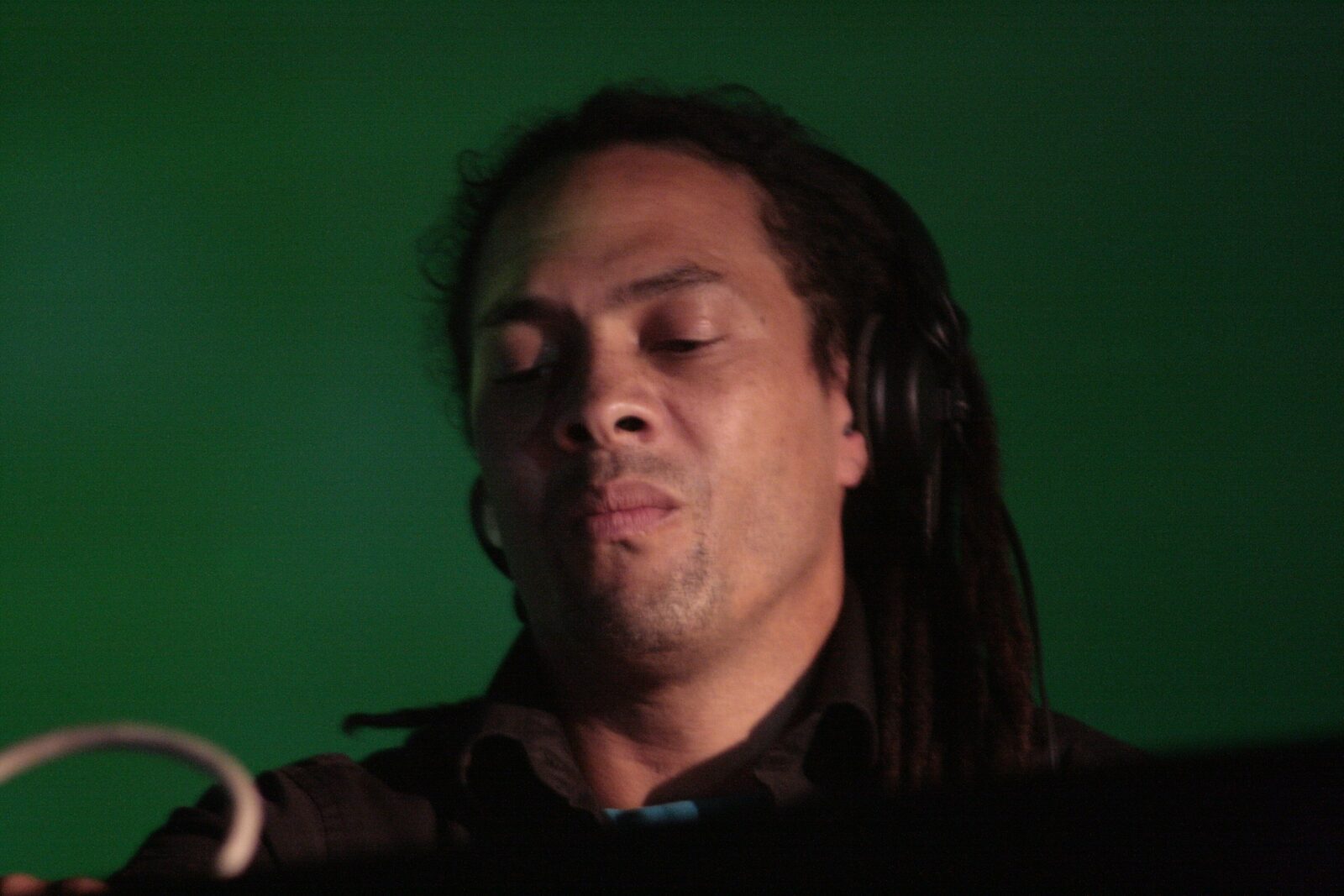
Roni Size was scheduled to play a one-off set on Thursday, October 15, 2026 inside the abandoned Cwmorthin slate mine in Eryri (Snowdonia), North Wales, at a chamber the organisers put 1,375 feet (about 419 metres) below ground. The event was run by Casio's G-SHOCK brand as the launch of its new MUDMAN GDG-B100 watch, and it was billed as the world's deepest underground rave. Entry was by ballot only, the ballot closed on October 9, 2026, and only "a handful" of places existed. Everyone else was promised the set via G-SHOCK Radio, with the full performance to follow on Mixcloud. As of October 16, 2026, we found no account of the night from G-SHOCK, Mixmag, MusicRadar, Nation.Cymru or Time Out, and one unbylined report from a lesser-known site, set out in the section below.
That is the headline. The more interesting questions sit underneath it: who is paying for a drum and bass rave in a Welsh mountain, what "deepest" actually means when the Guinness concert record sits at roughly 2,700 metres, and what a ballot-only party for a few fit strangers says about where rave culture is in 2026. We read the organiser's own page, the press coverage that preceded the event, and the sources on the mine, and we flag below everything we could not confirm.
What happened at the Roni Size mine rave?
There is no confirmed account of the night yet. The organiser's G-SHOCK UK page still reads as a pre-event announcement with no attendance figure, report or replay link, and the pre-event articles from Mixmag, Nation.Cymru, Yahoo News UK and London Post that we re-opened on October 16 carry no post-event update. Searches for MusicRadar and Time Out surfaced only their pre-event pieces. The only post-event report we found is Brit Brief, published on October 16, 2026, with no byline and no agency credit. Treat everything below as unconfirmed until G-SHOCK, Go Below or a major outlet publishes its own account.
| Question | What Brit Brief reports | Status |
|---|---|---|
| Did the set go ahead? | Yes, Roni Size played a one-off set in Cwmorthin | Single source |
| How many attended? | 39 people | Single source, no figure from the organiser |
| How did they get in? | A descent of about two hours via miners' stairways, flooded passages, abseils and zip lines | Matches the organiser's pre-event description |
| What was the set like? | It opened with the Welsh national anthem, with equipment carried in on people's backs | Single source |
| The sound experiment? | Transducers sent parts of the music into the slate and geophones and hydrophones recorded the response | Matches the pre-event description, not independently confirmed as carried out |
| Safety? | Attendees wore helmets, and Go Below guided the group and managed safety | Single source |
| World record? | Evidence is being submitted for independent verification, no ratification reported | Pending |
| Can I watch it? | The full set is said to be on G-SHOCK Radio's Mixcloud | We could not open the Mixcloud page to confirm |
Brit Brief's own framing is inconsistent. Its headline says Size "hosts" a world-record rave while its body says the record is pending, and it describes attendees as ballot winners in one place and the event as strictly ticketed in another. As of October 16, 2026, we found no official statement that the world record was granted or even formally submitted, no named record body, no attendance figure from the organiser and no incident report either way. We will update this article when G-SHOCK, Go Below or a major outlet publishes its own account.
What is the world's deepest rave with Roni Size?
It was a one-off "G-SHOCK Sessions with Roni Size" in a slate mine, with attendees due to reach the dancefloor by descending dark tunnels and waterlogged passages, crossing underground ravines, riding zip lines and abseiling down rock faces. That is the organiser's own wording on G-SHOCK's UK MUDMAN page, which gives the date as October 15, 2026, marked "AM + PM", and the venue as Cwmorthin Slate Mine, Eryri, North Wales.
MusicRadar and Mixmag both ran the story in the first week of October, and Mixmag cites a press release as its source. The music is only half the pitch. The other half is a "specialist sound experiment": vibration transducers were to drive parts of Size's set into the slate, while geophones and hydrophones recorded how the frequencies travel through rock, mud and water. That recorded response was then to be fed back into the live mix.
What are the verified details?
| Detail | What we can confirm | Source |
|---|---|---|
| Date | Thursday, October 15, 2026 (AM + PM listed) | G-SHOCK UK page, Time Out |
| Venue | Cwmorthin Slate Mine, Eryri (Snowdonia), North Wales | G-SHOCK UK page |
| Stated depth | 1,375 feet (about 419 m) below ground | G-SHOCK UK page |
| Organiser | G-SHOCK (Casio), launching the MUDMAN GDG-B100 | G-SHOCK UK page |
| Performer | Roni Size, one-off set | G-SHOCK UK page, MusicRadar |
| Entry | Free ballot via the G-SHOCK site, closed October 9, 2026 at 15:00 GMT | G-SHOCK UK page, Time Out |
| Capacity | "Only a handful of places" | G-SHOCK UK page |
| Guide | Go Below, the underground adventure operator | WeRaveYou, Secret GB |
| Broadcast | Planned: G-SHOCK Radio live via Starlink, full set on Mixcloud afterwards | WeRaveYou, Nation.Cymru |
| Record status | Planned submission for independent verification, no body named | WeRaveYou, Nation.Cymru |
| Attendance | Not published by the organiser; one unbylined report says 39 | Brit Brief (unconfirmed) |
The "free" detail comes from Time Out, which also describes the dancefloor as the deepest accessible point in the UK. The G-SHOCK page we read does not state a price, so treat "free" as reported rather than organiser-confirmed. The Go Below involvement, the Starlink link and the Mixcloud upload come from WeRaveYou, which dates its report October 7, 2026, and Nation.Cymru, which published on October 6, 2026. Both read like a shared press release, so they are one source, not two.
What could we not confirm?
Quite a lot, and it matters. No other performers are named in anything we read: the only other names in the MusicRadar piece are Fabio and Grooverider, and they are billed for a separate 2027 Bristol show. We found no published age, fitness or equipment criteria, only a statement that winners must meet them. We found no capacity figure beyond "a handful", no accessibility statement, no safety plan, no licensing details and no named record-keeping body. T3 and Time Out do not describe a formal record application at all, while Nation.Cymru says evidence will be submitted for "independent recognition" without saying to whom. Nation.Cymru's headline also says 1,400 feet while its body says 1,375, which looks like rounding. The organiser's figure is 1,375.
One more wrinkle: the G-SHOCK page lists "AM + PM" while the pre-event press coverage talked about a live broadcast "on the night". Underground there is no night, so it is possible the descent ran in sessions. Brit Brief's post-event report mentions a descent of about two hours but does not say whether there was more than one session. Nothing we read explains this, so we are not guessing.
Where is Cwmorthin, and why does a slate mine matter?
Cwmorthin is a former slate quarry and mine west of Tanygrisiau, near Blaenau Ffestiniog in Gwynedd. According to Wikipedia's entry on the quarry, the Casson family opened it in 1810, the Cwmorthin Slate Company formed in January 1861, and the neighbouring Oakeley quarry took it over around 1900. Oakeley closed in 1970, there was small-scale working in the 1980s and 1990s, and all work reportedly ceased in 1997. Sources disagree here: Sub Brit says it stopped working as a separate quarry around 1939 and was afterwards reached through Oakeley. Both can be true, because one describes the independent quarry and the other the wider working life of the mine.
The bigger context is the slate itself. The Slate Landscape of Northwest Wales became a UNESCO World Heritage Site in 2021, and Wikipedia records that Wales produced 92 percent of UK slate in 1882, that output peaked in 1898 at over half a million tons with about 17,000 men employed, and that the Oakeley mine at Blaenau Ffestiniog was the largest slate mine in the world. Blaenau's slate was worked underground rather than in open pits, and the parish population rose from 732 in 1801 to 11,274 in 1881. So the drop into the dark is not a stunt location pulled from nowhere. It is a working landscape that built a town, and this is one more use for the chambers its miners left behind.
The same mine already sells a different kind of descent. Go Below runs Deep Sleep, an overnight stay in cabins at 1,375 feet that Wikipedia describes as opening in April 2023, with guests given a helmet, light, harness and boots. That is the same depth figure the rave uses. We are not claiming it is the same chamber, only that the number is the operator's established selling point rather than a fresh measurement made for the party.
Who is Roni Size?
Roni Size, born Ryan Owen Granville Williams in Bristol on October 29, 1969, is one of the founding figures of drum and bass. According to Wikipedia, he was expelled from school at 16, went to house parties thrown by the Wild Bunch sound system and learned production in a basement project, and with Krust, DJ Suv and DJ Die he founded the Full Cycle label.
His breakthrough was Roni Size and Reprazent. The group made its live debut in April 1997 at Tribal Gathering, and its debut album New Forms came out on June 23, 1997 on Talkin' Loud. That record won the 1997 Mercury Prize. "Brown Paper Bag", with vocalist Onallee, was one of its singles. Later albums included In the Møde in 2000 and a solo record, Touching Down, in 2002. Reprazent were revived in 2008 with New Forms², and Wikipedia notes Coachella and Ultra appearances in 2009.
How he works matters to this story. In a 2018 Mixmag piece, which originally ran in the Guardian, he describes going to raves and recreating the parts he liked when building his own music. In MusicRadar's report he talks about "happy accidents" such as playing a track at the wrong speed, and says Bristol raves happened "down in tunnels" and on front lawns. Playing to the room is the point of his whole approach, so a room made of slate is at least consistent.
He is also not retiring into novelty gigs. MusicRadar reports that he has announced an outdoor show at Bristol's Lloyds Amphitheatre on June 25, 2027, marking thirty years of New Forms, with Fabio and Grooverider supporting. For more drum and bass context on this site, see our report on Noisia's reunion.
Is a rave underground a new idea?
No. Parties in caves, quarries and disused industrial buildings are as old as the rave itself, and what has changed is who foots the bill. Here is what we can source.
What were the Coniston cave raves?
The best documented British precedent is also a slate quarry. According to VICE's 2018 feature, Outhouse Promotions, later the "Cave Crew", threw parties in a cave at a remote slate quarry near Coniston in the Lake District from the late 1980s into the early 1990s. Organiser Dave "Steely D" Steel recalls them growing from about a dozen people to thousands, with house, acid, Belgian techno and Detroit records on the decks, and police roadblocks backing traffic up for miles. The Vane gallery's note on Matt Stokes adds that word of mouth drew crowds from across the UK in summer 1991, that the landowner had the cave entrances drilled for blasting as a last resort, and that the Cave Crew had disbanded by 1993 after equipment was confiscated.
The parallel is useful and the contrast sharp. In Coniston the cave was the venue and the police were the problem. In Cwmorthin the mine is the venue and a watch brand is the permission slip.
How deep have gigs actually gone?
Here "deepest" needs care, because it depends what is being measured. The Guinness record for the deepest underground concert has changed hands more than once, and the figures are not measured the same way.
| Event | Depth | Date | Notes |
|---|---|---|---|
| Turda salt mine, Romanian Eurovision heat | about 86 m | February 2018 | Not a rave, tourist salt mine (Euronews) |
| Shaft Bottom Boys, Creighton Mine, Sudbury | 1,893.8 m below sea level | March 7, 2020 | Guinness record at the time |
| Miners and Sons, Kidd Mine, Timmins | roughly 2,700 m (9,000 ft level) | November 15, 2024 | Current Guinness record per CBC |
| Roni Size, Cwmorthin | about 419 m below ground (organiser figure) | October 15, 2026 | "Deepest rave" claim, not independently verified |
The sources are Euronews, Guinness World Records and CBC. Note the Guinness figure is below sea level, while the Cwmorthin figure is described as below ground level, so the numbers are not strictly comparable. Even so, the order of magnitude is clear: the concert record is several times deeper than the Welsh mine. So "deepest rave" is a narrow category claim, not a depth record in the usual sense. We have not found any prior "deepest rave" record to beat, and the organisers have not named one.
What about other reused spaces?
Rave has always colonised buildings that were built for something else. The Pula fortress that first hosted Dimensions Festival was a mid-19th-century military site, and London's Printworks was a print works. Those venues were turned into clubs by promoters over years. What is different about Cwmorthin is the one-night, brand-built, broadcast-first format.
How do you get in, and is it safe?
The ballot closed on October 9, 2026 at 15:00 GMT, and the event has now passed, so there is nothing left to apply for. If you were not picked, the practical route is the replay, which was promised on Mixcloud. G-SHOCK's radio page links to the G-SHOCK Radio Mixcloud account, but we could not open that account to confirm the set has been posted, and we have not seen a dedicated link to it.
On safety, the facts are thin and we will not pad them. The route involves stairs, waterlogged passages, zip lines and abseils, and the organisers say winners must meet age, fitness, clothing and equipment requirements without publishing the detail. Go Below's own site lists its Hero Xtreme trip at ages 14 and over and claims experienced guides, though it does not describe qualifications. Secret GB points out that a 2023 report on Deep Sleep, a different trip, describes about 45 minutes of uphill walking and then roughly an hour underground, so this is not a casual door-to-dancefloor evening.
On law, the rave provisions of the Criminal Justice and Public Order Act 1994 were a response to the Castlemorton free festival of 1992, but section 63 as written covers gatherings on land in the open air of 20 or more people, with amplified music at night, so it is not the obvious framework for a managed underground event, and it exempts licensed activity under the Licensing Act 2003. What licence, if any, applies underground in Cwmorthin has not been published, and we are not offering a legal opinion. Our existing report on why the UK keeps losing its nightclubs explains how restrictive the UK's licensed-venue landscape has become, which is part of why a brand-run one-off in a mountain is attractive in the first place.
Accessibility is the clearest gap. We found no statement from the organisers on access for disabled people, and the route as described suggests it would be demanding for many. That should be said plainly, not buried.
What we make of it
This section is RTS.FM's own opinion, not reporting. Each point comes with the strongest argument against it.
-
It is a product launch first and a rave second. The G-SHOCK page frames the whole thing as the launch of the MUDMAN, and press reports say attendees get the watch before its wider release. The rave is the advertisement. That does not make it fake, but it explains the shape: tiny capacity, maximum spectacle, broadcast as the real deliverable. The counter: brand money is exactly what pays for the transducers, Starlink uplink and guides, and an artist like Size gets to try an acoustic experiment that no club would ever fund.
-
"Deepest" is the weakest part of the pitch and the least important. As the table above shows, the concert record is far deeper, and 1,375 feet is also the operator's long-standing figure for its hotel. The honest framing is "deep for a rave, in a mine the public can reach", which is still extraordinary. Leaning on a superlative that is unverified invites exactly this scrutiny. The counter: we found no earlier "deepest rave" claim to beat, so a category claim is a legitimate hook; organisers say they will submit it for independent verification, and until a body rules, scepticism is a courtesy, not an accusation.
-
The sound experiment is the one genuinely new idea. Pumping a drum and bass set into slate and feeding the rock's response back into the mix treats the mountain as an instrument, which fits the happy-accidents instinct Size describes. Bass-heavy music in a mountain of waterlogged passages is at least a sound worth hearing, and it ties to the wider trend we covered in why festivals now book hi-fi sound systems: sound as the headline act. The counter: as of October 16 we have not found a confirmed replay, so nobody outside the mountain can judge the result, and a live mix passed through geophones and a satellite link may end up as a good story and a mediocre listen.
-
Access and safety are the real conversation. Rave history is full of people turning up to unlikely places, from the Coniston cave to disused factories, and police stopping them. Here the state has been replaced by a ballot and a risk assessment, which is arguably safer, but also means a handful of fit winners are chosen by a brand. We would like to see capacity, accessibility and safety arrangements published, not implied. The counter: an experienced operator running a controlled descent is exactly how an underground party should be run, and publishing every safety detail for a handful of attendees may simply not have been a priority.
quick wins
- Roni Size's set in Cwmorthin slate mine, Eryri, North Wales, was scheduled for Thursday, October 15, 2026, at a chamber 1,375 feet down per the organisers.
- The event was run by G-SHOCK (Casio) to launch the MUDMAN GDG-B100 watch; the ballot closed on October 9, 2026 and only a handful of places existed.
- As of October 16, 2026, the only post-event report we found is an unbylined Brit Brief piece claiming 39 attendees and a descent of about two hours; the organiser has published no account.
- The set was to be broadcast on G-SHOCK Radio via Starlink, with the full performance promised on Mixcloud; we could not confirm the replay is live.
- "Deepest rave" is an unverified category claim, and no record has been confirmed; the Guinness concert record sits at roughly 2,700 metres in a Canadian mine.
- Size's next big date is Lloyds Amphitheatre, Bristol, on June 25, 2027, marking 30 years of New Forms, with Fabio and Grooverider supporting.
- Unconfirmed: attendance, other performers, price (reported free), accessibility, licensing, the replay and the record-keeping body.
Frequently Asked Questions
When was the Roni Size deepest rave?
It was scheduled for Thursday, October 15, 2026. The organiser's page listed the date as AM and PM, and did not explain whether that meant separate sessions.
What happened at the Roni Size mine rave?
The organiser has not published an account yet. One unbylined report from Brit Brief, published on October 16, 2026, says Roni Size played a one-off set after a descent of about two hours, that 39 people attended, and that the set opened with the Welsh national anthem. We could not confirm any of this from a second source.
Where was the rave in a Welsh mine?
It was inside the abandoned Cwmorthin slate mine in Eryri (Snowdonia), North Wales, near Blaenau Ffestiniog in Gwynedd. The mine is west of the village of Tanygrisiau.
How deep underground was the Snowdonia rave?
The organisers say 1,375 feet below ground, which is about 419 metres. One news site rounded this up to 1,400 feet in its headline, but the organiser figure is 1,375.
What was the Casio G-SHOCK underground mine rave?
It was a promotional event run by G-SHOCK, the watch brand of Casio, to launch its MUDMAN GDG-B100 watch. The Cwmorthin rave was billed as "G-SHOCK Sessions with Roni Size." Press reports name the adventure operator Go Below as the guide for the descent.
Can I still get Roni Size underground rave tickets?
No. Entry was by ballot on the G-SHOCK website, the ballot closed on October 9, 2026 at 15:00 GMT, and the event has now taken place. The organisers said only a handful of places were available. The next Roni Size date we found is Lloyds Amphitheatre, Bristol, on June 25, 2027.
How much did the Cwmorthin rave cost?
Time Out reported that it was free, with entry by ballot only. The organiser page we read does not state a price, so the free claim is reported rather than confirmed.
Can I still watch the set?
Possibly. G-SHOCK said the full performance would be put on Mixcloud after the event, and its radio page links to the G-SHOCK Radio Mixcloud account. As of October 16, 2026, we could not open that account to confirm the set is posted and have not seen a dedicated link.
Was the Roni Size mine rave a world record?
Not confirmed. The organisers planned to submit it for independent verification, and no recognising body has been named. Brit Brief says the evidence is being submitted and that no ratification has been reported. The Guinness record for the deepest underground concert is a separate and much deeper category.
Who else played at the Cwmorthin rave?
No other performers are named in the coverage or on the organiser page we read. Fabio and Grooverider are mentioned only as support for Roni Size's Bristol show on June 25, 2027.
Was the rave safe?
The organiser has not published a safety plan. Brit Brief reports that attendees wore helmets and that Go Below guided the group and managed safety, which we could not confirm elsewhere. Go Below lists its own trips with age limits and guides, but we found no incident report either way.
What was the sound experiment?
Vibration transducers sent parts of the set into the slate, while geophones and hydrophones recorded how the sound travels through rock, mud and water. The recorded response was then fed back into the live mix.