31 OCT 2026 · rts.fm editorial
Charlotte de Witte's Azadi EP Uses an AI Singer
Charlotte de Witte's Azadi EP, out 5 November, uses the AI singer NAVA and gives all proceeds to FEMENA. What is confirmed and why fans are split.
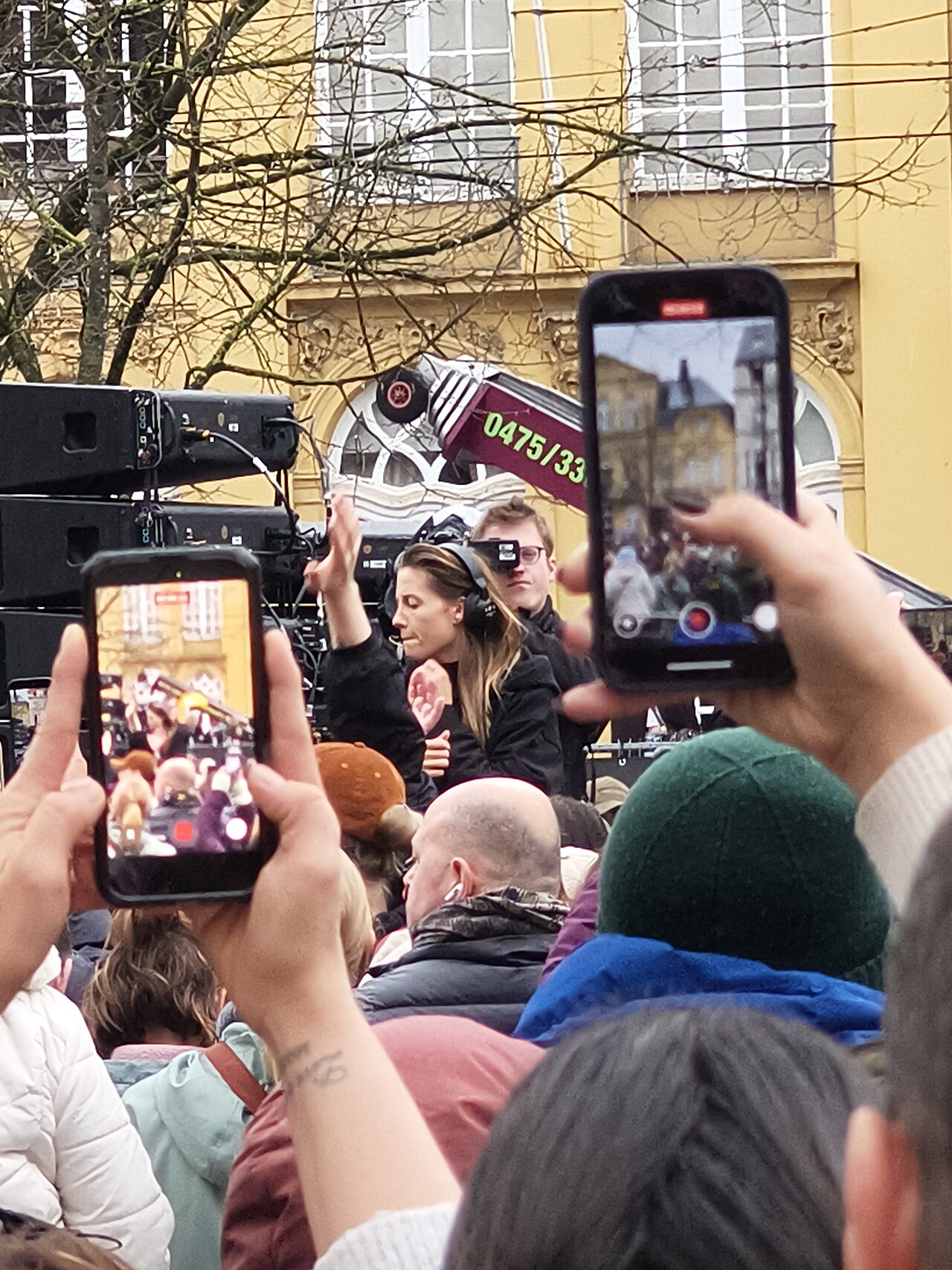
Charlotte de Witte will release a three-track EP on 5 November 2026 on her own label KNTXT, and every track features an artificial voice. The EP is called Azadi, Persian for freedom, and the singer is NAVA, an AI persona created by the London-based artist of Iranian origin Farbod Mehr. All proceeds, the release says, go to the women's rights organisation FEMENA. It is also, in the same week, the most argued-over techno release of the autumn, and almost everything about the argument rests on one fact nobody has published: how NAVA's voice was made.
This piece sets out what is confirmed, what the people involved have said, what critics and defenders have argued, and where the platforms' AI rules fit. We read the EP's Bandcamp page and the announcement coverage in the trade press, and we say where a claim rests on a single source or on a summary of a page we could not open. DJ Mag and EDM.com blocked our fetcher, so DJ Mag is known to us only through search summaries. This is a news report, not a review, because the music is not out yet.
The short version: Azadi has three tracks, "Azadi", "Omid" and "Tales of the Desert", each credited to Charlotte de Witte and NAVA. It is out digitally on 5 November, with a black 12-inch vinyl due around 11 December. NAVA is openly an AI persona and the press release says it represents Iranian women who are banned from performing in public. The critics' core question is why an artificial singer and not an Iranian woman. De Witte has not answered that publicly, we found no Iranian voices on the EP, and the tool, training data and consent behind NAVA's voice are undisclosed.
What is the Azadi EP?
Facts from the EP's Bandcamp page and the announcement coverage:
- Release: 5 November 2026 on KNTXT. The black 12-inch vinyl ships on or around 11 December. Bandcamp pre-orders were £4 for the digital album and £13.50 for the vinyl.
- Tracks: "Azadi", "Omid" and "Tales of the Desert", all marked "feat. NAVA". The Playground describes "Azadi" as an acid-driven opener that moves into NAVA's high vocals, "Omid" as bass-heavy with a Farsi spoken-word element, and "Tales of the Desert" as a melodic piece with long breakdowns.
- Credits: Bandcamp gives only the artists and the label. It names Farbod Mehr as NAVA's creator and lists no other writers, producers or vocalists.
- Teaser: Resident Advisor reports that de Witte posted a snippet of "Tales of the Desert" on Instagram on 20 October with AI-generated video of her and NAVA in a salt-flat landscape. The Playground adds that she previewed tracks in a surprise Tomorrowland main stage set this summer, a claim we found only there.
- Money: Bandcamp says all EP proceeds go to FEMENA, a feminist organisation supporting women human rights defenders in the SWANA region and Asia. No percentage, amount or mechanism, such as gross or net of fees, is stated anywhere we looked. A report by DJ Mag, seen in summary, says that her previous EP, The Resistance, in September 2026, also sent all proceeds to a charity, The Nighttime Foundation.
Who or what is NAVA?
NAVA is an AI-generated Persian singer that Farbod Mehr created in 2025. Bandcamp calls her an AI singer whose face is crafted from classical Iranian art. According to The National in March 2026, her face was built from Qajar-era portraits, the faces of Mehr's female Instagram followers and Iranian art imagery, and a video of her singing an early-twentieth-century patriotic poem, "Javanan-e Vatan", passed 13 million views despite an internet blackout in Iran. Resident Advisor, relayed by Techno Airlines, puts her Instagram following at about 775,000.
Two things are not in any source we read. First, how the voice was made: no model or tool is named, there is no word on training data, and nothing says whether any human singer or sample contributed. The National, EDMTunes and AI Musicpreneur all note the gap. Second, any statement from Mehr about the EP itself, because the quotes we found date from before its announcement.
What did Charlotte de Witte say?
According to the press text carried by The Playground, de Witte was introduced to NAVA by a mutual friend, and she frames the EP as a small act of resistance. The sentence doing the most work is "NAVA represents Iranian women banned from public performance." She also says, in the same text, that NAVA, unlike a human singer, cannot be arrested for using her voice, and that music can carry stories that might otherwise go unheard. We found no reply from her to the criticism.
What are critics and defenders saying?
The reaction is thin and mostly unnamed, so we describe it by source and not by person:
- EDMTunes (23 October) reports that techno fans in Instagram comments questioned an artificial vocalist against a human one, raising human creativity and the value of vocal performance. It also notes one commenter who defended NAVA as a way to bring silenced Iranian women and Persian culture to a global stage.
- AI Musicpreneur (24 October), an opinion piece, argues that the openness is defensible but asks whose voice NAVA is built from, since a voice trained on women who never agreed to it would undercut the EP's message.
- Time To House (25 October), an editorial, calls the project moving but notes that it ships without a paid human vocalist.
- Techno Airlines frames the split as critics asking why not a real Iranian woman against supporters who say an AI persona avoids the risk a singer inside Iran would face. It links the debate to the AFEM, the Association for Electronic Music, and its principles of consent, credit and compensation for AI, but we found no AFEM comment on this EP, so that link is the blog's own.
We searched Iranian diaspora outlets, including IranWire, Iran International and BBC Persian, and found no coverage of the EP and no Iranian women artists commenting on it. That absence is a limit of what we could find, and the loudest voices in the story are still outsiders.
Where do the platforms' AI rules stand?
Azadi is a test of rules written for a different problem. All the rules we track target AI output or a synthetic artist identity, and none has been applied to this release in public:
- Spotify added an AI Persona badge on 12 August 2026 for artists whose identity is synthetic, which it describes as being about the artist and not about how the music was made. We cover the rule in our report on the badge and IFPI fraud figures. No source says Spotify would badge NAVA.
- Bandcamp, where the EP is for sale, has banned music generated wholly or in substantial part by AI since January 2026, with human review of flags. The word "substantial" is a judgement call, as our six-month review of the ban explains, and Bandcamp has not commented on Azadi.
- Beatport, according to Mixmag Asia, said in August that it withholds fully or majority AI-generated tracks, while AI-assisted tracks are allowed and tagged. Whether a human-produced track with an AI voice counts as majority AI is unanswered.
- Deezer says AI is now more than half of the tracks uploaded each day and detects and demonetises it, as our look at Deezer's AI uploads details. That is a flood of anonymous uploads, which is a different thing from a credited, named collaboration.
The closest parallel on our site is the split over producers who use AI tools, in our piece on Todd Edwards sampling Suno. The distinction there, between AI in the workflow and an AI credited on the sleeve, is the one Azadi sharpens. For the opposite case, where AI tools only separate human recordings, see our guide to AI stem separation for DJs.
Why does this release matter for Charlotte de Witte?
De Witte is the Belgian producer from Ghent behind KNTXT, and she is at the top of the techno field this year: DJ Mag's 2026 Top 100 poll placed her at No. 6 overall, up from No. 9 the year before, and again named her the world's No. 1 techno DJ. Her profile and label story are on her artist page, and we have covered her One Mind EP with Amelie Lens and the history of women in Belgian techno. The AI debate also ran through ADE this month, as we reported in our ADE 2026 wrap-up. Our view, from the facts above: a charity EP with a transparent persona is a defensible idea, but the project asks listeners to accept an undisclosed voice for the sake of a cause, and the cheapest way to settle the argument would be for the credits to say how it was made.
What we could not confirm
- How NAVA's voice was made, and whether any human voice, consent or licence is involved.
- The charity mechanism: the EP says all proceeds, with no percentage or amount, and we could not open FEMENA's confirmation of the arrangement.
- Any reply from de Witte to the criticism, and any statement from Mehr about this EP.
- Iranian reactions: we found none. The "70 per cent of views from inside Iran" claim attributed to a Guardian interview is not in the sources we read, so we leave it out.
- The Tomorrowland preview, which we found in one outlet only.
- How Beatport, Bandcamp or Spotify would classify the EP.
- Tour dates, beyond a London show reported for 1 November, since we did not check her official site.
If you have first-hand knowledge or a correction, contact us through our about page.
quick wins
- Charlotte de Witte's Azadi EP is out on 5 November 2026 on KNTXT, with a black 12-inch vinyl around 11 December: three tracks, "Azadi", "Omid" and "Tales of the Desert", all featuring the AI vocalist NAVA.
- NAVA is an openly AI persona created in 2025 by the London-based artist of Iranian origin Farbod Mehr; how her voice was made is not disclosed.
- Bandcamp says all EP proceeds go to FEMENA, a women's rights organisation, but gives no percentage or mechanism.
- Critics ask why an AI singer and not an Iranian woman; de Witte says NAVA represents Iranian women banned from performing in public and has not answered the criticism.
- We found no Iranian women artists or diaspora outlets commenting on the EP, and no public platform ruling on it under Spotify, Bandcamp or Beatport AI rules.
- De Witte placed No. 6 in DJ Mag's 2026 Top 100, up from No. 9, and was named No. 1 techno DJ.
Frequently Asked Questions
What is Charlotte de Witte's Azadi EP?
A three-track EP, Azadi, due on 5 November 2026 on her label KNTXT. The tracks are "Azadi", "Omid" and "Tales of the Desert", each featuring the AI vocalist NAVA. A black 12-inch vinyl is due around 11 December.
What does Azadi mean?
Azadi is the Persian word for freedom. The EP is a project about Iranian women's right to be heard, according to de Witte's statement.
Who is NAVA?
NAVA is an AI-generated Persian singer created in 2025 by the London-based artist of Iranian origin Farbod Mehr. Her face draws on classical Iranian art, and de Witte says she represents Iranian women who are banned from performing in public. How the voice was produced has not been disclosed.
Where does the money from the Azadi EP go?
Bandcamp says all proceeds go to FEMENA, a feminist organisation supporting women human rights defenders in the SWANA region and Asia. The release gives no percentage and does not say whether the figure is before or after fees. De Witte's previous EP, The Resistance, also donated its proceeds, to The Nighttime Foundation, according to DJ Mag.
Why is the Azadi EP controversial?
Because the voice on every track is artificial. Fans and commentators ask why not a real Iranian woman, and whose voice an AI is built from. Supporters say an AI persona avoids the personal risk a singer inside Iran would face. We found no Iranian voices on the EP, and de Witte has not replied to the criticism.
Is the Azadi EP allowed on Spotify, Bandcamp and Beatport?
It is on Bandcamp, and no platform has publicly said how its AI rules apply. Spotify's AI Persona badge, Bandcamp's ban on music made wholly or substantially by AI and Beatport's policy on majority-AI tracks all depend on judgement calls that nobody has made in public for this release.
How high is Charlotte de Witte in the DJ Mag Top 100?
No. 6 overall in the 2026 poll, up from No. 9 in 2025, and the world's No. 1 techno DJ in the same poll, according to DJ Mag as reported by Techno Airlines and Bandwagon.
Sources
Main sources, by claim. Pages were read on 31 October 2026.
- The EP: Charlotte de Witte on Bandcamp, https://charlottedewittemusic.bandcamp.com/album/azadi-ep ; The Playground, 28 October 2026, https://theplayground.co.uk/charlotte-de-witte-announces-azadi-ep-featuring-ai-vocalist-nava-out-5-november-on-kntxt/ ; Resident Advisor, https://ra.co/news/86257 ; DJ Mag, https://djmag.com/news/charlotte-de-witte-announces-new-ep-azadi-featuring-ai-vocalist-nava (read in summary only)
- NAVA: The National, 16 March 2026, https://www.thenationalnews.com/news/uk/2026/03/16/iranians-embrace-ai-singer-navas-revolutionary-anthem
- Reaction: EDMTunes, 23 October 2026, https://www.edmtunes.com/2026/10/23/charlotte-de-witte-ai-vocalist-debate/ ; AI Musicpreneur, 24 October 2026, https://www.aimusicpreneur.com/ai-music-news/charlotte-de-witte-nava-ai-vocalist-azadi-ep-2026/ ; Time To House, 25 October 2026 ; Techno Airlines, https://www.technoairlines.com/blog/charlotte-de-witte-nava-azadi-ep-ai-singer ; AFEM AI principles, 11 July 2025, https://associationforelectronicmusic.org/2025/07/11/launch-of-the-afem-ai-principles/
- FEMENA: https://femena.net/about-us/
- Platform rules: Mixmag Asia on Beatport, https://mixmag.asia/read/beatport-bans-tracks-ai-assisted-fully-majority-news ; our own reporting linked above for Spotify, Bandcamp and Deezer
- Rankings: Techno Airlines, https://www.technoairlines.com/blog/dj-mag-top-100-djs-2026-results ; Bandwagon, https://www.bandwagon.asia/articles/david-guetta-tops-dj-mag-s-top-100-djs-2026-anyma-charlotte-de-witte-climb-rankings ; DJ Mag, https://djmag.com/news/charlotte-de-witte-voted-worlds-no-1-techno-dj-dj-mags-top-100-djs-poll-2026 (read in summary only)
- Previous EP: DJ Mag on The Resistance, https://djmag.com/news/charlotte-de-witte-donates-all-proceeds-resistance-ep-nightlife-advocacy-foundation (read in summary only)
- Photo: Joost Pauwels, CC0, https://commons.wikimedia.org/wiki/File:Charlotte_de_Witte_(2026).jpg
