16 OCT 2026 · rts.fm editorial
Belgian Techno: The DJs and Scene Behind the Sound
Belgian techno explained: new beat, R&S, Fuse and Tomorrowland, plus the women and men from Charlotte de Witte to Amelie Lens who carry the sound.
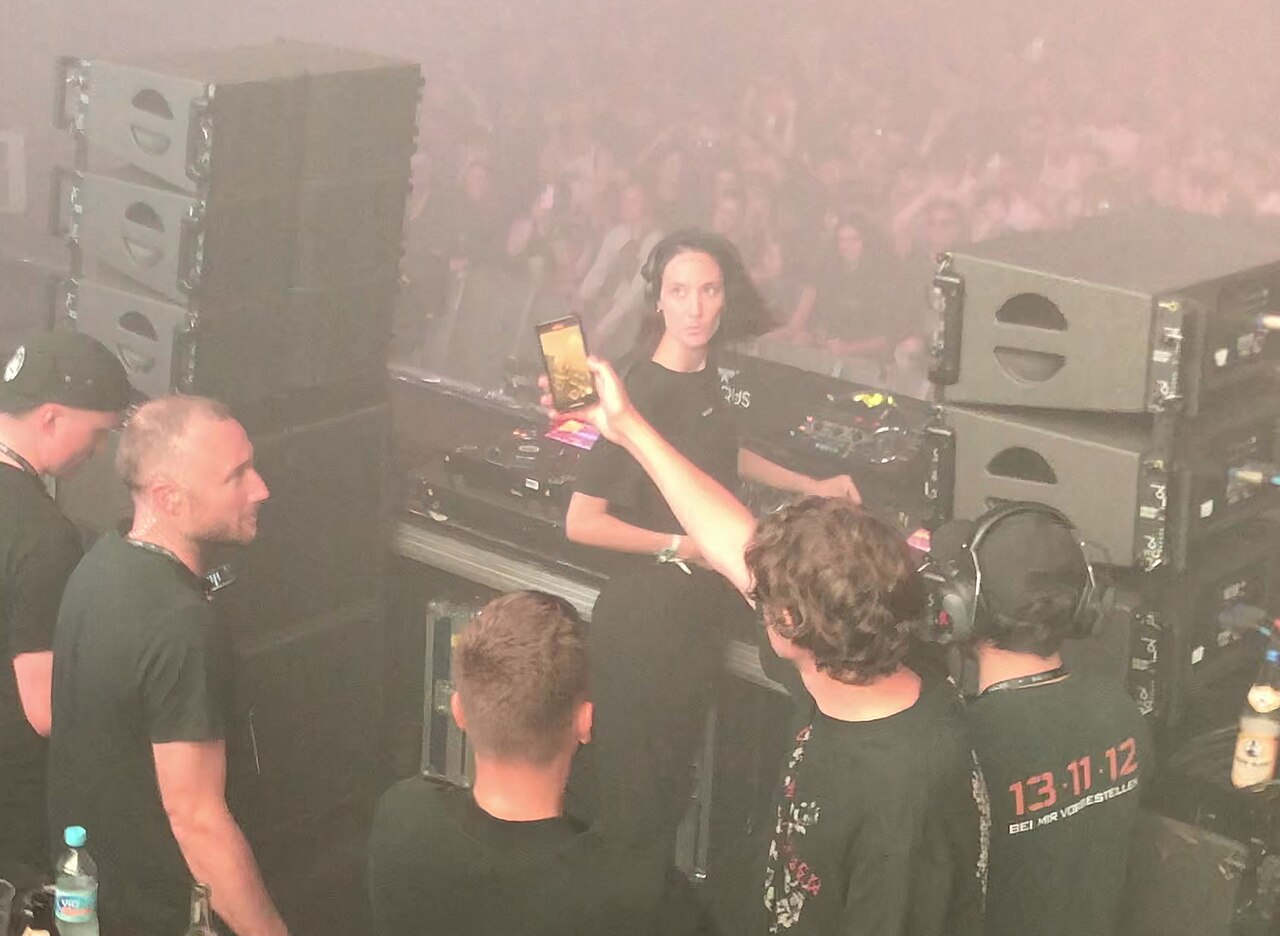
The best-known Belgian DJs working in techno today are two women from Flanders, Charlotte de Witte of Ghent and Amelie Lens of Antwerp, and they stand on a scene that has been exporting records, clubs and festival blueprints since the late 1980s. Belgium matters to techno because a small country with a handful of clubs and one very stubborn Ghent label turned a slowed-down club oddity called new beat into the hard, fast, orchestral rave sound that fed Dutch gabber, UK breakbeat hardcore, jungle and hard house.
This is the overview our readers keep searching for. It covers who the notable Belgian DJs and producers are, women and men, how the history runs from new beat to the current arena wave, which labels and rooms carried it, and where you can still hear it. We have checked each fact against the sources linked in the text, and where sources disagree we say so.
Who are the best-known Belgian female DJs?
Charlotte de Witte and Amelie Lens are the two names that dominate every search for a Belgian female DJ, and both have been at the top of techno's touring circuit for years. De Witte is from Ghent, runs the labels KNTXT and Époque, and rose to No. 6 in DJ Mag's Top 100 DJs poll announced on 6 October 2026, according to Bandwagon. Lens grew up in Antwerp, founded Lenske in 2018 and runs EXHALE, and her highest confirmed finish in the same poll is 30th, in 2023, per Wikipedia.
They are not the only Belgian women with credits, but the field is thinner than the listicles suggest. We searched for a verifiable third name in hard or peak-time techno and did not find one with the documentation we require, so the rest of our list leans on adjacent scenes. Anouk Matton, who plays as Mattn, is an Antwerp house and electro-house DJ who was listed in DJ Mag's Top 100 five times between 2018 and 2022, with a best placing of 42nd in 2020. Charlotte Adigéry, raised in Ghent, makes electronic-leaning experimental pop on the Deewee label with Bolis Pupul, including the 2022 album Topical Dancer. Further back, Nikkie Van Lierop was a lead vocalist, keyboardist and programmer in Lords of Acid, and Gray Area lists her among the 1990s Belgian techno producers.
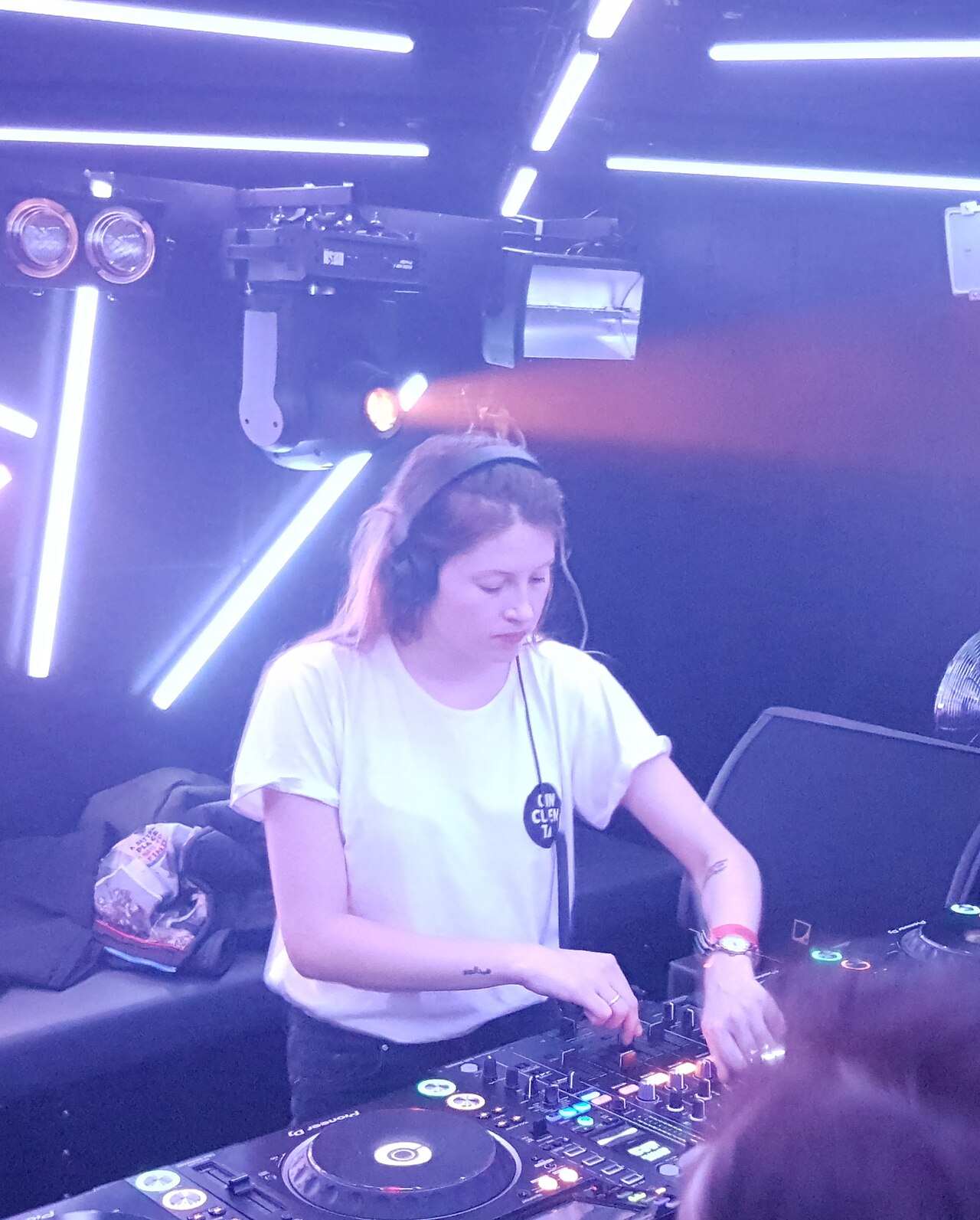
What are the origins of the two headliners?
De Witte began DJing in 2010, mostly playing electro, and won a Studio Brussel DJ contest in 2011 that led to a Tomorrowland slot, according to Wikipedia. She used the alias Raving George to counter bias against female DJs, dropped it in 2015, and released the Weltschmerz EP that year on Tiga's Turbo Recordings. Beatportal dates the launch of KNTXT to 2019 and says it was conceived as a safe space for other artists; her self-titled debut album followed in November 2025.
Lens built a residency at Labyrinth Club in Hasselt from 2013 and released her first track, "Exhale", in 2016 on Lyase Recordings, per Wikipedia. Our own profile of Amelie Lens adds that she first played as Renée, then covers the 2016 Let It Go EP on Second State Audio, the creation of Lenske in 2018 and her debut album AURA, which it dates to 4 September 2026 on EXHALE.
The two have been pitted against each other for years, a framing we reported them pushing back on, and in early 2025 they played three sold-out back-to-back nights at Flanders Expo in Ghent, which Rave Jungle reported as 69,000 tickets, alongside the One Mind EP. We unpack that run in our piece on One Mind.
Who are the other notable Belgian DJs and producers?
Belgium's catalogue is deeper than the current wave, and most of its pioneers were men working in new beat, acid and hardcore. The table below collects fourteen artists with documented credits, ordered roughly from the present back to the 1980s. Positions are from the sources linked in the last column.
| Artist | Base | Sound | Label or platform | Notable credit | Source |
|---|---|---|---|---|---|
| Charlotte de Witte | Ghent | Acid and minimal techno | KNTXT, Époque | DJ Mag Top 100: 74th in 2019, 6th in 2026 | Wikipedia, Bandwagon |
| Amelie Lens | Antwerp | Hard, acid-inflected techno | Lenske, EXHALE | DJ Mag Top 100: 30th in 2023 | Wikipedia |
| Mattn (Anouk Matton) | Antwerp | House, electro-house | Smash the House | DJ Mag Top 100 five times, best 42nd in 2020 | Wikipedia |
| Charlotte Adigéry | Ghent | Electronic-leaning experimental pop | Deewee | Topical Dancer (2022) with Bolis Pupul | Wikipedia |
| Soulwax / 2manydjs | Ghent | Rock, electronic, mashup DJ sets | Deewee | As Heard on Radio Soulwax Pt. 2 (2002); Deewee founded 2015 | Wikipedia |
| Dimitri Vegas & Like Mike | Willebroek | Big-room, festival EDM | Smash the House | DJ Mag No. 1 in 2015 and 2019; Tomorrowland resident DJs since 2010 | Wikipedia |
| Lost Frequencies | Brussels | Deep and tropical house | Found Frequencies, Sony | "Are You with Me" No. 1 in Belgium (2014); DJ Mag 22nd in 2023 | Wikipedia |
| Netsky | Antwerp | Drum and bass | Hospital Records, Helix | "Running Low" No. 1 in Belgium (2014); Sportpaleis headline (2017) | Wikipedia |
| Peter Van Hoesen | Born near Antwerp, later Brussels and Berlin | Abstract, bass-heavy techno | Time To Express (founded 2008) | Life Performance (2013, Tresor) | Wikipedia |
| Liza 'N' Eliaz | Born in Ostend, worked in Paris | Hardcore techno, speedcore | Atom Records and others | Jet Propulsion Mix (1993) | Wikipedia |
| Praga Khan (Maurice Engelen) | Born in Herselt | New beat, acid, techno | Lords of Acid, solo | "Injected with a Poison" (1992), No. 16 on the UK singles chart | Wikipedia |
| Lords of Acid | Antwerp | New beat, acid, electro-industrial | Various | "I Sit on Acid" (1988); Lust (1991) | Wikipedia |
| Technotronic (Jo Bogaert) | Aalst | New beat, house, pop | Various | "Pump Up the Jam" (1989), No. 2 in the US and UK | Wikipedia |
| Frank De Wulf | Belgium | New beat, acid, techno | Music Man, R&S | Acid Rock as Rhythm Device; Play (1994) on R&S | Wikipedia |
Two caveats. Liza 'N' Eliaz is described as Belgian on Wikipedia but built a career in the French free-party scene, so treat the label with some care. And Frank De Wulf's Wikipedia entry gives no year for Acid Rock, so we do not date it.
Why is Belgium so important to techno?
Belgium mattered because its 1980s club scene produced new beat, a slow and dark dance hybrid that gave local labels and producers a commercial engine, and when American house and Detroit techno arrived the same people sped it up. Wikipedia's entry on Belgian techno describes the result as an early form of hardcore techno at roughly 120 to 140 BPM, with orchestral stabs, sirens and menacing synths, and notes that its sounds were taken up by gabber, jungle, hard house and later hardstyle. The long reach is why the current hard techno boom, which we examine in our piece on its American rise, keeps pointing back to Belgian names.
Two structural factors stand out in the sources. First, labels grew out of local frustration: Wikipedia says R&S's founder wanted original tracks licensed rather than the poor covers circulating in Belgian commercial clubs. Second, clubs such as Boccaccio and Fuse and the Ghent festival I Love Techno built domestic audiences large enough to support scenes. A third factor is our own reading of the geography, not a finding from a source: Brussels, Ghent and Antwerp sit close together, which lets a night promoted in one city draw on the next.
What is new beat?
New beat is a Belgian dance genre of the late 1980s that mixed new wave, hi-NRG, EBM and hip hop scratching at deliberately slow tempos. Wikipedia says it began in Belgium in 1987 and was "accidentally invented" when DJ Dikke Ronny played A Split-Second's "Flesh" at 33 rpm with the pitch raised, though it places the club in Antwerp while Gray Area places it in Brussels and says the genre's origin is disputed between Brussels, Antwerp and Ghent. We cannot settle that, so we will not.
What the sources do agree on is the scale. The compilation New Beat Take 1 sold 40,000 copies in Belgium, and Technotronic's "Pump Up the Jam" reached No. 2 on both the US Hot 100 and the UK singles chart in 1989, per Wikipedia. Labels such as Antler and its Subway imprint, founded by Roland Beelen and Maurice Engelen, sat at the centre of it. The subgenres hard beat and skizzo followed in 1988 to 1990 and led directly into rave techno.
What happened at Boccaccio?
Boccaccio Life sat in Destelbergen near Ghent, and Belgique Insolite says it was renamed Boccaccio Life International after a 1986 renovation, drew crowds from across Europe on Sundays and claimed to be the first club in Europe to play acid house and new beat. Authorities ordered it closed in October 1993, citing drugs and disturbance to residents. The building reopened in 2001 as The Temple, which closed in 2010, and was reworked as Riva in 2013, with retro "Sound of B" parties still held there according to the same source. We did not verify whether Riva operates as a regular club today.
Which Belgian labels shaped techno?
R&S Records of Ghent is the label that did most to move Belgian techno onto the world stage. It was founded by Renaat Vandepapeliere and Sabine Maes, and its name is their initials. The founding year is disputed: Wikipedia and Attack Magazine give 1983, while Resident Advisor gives 1984, and our earlier study of how long independent labels last used 1983.
According to Attack Magazine, the label hit its stride in the late 1980s with new beat records, many produced by Vandepapeliere himself, then moved toward American house and techno as tempos rose. Resident Advisor says the early 1990s releases that defined the rave and ambient era included Energy Flash, Mentasm and Plastic Dreams. Joey Beltram, the American producer from Queens who made Energy Flash, is credited by Wikipedia with Mentasm in 1991 as Second Phase, though that page does not name the label. Attack Magazine says Aphex Twin debuted on R&S with "Didgeridoo", and RA says Selected Ambient Works 85-92 appeared on the ambient sister label Apollo. The label closed in 1997 or 2000 depending on the source, and relaunched around 2008 to 2009; Wikipedia says it relocated to London and signed James Blake, Blawan and Nicolas Jaar.
Belgium's other labels in the era include Music Man, Antler-Subway, Byte and Rave 55, all named in Wikipedia's Belgian techno entry. For a parallel story of a regional scene and the label that anchored it, compare Kompakt in Cologne.
The current wave built its own labels instead. De Witte's KNTXT began, in our profile's telling, as a Brussels club night in 2015 before becoming a label in 2019, and Beatportal reports that every release is pressed on vinyl, that a digital-only sub-label named RPM exists, and that Indira Paganotto, Acid Asian and Alignment have released through it. In January 2024 she added Époque, which Wikipedia describes as a platform for remixes of iconic Belgian tracks. Lens runs Lenske and EXHALE. In both cases a headliner owns the release pipeline instead of renting someone else's.
How did the current wave of Belgian techno happen?
The current wave came out of festival contests, club residencies and label launches between 2011 and 2019, then scaled up fast. De Witte's Tomorrowland-linked contest win in 2011 gave her an early stage, and Tomorrowland itself, which began in Boom in 2005 under brothers Manu and Michiel Beers, drew 400,000 people across two weekends in 2024. Lens built her sound in Hasselt clubs before moving onto festival stages.
The mechanics are simple and worth stating plainly. Belgian dance fans were trained by decades of large domestic events: I Love Techno started in 1995 at Vooruit in Ghent with about 700 people, moved to Flanders Expo, and peaked at tens of thousands before leaving Ghent for Montpellier after 2014. When de Witte and Lens later sold out Flanders Expo, they were filling the same halls that I Love Techno once did. The domestic audience was already there; the new generation gave it a reason to return.
The scale of the 2025 shows, 69,000 tickets across three nights, is the clearest sign that this has moved beyond clubs. For the American side of the story, see our hard techno feature, which credits Lens and de Witte among the artists who brought harder techno to a US audience.
Timeline: Belgian techno in dates
The table lists dated milestones from the sources above. Where sources disagree on a date, we give both.
| Date | Milestone | Source |
|---|---|---|
| 1983 or 1984 | R&S Records founded in Ghent by Renaat Vandepapeliere and Sabine Maes | Attack Magazine, Resident Advisor |
| 1986 | Boccaccio renovated and renamed Boccaccio Life International | Belgique Insolite |
| 1987 | New beat begins in Belgium | Wikipedia |
| 1988 | Lords of Acid's debut single "I Sit on Acid" | Wikipedia |
| September 1989 | Technotronic releases "Pump Up the Jam" | Wikipedia |
| October 1993 | Authorities order Boccaccio closed | Belgique Insolite |
| 1994 | Fuse opens in Brussels | Wikipedia |
| 1995 | I Love Techno starts at Vooruit in Ghent | Wikipedia |
| 2005 | First Tomorrowland in Boom | Wikipedia |
| 2008 to 2009 | R&S relaunches and revives Apollo | Wikipedia |
| 2011 | Charlotte de Witte wins a Studio Brussel DJ contest and plays Tomorrowland | Wikipedia |
| 2014 | Last I Love Techno in Ghent | Wikipedia |
| 2018 | Amelie Lens founds Lenske | Wikipedia |
| 2019 | KNTXT becomes a label | Beatportal |
| January 2023 | Brussels order forces Fuse to close; it reopens under restrictions in February | Mixmag |
| January 2024 | Époque launches | Wikipedia |
| 31 January to 8 February 2025 | Lens and de Witte play three Flanders Expo shows | Rave Jungle |
| 6 October 2026 | De Witte rises to No. 6 in DJ Mag's Top 100 | Bandwagon |
Where to hear Belgian techno?
The most reliable place in the capital is Fuse in Brussels, which opened in 1994 on Rue Blaes in the Marolles district after Thierry Coppens and Peter Decuypere turned the former Le Disque Rouge into a club, per Wikipedia. Its capacity is about 1,500 and it appeared in DJ Mag's top 100 clubs list from 2008 to 2014, peaking at 21st in 2010. Brussels ordered it to close in January 2023 over noise and opening hours, and Mixmag reported on 3 February 2023 that it could reopen under strict conditions for two years before having to move. As of 16 October 2026, Fuse's own site advertises a 2026/27 season with Maribou State and Cinthie that night, a 24HRS of Fuse event on 17 October, Marco Shuttle on 24 October and international residencies for Ben Klock and ÜBERKIKZ announced on 2 September 2026. We found no confirmation of a relocation, so check the club before travelling, and see our Europe club closures tracker for how other cities are handling the same pressure.
For scale, Flanders Expo in Ghent is where I Love Techno grew and where de Witte and Lens sold out in 2025, and Tomorrowland in Boom remains the country's biggest summer date; we did not retrieve the 2027 dates, so check the official site. Across the Dutch border, our guide to Awakenings covers the festival where KNTXT and EXHALE stages have appeared, per our artist profiles. And if you want the underground side without a ticket, RTS.FM streams underground house and techno around the clock at rts.fm.
What we make of it
This section is RTS.FM's own opinion, not reporting.
- The Belgian techno story is mostly one of infrastructure, not talent. Labels with pressing contracts, clubs with big floors and a festival market within an hour of each other did more to create de Witte and Lens than any single scene secret. The strongest counter-argument is that infrastructure follows success, and two exceptional individuals may explain more than a national system ever could.
- We should not retrofit a women's movement onto the history. The pioneers we can document are mostly men, with exceptions such as Nikkie Van Lierop, and the visibility of de Witte and Lens is recent. Treating them as heirs to a long female lineage would flatter the story. The strongest counter-argument is that the archive itself is male-skewed, and absence of documentation is not proof of absence of women.
- The arenas are the headline, but the scene's health is still decided in the clubs. Fuse's fight with Brussels regulators shows how a city can wear down the rooms that train audiences for Flanders Expo. The strongest counter-argument is that audiences who fill arena-sized halls do not need small clubs to exist, and the pipeline from room to arena may be a nostalgic assumption.
quick wins
- Charlotte de Witte (Ghent) and Amelie Lens (Antwerp) are the best-known Belgian female DJs in techno; de Witte rose to No. 6 in DJ Mag's Top 100 on 6 October 2026, per Bandwagon.
- Other Belgian women with credits include Mattn (Antwerp house), Charlotte Adigéry (Ghent) and Lords of Acid's Nikkie Van Lierop.
- New beat began in Belgium in 1987 and led to rave techno at roughly 120 to 140 BPM.
- R&S Records of Ghent (founded 1983 or 1984 depending on the source) is the label that took Belgian techno worldwide.
- Fuse in Brussels, open since 1994, advertises a 2026/27 season at fuse.be after its 2023 closure scare.
- Start with Charlotte de Witte, Amelie Lens and their One Mind EP.
Frequently Asked Questions
Who are the best Belgian female DJs?
The best-known are Charlotte de Witte from Ghent and Amelie Lens from Antwerp, both techno headliners with their own labels. Other Belgian women with documented credits include Mattn, an Antwerp house DJ listed five times in DJ Mag's Top 100 between 2018 and 2022, and Charlotte Adigéry, a Ghent-raised electronic and pop artist on the Deewee label.
Is Charlotte de Witte Belgian?
Yes. Charlotte de Witte was born in Ghent, Belgium, and rose to No. 6 in DJ Mag's Top 100 DJs poll announced on 6 October 2026. She runs the labels KNTXT and Époque.
Is Amelie Lens Belgian?
Yes. Amelie Lens was born in Vilvoorde, Belgium, grew up mainly in Antwerp and is based there. She founded the label Lenske in 2018 and also runs EXHALE.
What is Belgian techno?
Belgian techno, also called rave techno or Belgian hardcore techno, is an early 1990s style that grew out of new beat. It typically runs at about 120 to 140 BPM, with orchestral stabs, sirens and menacing synths, and it influenced gabber, jungle and hard house. The term is also used more loosely today for the Belgian-led hard and acid techno scene.
What is new beat?
New beat is a Belgian dance genre of the late 1980s that blended new wave, hi-NRG, EBM and hip hop scratching at slow tempos. It began in 1987 and is credited with leading to Belgian rave techno. Technotronic's "Pump Up the Jam" reached No. 2 in the US and UK in 1989.
Who founded R&S Records?
R&S Records was founded in Ghent by Renaat Vandepapeliere and Sabine Maes, whose initials give the label its name. Sources give the founding year as either 1983 or 1984. The label released Energy Flash, Mentasm and Plastic Dreams, and it relaunched around 2008 to 2009.
Who is Isabelle de Witte?
We could not find a DJ or producer named Isabelle de Witte in any source we opened. The Belgian techno artist people usually mean with this surname is Charlotte de Witte, so searches for Isabelle de Witte most likely refer to her.
Are there other Belgian female DJs besides Charlotte de Witte and Amelie Lens?
Yes, though fewer are documented in the techno specifically. Mattn plays house and electro-house, Charlotte Adigéry makes electronic-leaning pop, and Nikkie Van Lierop was a vocalist, keyboardist and programmer in Lords of Acid in the early 1990s. We did not find a third Belgian woman in hard techno with enough verifiable credits to list.
Is Fuse in Brussels still open?
Yes, as of 16 October 2026 Fuse advertises a 2026/27 season on its website, with listings on Fridays and Saturdays at Rue Blaes 208. It was ordered to close in January 2023 over noise and hours, then allowed to reopen under strict conditions for two years before a required move. We found no confirmation of a relocation.
What are KNTXT and Lenske?
KNTXT is Charlotte de Witte's label, launched in 2019, and Lenske is Amelie Lens's label, founded in 2018. Both release techno from other artists as well as their own. De Witte also runs Époque, and Lens runs EXHALE.