20 OCT 2026 · rts.fm editorial
Digbeth Clubs vs the Midlands Rail Hub: What Is at Stake
Five Birmingham venues say the £1.75bn Midlands Rail Hub could displace over 50 Digbeth businesses. What is proposed, what is disputed and what comes next.
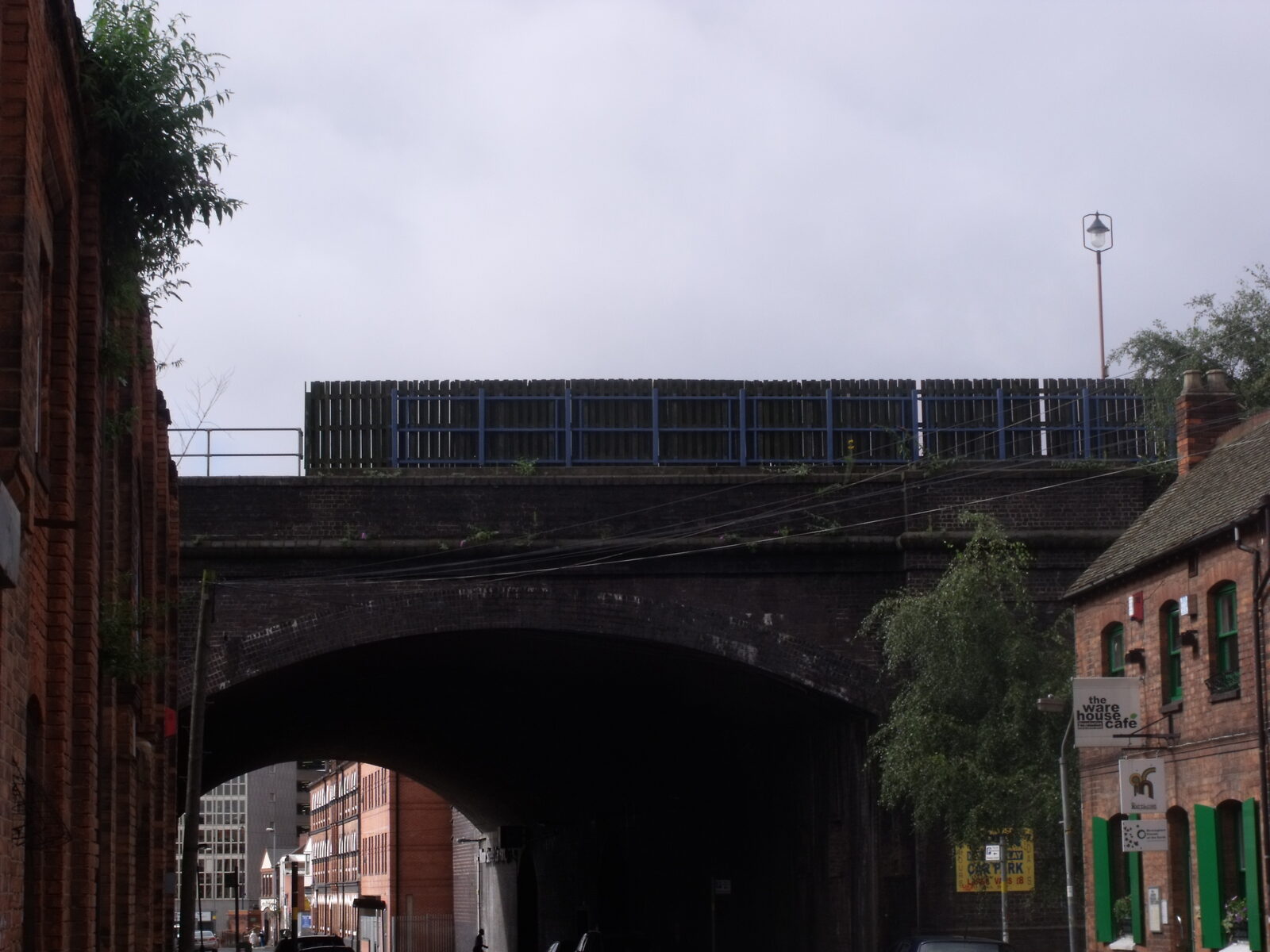
On Sunday 11 October, hundreds of people filled Lower Trinity Street in Birmingham's Digbeth for the Save Digbeth Block Party, two stages inside the clubs and one on the street, with a fire truck parked outside to make the point. The party was a protest. Five independent venues, XOYO Birmingham, Club Colette, Mama Roux's, Luna Springs and The Night Owl, had formed the Digbeth Music Venues Alliance days earlier, and they say Network Rail's £1.75 billion Midlands Rail Hub could demolish or displace more than 50 independent businesses around Lower Trinity Street and the Bordesley Viaduct.
Most coverage so far has repeated that headline. We read the primary material behind it instead: the venues' own press release, the rail partnership's statement, and two consultation responses from groups that back the railway but object to its footprint. This article sets out what is proposed, who is claiming what, which numbers are disputed and what has not been answered yet. Everything below is attributed. We have not seen the engineering drawings and we have not been to the site for this piece.
What is actually proposed?
The Midlands Rail Hub is a £1.75 billion programme to add capacity into central Birmingham. The part that matters in Digbeth is the Bordesley Chords: new railway sections and new platforms between Bordesley and Birmingham Moor Street, which would mean widening sections of the Bordesley Viaduct that runs through the district. Time Out reported on 7 August that businesses under and beside the arches say their premises would have to be demolished for the viaduct to widen. Network Rail says the wider project could eventually deliver up to 300 additional services a day into or out of Birmingham, according to Skiddle's report.
The scheme is run by the Midlands Rail Hub Alliance, which Reach's regional titles describe as five firms: AtkinsRéalis, Laing O'Rourke, Network Rail, Siemens Mobility and VolkerRail, working with Midlands Connect, the West Midlands Rail Executive and the Department for Transport. It needs a Transport and Works Act Order (TWAO), the legal consent required for building railways, tramways and busways in England and Wales.
What is the timeline?
| Step | What is reported | Source |
|---|---|---|
| First public consultation | Closed on 28 August 2026, with more than 3,500 responses | Resident Advisor |
| Next consultation | Expected in summer 2027, on "more refined and detailed proposals" | Rail partnership statement, via Reach |
| Formal approval sought | 2028 | Skiddle |
| TWAO result | Not expected until summer 2029 | Reach |
| Construction | Potentially from 2030 | Skiddle, Reach |
Skiddle stresses that the proposals are not final, and the partnership itself describes this as a first round. Nothing in these sources says a demolition has been approved. What the venues are objecting to is the current footprint, ahead of the 2027 round.
Who is saying what?
| Claim | Who says it | What backs it |
|---|---|---|
| More than 50 independent businesses could be demolished or displaced | Digbeth Music Venues Alliance | Its press release of 5 October. We found no official count published by the rail partnership |
| Venues have been offered no relocation support, guaranteed compensation or clear timeline | The same alliance | Same press release. The partnership has not addressed compensation in the statements we found |
| "Dozens" of businesses at risk | Time Out | The article's own wording, not a counted figure |
| The Warehouse on Allison Street would be lost under current plans | Better Streets for Birmingham, Birmingham Friends of the Earth | Better Streets' consultation response |
| The partnership says it is "committed to working with those who may be affected" | Midlands Rail Hub Alliance | Its statement |
| The partnership will not go back to the drawing board on a 15-metre viaduct extension | Karen Leach, Birmingham Friends of the Earth | Birmingham Now. The partnership told the paper it has carefully considered feedback |
The numbers deserve care. "More than 50" comes from the venues' alliance and appears word for word in the press release, in Resident Advisor and in several regional outlets, which is one claim repeated, not several sources confirming it. Time Out's "dozens" is consistent but not the same number. The detail that would settle it, a list of which properties fall inside the proposed land take, is not in anything we have read.
The part the music press has missed: the railway lobby has objections too
The story is usually told as clubs against trains. The consultation responses show something more complicated.
Railfuture's West Midlands branch, an independent rail-user group, filed a 37-page response that opens by saying it strongly supports the scheme. It then asks the promoter to justify the structural width required along the route and to minimise permanent and temporary land take, particularly where demolition is proposed. It argues that fewer, longer steel spans could take less land than many shorter concrete ones, while keeping the six running lines the capacity depends on. It also proposes moving some stairs and lifts onto a site already cleared, to reduce land take at what it calls a particularly sensitive location for the community.
Better Streets for Birmingham is also very supportive of the project, but has serious concerns about the footprint of the additional viaduct and its access roads. Its response says much of the loss of adjacent properties, The Warehouse in particular, could be avoided through engineering solutions. Where it cannot, it wants relocation worked out with the affected businesses, possibly underneath the new infrastructure, and compensation only if nothing else is possible.
Birmingham Friends of the Earth, which owns The Warehouse, goes further. Chief executive Karen Leach told Birmingham Now that the East and West Chords could be separated and delivered without demolition. That is her organisation's claim. We have not seen an engineering assessment that tests it, and the rail partnership has not published one in response in anything we found.
None of this proves the viaduct can be narrower. It shows that people who want the railway built are asking for the same land-take justification the venues are asking for.
What the venues and campaigners want
The alliance says it is "not against progress", but against "progress that treats culture as collateral damage", and that the venues "cannot be demolished without something equivalent in place". Save Our Scene, the campaign group behind the block party, says it has facilitated more than 4,000 emails to Birmingham MP Shabana Mahmood. Its founder, George Fleming, wants Network Rail to go back to the drawing board before the summer 2027 consultation and has urged the housing ministry (MHCLG) to call in the plans and check whether the Agent of Change principle is being delivered in Digbeth. Agent of Change is the planning principle that puts the burden of mitigating noise on the newcomer, not on the existing venue, and the campaign's point is that it should apply when the new development is a railway.
DJ Low Steppa, who started out in Digbeth, put the stakes in his own words ahead of the party: scenes like this "take years to build but can disappear in a few planning decisions".
What has not been answered
- How many businesses, exactly. The only count is the venues'. No official list of affected properties has appeared in the coverage we found.
- What compensation looks like. The rail partnership says it is committed to working with affected landowners, businesses and tenants. The venues say they have been offered nothing yet. The two statements describe different stages and may both be accurate.
- Whether the chords can be built separately. Friends of the Earth says yes. The partnership has not published an answer we could find.
- Birmingham City Council's position. We did not find a published council statement on the Bordesley Chords.
- Whether late-night licences are protected. The venues' concern is not only buildings. A club that moves needs a new premises licence, which is a separate, contestable process. We found no rail partnership commitment on this.
Why this matters beyond Birmingham
Clubs close through licensing fights, rent, redevelopment and falling attendance. Digbeth is a case of infrastructure. We have covered the money side in our look at why people go out less and the regulatory side in our piece on UK nightclub closures and licensing reform, and the European club closures tracker shows how often the cause is a landlord or a development plan rather than the club itself. London's licensing machinery is the subject of the REMEL report. What Digbeth adds is a state-backed project with a multi-year timeline, where venues have until summer 2027 to shape the next round.
For anyone in the scene who wants to act: the first consultation is closed, the next one has not opened, and the campaign's route for now is writing to the MP through Save Our Scene.
quick wins
- Five venues formed the Digbeth Music Venues Alliance and held a protest block party on 11 October 2026 against the Bordesley Chords part of the £1.75bn Midlands Rail Hub.
- The alliance claims more than 50 independent businesses could be demolished or displaced. That figure comes from the venues, and we found no official count.
- The first consultation closed on 28 August 2026 with over 3,500 responses. The next is expected in summer 2027, a formal application in 2028, a decision not before summer 2029 and construction from 2030.
- Railfuture and Better Streets for Birmingham both support the railway but ask the promoter to justify the width and land take. Friends of the Earth says the chords can be separated without demolition, which is unverified.
- Not found: a published list of affected properties, a compensation offer, or a Birmingham City Council statement.
Frequently Asked Questions
What is the Midlands Rail Hub?
A £1.75 billion rail programme run by the Midlands Rail Hub Alliance, a partnership of AtkinsRéalis, Laing O'Rourke, Network Rail, Siemens Mobility and VolkerRail, to increase train capacity into central Birmingham. The Digbeth controversy concerns the Bordesley Chords, which would widen sections of the Bordesley Viaduct and add platforms at Moor Street.
Which Digbeth venues could be affected?
The Digbeth Music Venues Alliance is made up of XOYO Birmingham, Club Colette, Mama Roux's, Luna Springs and The Night Owl. The Warehouse on Allison Street, which is owned by Birmingham Friends of the Earth, is also named as under threat. Time Out also names Original Patty Men among the affected businesses.
How many businesses are at risk?
The Digbeth Music Venues Alliance says more than 50 independent businesses could be demolished or displaced. Time Out says "dozens". We found no official count from the rail partnership.
Is demolition confirmed?
No. The proposals are at an early stage. The first consultation has closed, a more detailed proposal is due in 2027, and the legal consent process is not expected to finish before summer 2029.
When will construction start?
Construction is not expected before 2030, according to the rail partnership's timeline as reported by Reach and Skiddle.
Are the venues against the railway?
The alliance says it is not against progress or improved rail infrastructure. Its objection is to demolition without relocation support, compensation or a replacement. Railfuture and Better Streets for Birmingham both support the scheme while asking for a smaller footprint.
Can I still respond to the consultation?
The first consultation closed on 28 August 2026. The next is expected in summer 2027. In the meantime, Save Our Scene is asking supporters to write to their MP through its website.