09 OCT 2026 · rts.fm editorial
Teenage Engineering to Stop Making Synths: What It Means
Teenage Engineering's CEO says the OP-1 maker plans to stop making synthesizers. Here's what was said, what wasn't, and how the company got here.
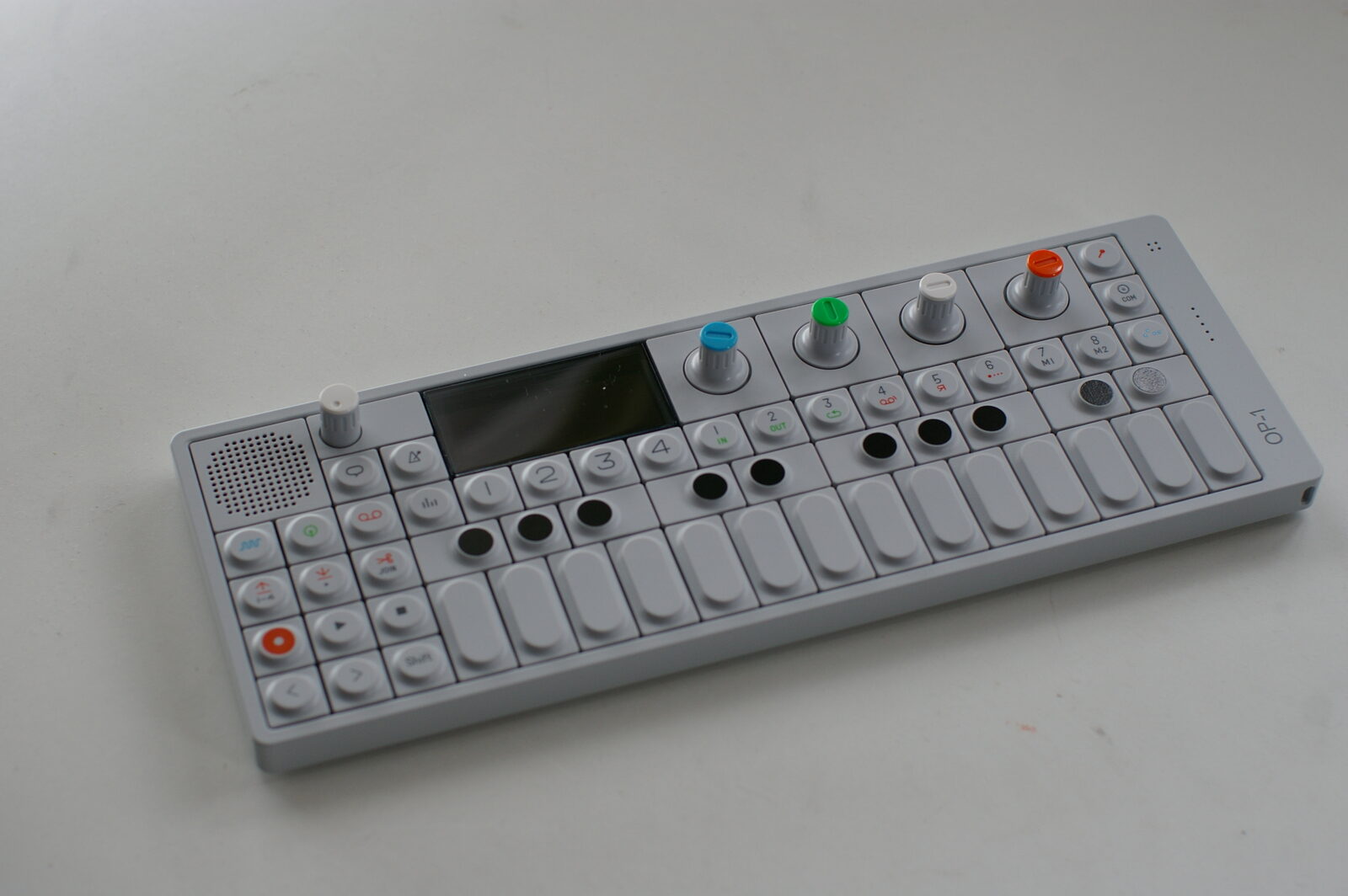
Teenage Engineering, the Stockholm company behind the OP-1, plans to stop making synthesizers, according to founder and CEO Jesper Kouthoofd. He told Highsnobiety that he informed staff of the decision during a reorganisation last autumn, and that the plan includes the OP-1 itself. No end date, product list or support policy has been published, and the company has not issued a separate statement beyond sharing the interview on its own channels.
Resident Advisor reported the news on October 8, 2026, the same day as Engadget and Gearnews. This piece sets out exactly what was said, separates it from what is still speculation, and traces the history that makes the news matter: how a small garage project in Stockholm became one of the most influential hardware brands in electronic music.
What Teenage Engineering actually said
The source is a single long-form interview with Kouthoofd, published by Highsnobiety. The key lines, as quoted across the coverage, are blunt. On how his team reacted: "Everyone was like, 'What are you talking about?'" On the reasoning: "the products aren't the business. We can be so much more than that." And on money: "We shouldn't make profits out of the products. The real value lies in the company as a whole."
Kouthoofd also said he no longer wants the company's ideas to end up as "obvious end products," such as yet another synthesizer. He described a future built around the company itself rather than any single category, and teased a project he says will "change our online life," adding that some of the work in progress will not ship for five to ten years.
What has not been said
This is where headlines have run ahead of the facts. The interview gives no date for the last synthesizer to leave the factory. It does not list which products are affected, though coverage names the original OP-1, the OP-XY and the Pocket Operator range among them. It says nothing about firmware updates, spare parts or repairs for machines people already own. Gearnews points out that this is, in its own words, "simply a statement from the company's founder in an interview," and that Teenage Engineering has historically kept updating its existing gear. Treat "stop making synths" as a stated intention with no schedule, not a closing-down notice.
The numbers behind the company
According to the interview coverage, Teenage Engineering now employs about 100 people and brings in roughly $46 million a year. That is a notable jump from the 55 employees Wikipedia recorded in 2019, and it helps explain the confidence of the pivot: this is not a rescue, it is a profitable company choosing a different direction.
A short history of Teenage Engineering
| Year | Milestone |
|---|---|
| 2005 | Teenage Engineering founded in Stockholm |
| 2009 to 2010 | OP-1 announced at Musikmesse Frankfurt, then shown as a prototype at NAMM 2010 |
| 2011 | OP-1 goes on sale |
| 2014 | OD-11 speaker ships, based on a 1974 Sonab design |
| 2015 | Pocket Operator series launches at NAMM, starting at $59 |
| 2016 | Impossible I-1 instant camera |
| 2018 | OP-Z synthesizer and sequencer; IKEA Frekvens collection |
| 2019 | Playdate handheld console announced, developed with Panic |
| 2021 | Design partnership with Nothing |
| 2022 | TX-6 mixer and OP-1 Field |
| 2023 | TP-7 field recorder and EP-133 K.O. II sampler |
| 2024 | Rabbit r1 co-design; OP-XY |
| 2025 | EP-40 Riddim sampler and EP-2350 Ting microphone |
| 2026 | CEO says the company plans to stop making synthesizers |
2005: Stockholm, and a games company
Teenage Engineering was founded in Stockholm in 2005. Three of the founders, Kouthoofd, Eriksson and Rudberg, had previously led a games company called Netbabyworld between 1999 and 2003, and were joined by David Möllerstedt, who had run the audio department at EA DICE. That mix, game developers plus audio engineers plus a design-minded boss, is visible in everything the company later made: instruments that feel more like handheld consoles than studio equipment.
The OP-1: a protest against the laptop
The OP-1 was the company's first real product and remains its defining one. It was announced at Musikmesse Frankfurt in 2009, shown at NAMM in 2010 and released in 2011, when the team had only nine engineers and developers. Kouthoofd has described it as a protest against making music on laptops, and Highsnobiety reports it was born in his garage. Its design drew on the Casio VL-Tone and Casio SK-1, and Kouthoofd's own summary of the philosophy was that "limitations are OP-1's biggest feature."
The result was a small, flat instrument with a tiny OLED display, a 24-key keyboard, four colour-coded macro knobs, a built-in sampler and an FM radio that could itself be sampled. Kouthoofd admitted to Highsnobiety that "the first version didn't even have an undo button." Critics noted its toy-like feel and lack of velocity sensitivity, but reviews were largely positive. It won a Swedish Design S Award in 2012, took second place in Georgia Tech's 2014 Guthman Musical Instrument Competition, and entered the permanent collection of the San Francisco Museum of Modern Art.
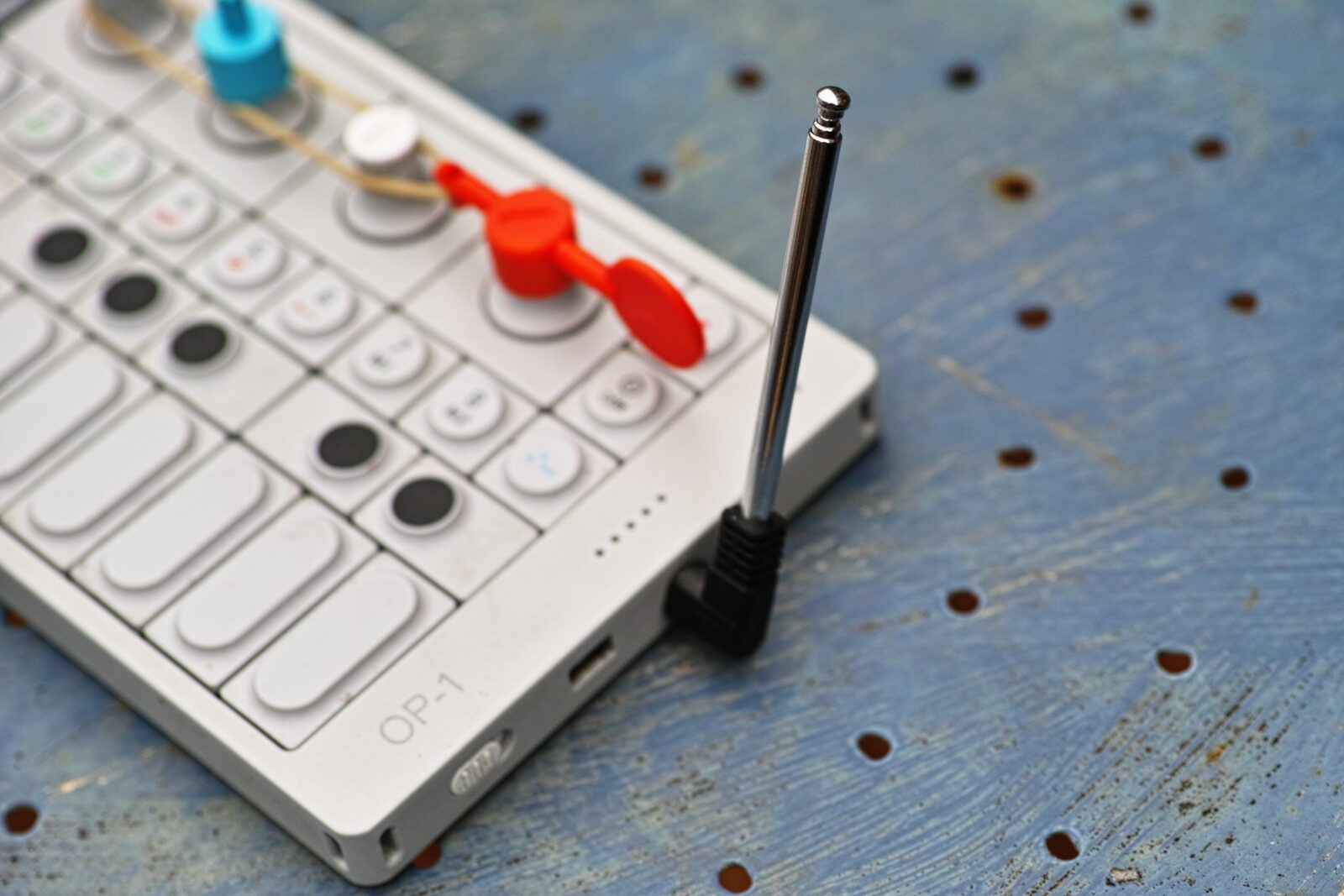
The OP-1 also taught the market a lesson about scarcity. In late 2018 it vanished from shops after Teenage Engineering ran out of its AMOLED screen stock, and rumours of permanent discontinuation pushed second-hand prices above the original retail price. When production resumed in February 2019, the price rose by about 35 percent. Users of the instrument over the years include Bon Iver's Justin Vernon, Beck, Depeche Mode, CHVRCHES and Jean-Michel Jarre, the same Jarre ADE has named official guest of honour for its 30th anniversary. Fifteen years on, Highsnobiety notes, the OP-1 is still among the most sought-after instruments on Reverb.
2015: the Pocket Operator and the $59 synth
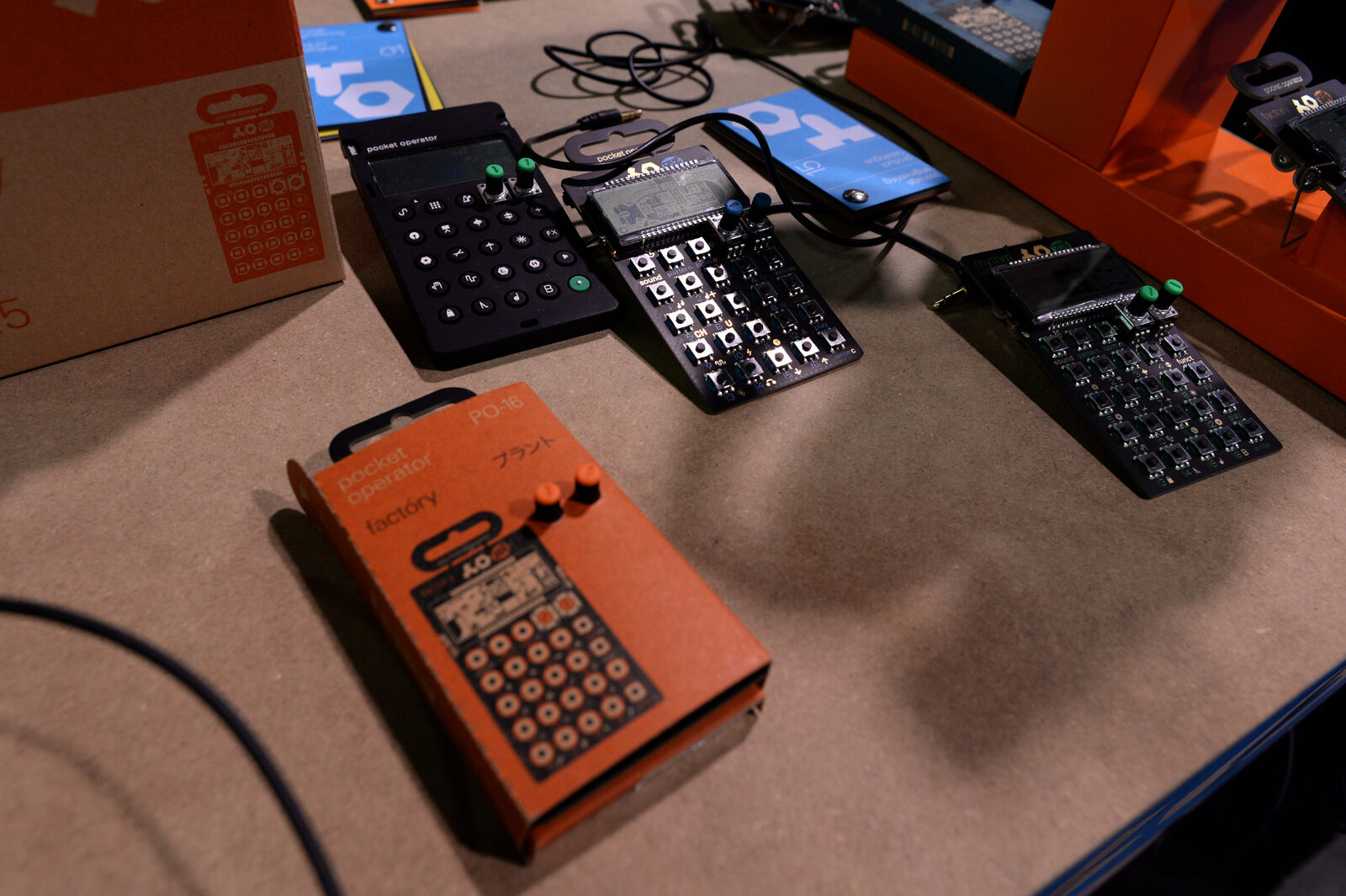
If the OP-1 built the reputation, the Pocket Operator built the audience. According to Teenage Engineering's own anniversary page, it began as a barter: in autumn 2013 the company asked Cheap Monday's then-designer Ann-Sofie Back to help it create "the cheapest synth ever made," in exchange for free lab clothes for the team. Two hundred screenless prototypes appeared at Moogfest 2014, and the PO-12 rhythm, PO-14 sub and PO-16 factory debuted at NAMM 2015 as a bare circuit board with an LCD and a handful of knobs.
The company aimed for $49 but the units launched at $59, with the range running up to $99. Third-party estimates put early demand as high as 40,000 units, enough to delay shipments by up to three months. Teenage Engineering now says the line has sold "just shy of a million units," a company figure rather than an audited one. The Pocket Operators brought a boutique brand to a far wider audience of beginner producers. The PO-20 series that followed in 2016 added effects, and the PO-30 series in late 2017 added a drum synthesizer built with MicroTonic, a sampler and a voice synth.
2016 to 2025: from synths to everything else
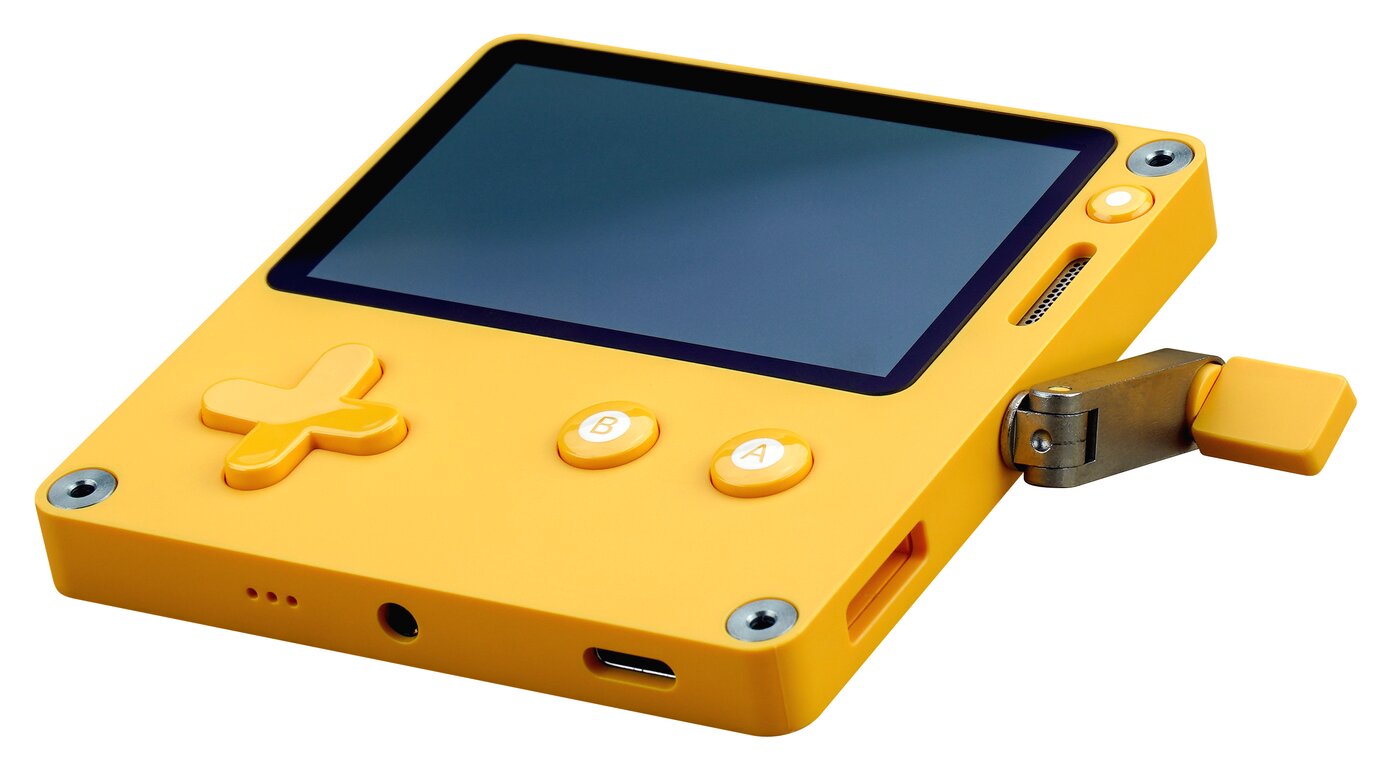
After the Pocket Operators, the catalogue widened fast and the line between instrument maker and design studio blurred. The Impossible I-1 instant camera arrived in 2016. IKEA's Frekvens audio and lighting collection followed in 2018, the same year as the OP-Z. In 2019 came the Playdate handheld, developed with the software company Panic, with a mechanical crank credited to Teenage Engineering. In February 2021 Nothing named the company its first founding partner to shape the brand's design language, and its engineers helped tune the ear (1) earbuds that launched that July. The Rabbit r1 pocket AI assistant, co-designed with Rabbit Inc, followed in January 2024.
Meanwhile the music side kept growing: the TX-6 mixer and OP-1 Field in 2022, the TP-7 field recorder and EP-133 K.O. II sampler in 2023, the OP-XY in November 2024 and the EP-40 Riddim sampler in November 2025. The OP-1 Field is listed at $1,999 and the OP-XY at $2,299 by US retailer Perfect Circuit, while the EP-133 sits at $329 on Teenage Engineering's own site, a spread that shows how far the brand moved from the $59 Pocket Operator.
Why Teenage Engineering's influence goes beyond synths
It is easy to read this story as a gear story. It is more accurately a design story. Teenage Engineering made a case that an instrument could be a piece of industrial design, a collectible and a conversation piece, and then exported that case to other industries. A designer at the company, Yi-ying Hsieh, told Highsnobiety that rivals build faster horses while Kouthoofd tries to build the car, and that the company is, in effect, "Jesper doing what he wants to do." Kouthoofd himself says he decides which prototypes reach the market even when his team predicts they will not sell.
That approach produced a sampler with Supreme and a DJ deck designed for Virgil Abloh, according to the same interview, and it also produced some famously strange commercial experiments. In June 2025 the company put a "Set your own price" slider on its site for the OP-1 Field, running from $1,399 to $9,999, describing it as "a delicate experiment" in how customers think and act. For a brand whose gear users often criticise as expensive, that is an unusually candid way to test the market.
For electronic music specifically, the influence is hard to overstate. The Pocket Operator made hardware sequencing and sampling cheap enough to be disposable, the OP-1 made it desirable enough to be a status object, and the shared visual language, bright knobs, pixel icons and minimalist enclosures, arguably set a template for how portable music hardware looks. A similar appetite for tactile, physical objects shows up in vinyl, which we covered in our look at record vinyl sales in 2025.
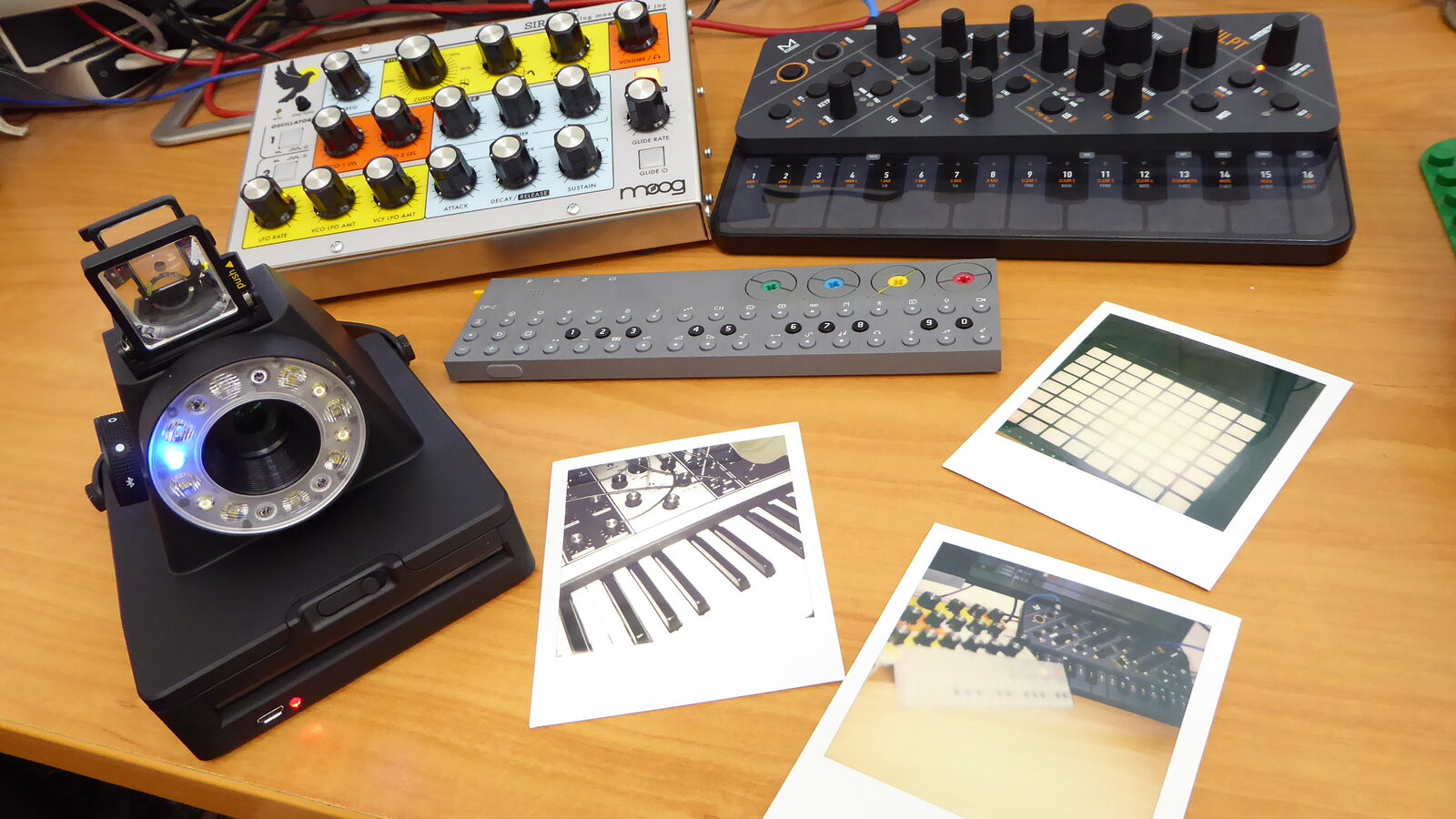
What the decision means for owners and producers
Nobody outside the company knows the timeline, so any prediction is inference. Still, history offers a precedent worth noting: the 2018 to 2019 OP-1 shortage showed how quickly rumours of discontinuation can push second-hand prices above retail. Gearnews guesses that prices of current gear may rise, and explicitly labels that as speculation, which is the right way to read it. Readers in its comments, including owners of the OP-1 Field and TX-6 and people about to buy an EP-133, were asking the practical questions: will service parts stay available, and will software support continue?
There is also an argument that the news is less dramatic than it sounds. Kouthoofd told Highsnobiety that most synth buyers do not use their machines as productive tools: "It's therapy. It's entertainment. It's a hobby." MusicRadar attributes a sharper version of that claim, 99 percent of buyers, to the interview. If that is the company's view of its own market, ending synth production is less a retreat than a statement about what the company thinks it is for. For working producers and DJs who rely on these machines on stage, nothing has changed yet.
The bigger picture
Teenage Engineering is signalling a move away from the thing that made it famous while, by its own reported numbers, the company is doing well, and it is doing so in a founder interview rather than a formal announcement. Whether that becomes a decisive pivot or a looser intention is not yet clear. What is certain is that the OP-1 and the Pocket Operator already changed what portable music hardware looks like, and that whichever way the company turns, its fingerprints are on far more than synthesizers. We will update this article when Teenage Engineering says more.
quick wins
- Teenage Engineering co-founder and CEO Jesper Kouthoofd told Highsnobiety the company plans to stop making synthesizers, including the OP-1, a decision he told staff about during a reorganisation in autumn 2025.
- No end date, product list or support policy has been announced, and the company has not issued a separate official statement beyond sharing the interview.
- The company employs about 100 people and earns roughly $46 million a year, per the interview coverage, up from 55 employees in 2019.
- The OP-1 launched in 2011 after a 2009 announcement and 2010 prototype; the Pocket Operator series launched at $59 in 2015 and, by the company's own count, has sold close to a million units.
- Teenage Engineering also designs for other companies, including Panic's Playdate, Nothing's ear (1) earbuds, IKEA's Frekvens range and the Rabbit r1.
- Kouthoofd said some upcoming projects will not ship for five to ten years, and described one as something that will "change our online life."
Frequently Asked Questions
Is Teenage Engineering really stopping production of synthesizers?
Founder and CEO Jesper Kouthoofd told Highsnobiety that the company plans to stop making synthesizers, including the OP-1. He gave no timeline and no list of products, and the company has not published a formal statement, so it is a stated plan rather than an announced shutdown.
Which Teenage Engineering products are affected?
Coverage names the original OP-1, the OP-XY and the Pocket Operator range, but the interview does not list products. Resident Advisor describes the company's music hardware as the OP-1, OP-1 Field, OP-XY, EP-133 and TP-7. Which devices end first, and whether samplers and recorders count as synthesizers, has not been clarified.
When will Teenage Engineering stop making synths?
No date has been given. Kouthoofd said he told his team about the plan during a reorganisation last autumn, but he did not say when the last synthesizer will be produced.
Will existing OP-1 and Pocket Operator owners still get support?
That has not been addressed. Gearnews notes that Teenage Engineering has a strong record of updating existing products, but the interview says nothing about firmware, repairs or spare parts for machines already sold.
Why is Teenage Engineering stopping synthesizer production?
Kouthoofd says the company's value lies in the business as a whole rather than in its products, and that he does not want ideas to become "obvious end products" such as another synthesizer. He also said most synth buyers treat their instruments as entertainment and a hobby rather than productive tools.
What else does Teenage Engineering make besides synths?
Beyond music hardware, the company has designed the Playdate handheld console with Panic, the ear (1) earbuds with Nothing, a collection for IKEA, the Impossible I-1 camera and the Rabbit r1 AI device, among other projects.
When did the OP-1 come out?
The OP-1 was announced in 2009, shown as a prototype at NAMM in 2010 and released in 2011. After a shortage in 2018, production resumed in February 2019 at a price about 35 percent higher.