12 OCT 2026 · rts.fm editorial
Ableton at 25: Independence, Hardware and Behles
Live turns 25 on October 30, 2026. What Gerhard Behles says about independence, why Ableton builds hardware, and how it differs from Teenage Engineering.
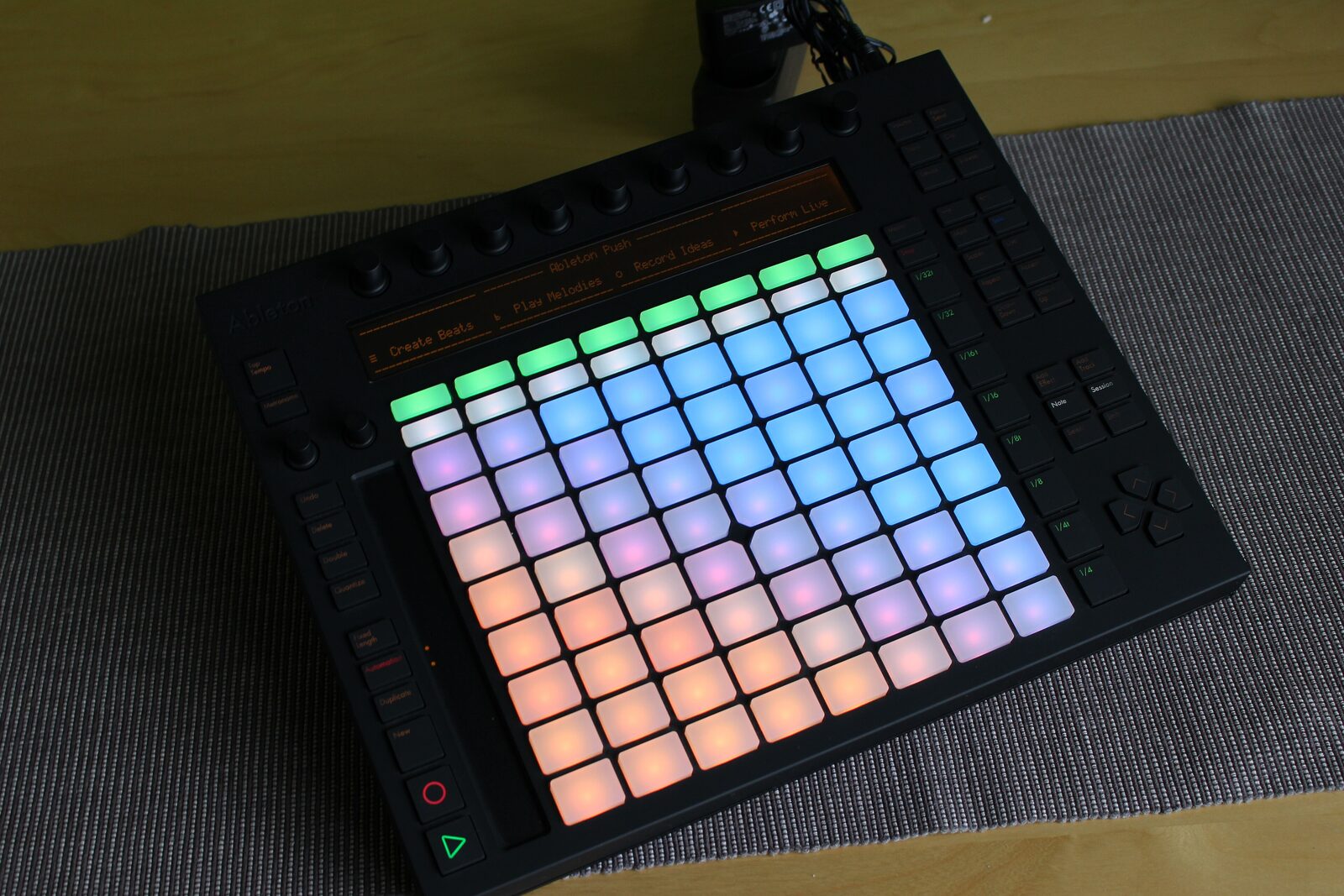
Ableton, the Berlin company behind the Live production software and the Push and Move hardware, was founded in 1999, making it 27 years old as of October 12, 2026, and Live itself turns 25 on October 30, 2026. Its independence matters now because, in the same month Teenage Engineering's CEO said his company plans to stop making synthesizers, Ableton's CEO told MusicTech that he wants the company to "own itself" while it keeps expanding into hardware. The 25-year count is based on Live 1.0, which MusicRadar dates to October 30, 2001.
This piece sets out what Ableton is, how it started, what is and is not documented about its ownership, and why its direction is a useful contrast to the news we covered in our report on Teenage Engineering and the end of synthesizers. Everything factual below is sourced and dated, and our own opinions are kept in a clearly labelled section near the end.
What is Ableton?
Ableton is a German music technology company headquartered in Berlin. Its best-known product is Ableton Live, a digital audio workstation (DAW) built around a clip-launching "Session View" as well as a traditional timeline. It also makes the Push pad controllers, the standalone Move groovebox, the Note app for phones and tablets, and, since 2017, owns Cycling '74, the maker of Max and Max for Live.
According to Ableton's own About page, the company was founded in 1999 and now employs more than 350 people from over 30 countries. Its Berlin office is on Schönhauser Allee in Prenzlauer Berg, and the contact page lists a second office in Pasadena, California.
Who founded Ableton, and where did Live come from?
Ableton's About page does not name the founders, so the origin story comes from press accounts. Wikipedia credits Gerhard Behles, Robert Henke and software engineer Bernd Roggendorf. MusicRadar, in a 20-year history of Live published on October 29, 2021, describes Behles as founding the company in 1999 with Roggendorf, and Henke as co-creator of Live. MusicTech's 2026 interview names Behles and Henke as the people who built the early software and Roggendorf as the third co-founder.
Behles and Henke were also Monolake, a minimal techno project that MusicRadar notes was signed to Chain Reaction, the label owned by Basic Channel's Moritz von Oswald and Mark Ernestus. They made music with self-built tools in the programming environment Max. Henke told MusicRadar the aim was "a system that allowed us to improvise with material on stage." The first version focused on audio loops, partly because Behles had written his master's thesis on time-stretching, according to Henke.
MusicRadar reports that between 1999 and 2001 the three-person team built Live 1, and that Ableton had a little under 20 employees around the launch. Early high-profile users included Sasha and Richie Hawtin. Behles also told MusicRadar that 1990s Berlin offered "always an audience" for illegal clubs in a city in flux after the wall came down, which is the scene Live grew out of.
A note on dates: MusicTech's 2026 interview says the brand "arose in 2001", while Ableton itself says 1999. The two are reconcilable. The company dates from 1999, and its first product reached the market in 2001.
When was Ableton Live released?
Live 1.0 was released on October 30, 2001, according to MusicRadar and Wikipedia. Ableton's own January 2002 press release confirms the month, stating that the launch of its first product "in October 2001 was very successful." That makes October 30, 2026 the 25th anniversary of Live, 18 days after this article's date.
| Year | Milestone |
|---|---|
| 1999 | Ableton founded in Berlin (Ableton's own About page) |
| 2001 | Live 1.0 released on October 30 |
| 2004 | Live 4 adds MIDI instruments, turning a loop performance tool into a full DAW |
| 2009 | Max for Live announced with Cycling '74 (January) |
| 2013 | Live 9 and the first Push announced on March 5, with Akai as hardware partner |
| 2015 | Push 2 (November); Link tempo-sync technology introduced; first Loop summit in Berlin (October 30 to November 1) |
| 2016 | Link opened to developers, with the source code and iOS SDK on GitHub (September) |
| 2017 | Ableton acquires Cycling '74 (announced June 6) |
| 2021 | Live 11 |
| 2022 | Note app released (October) |
| 2023 | Push 3 announced (May), including a standalone version |
| 2024 | Live 12 (March 5); Move released with Live 12.1 (October 8) |
| 2025 | Live 12.3 adds Stem Separation to Suite (November 25) |
| 2026 | Live 12.4, Link Audio, Move 2.0 (May 5) |
Sources for the table are Ableton's own pages and blog posts where they exist, plus MusicRadar, Synthtopia, Resident Advisor and Wikipedia for dates Ableton's site does not state directly.
Is Ableton independent or owned by investors?
Ableton does not publish its ownership structure on its About page, and none of the coverage we read names outside shareholders. What is documented is Behles's stated position. In the MusicTech interview, published on September 25, 2026, he says he wants Ableton to "own itself," and that selling the company or passing it on after his lifetime did not seem meaningful to him. He describes his role as that of a steward. MusicTech also notes he has no ideological objection to financial firms investing in music technology, but that private equity ownership did not seem beneficial to Ableton's community.
What did Billboard report about the investor call?
The investor story is reported second-hand, so we treat it carefully. In November 2021, Billboard published a feature titled "Inside Ableton, the music software company everyone wants to buy." Create Digital Music summarised it on November 19, 2021 and MusicTech followed on November 22, 2021. Per those reports, in July 2020 Behles and another Ableton executive joined a video call with a group that included Diplo, Scooter Braun and Thrive Capital's Joshua Kushner. Diplo reportedly described Behles's response as "very anarchic and punk."
Billboard's reporting, as relayed by MusicTech, also has Behles saying the company gets many inquiries and turns them down. We could not read the original Billboard piece, which sits behind a paywall, so this is "reportedly" territory. One small discrepancy is worth flagging: the 2026 MusicTech interview places the offers in 2021, but the earlier coverage dates the call to July 2020 and the reporting to November 2021.
What is Ableton Move, and why does Ableton make hardware?
Ableton released Move on October 8, 2024, alongside Live 12.1. Attack Magazine's launch report lists a launch price of $449, 32 pressure-sensitive pads, a 16-step sequencer, four tracks that can each be a drum kit, sampler or instrument, a built-in speaker and microphone, and a rechargeable battery rated at up to four hours. Wi-Fi moves sets to Live and Note through Ableton Cloud, and Live 12.1 Intro came bundled.
Hardware is not new for Ableton. Push, built with Akai, was announced on March 5, 2013 alongside Live 9, and Push 3 in 2023 added a standalone version that runs Live without a computer. Move extends that into a cheaper, portable box. MusicTech notes that producers were not initially impressed by Move, and that is part of the story: it was a risk taken in public.
The case for the strategy is visible in the May 5, 2026 update. Live 12.4, free for all Live 12 owners, adds Link Audio, which streams audio between compatible devices on a local network, and what Ableton calls Move 2.0 and Note 2.0, with audio tracks and sample loading. Hardware, phone app and desktop software are being stitched into one system.
How is Ableton different from Teenage Engineering's decision?
On October 8, 2026, Resident Advisor and others reported that Teenage Engineering CEO Jesper Kouthoofd told Highsnobiety the Stockholm company plans to stop making synthesizers. As we reported, he said "the products aren't the business," gave no end date, and has not published a product list or support policy. Teenage Engineering, by the interview coverage, has about 100 people and roughly $46 million in annual revenue, and sells design as much as instruments.
Ableton, with more than 350 staff, is going the other way in one respect: it is adding physical instruments to a software business. But the two are less opposed than they look. Teenage Engineering is leaving a category whose buyers, Kouthoofd says, mostly treat instruments as a hobby, while Ableton is making hardware that exists to connect people to Live, Note and Link. Where Kouthoofd says products are not the business, Behles frames the business as a relationship with the people who use the instruments.
Why does a DAW shape the music made in it?
Every DAW carries assumptions. Live's founding assumption, per Henke's account to MusicRadar, was that music could be improvised from loops on stage rather than recorded on a digital tape machine. That produced Session View, warping and a workflow where ideas are launched, layered and stretched before they are arranged. MusicRadar compares Live's influence to Roland's grooveboxes in the 1980s, while noting that countless tracks are also made in Logic, Cubase and Reason.
No credible market-share figure exists for Live among producers, and we do not state one. What can be said with confidence is that Live was designed around performance and that it is now widely used enough to be an assumed default in tutorials, sample packs and club-oriented production culture. Whether that influence is good or bad is an editorial question, which is where we turn next.
What does Berlin have to do with it?
Quite a lot. Behles described a 1990s Berlin where abandoned buildings became illegal clubs, and MusicRadar places Ableton alongside Native Instruments, launched in Berlin in 1996, as music tech brands rooted in that scene. In 2015 Ableton ran the first Loop summit in the city, with a night program in partnership with CTM festival. The scene that produced Live is the same one our guide to the best Berlin clubs in 2026 maps today, though the clubs have changed.
What we make of it
This section is RTS.FM's own analysis and opinion, not reporting.
1. Independence works as a product strategy, not just a virtue statement. Behles himself says Ableton's value is a "relationship-based thing" with people emotionally tied to an instrument, where one bad decision can break someone's flow. That kind of relationship is hard to run on a quarterly return. Our study of how long independent electronic labels stay independent found that 11 of 15 labels were still run by the people who founded them, and Ableton's logic looks similar. The caveat is that we cannot see the company's books, ownership documents or revenue, and independence does not make a company immune to mistakes.
2. Hardware is how software becomes an instrument. Teenage Engineering's logic is that the company is the product. Ableton's logic is that the device is a door into a system. A $449 Move that syncs sets with Live and Note is less a product than an invitation. Our view is that this is the more defensible bet for a company whose revenue depends on a software ecosystem, and it is a different wager from Teenage Engineering's. The risk is the one MusicTech noted: hardware reviews are public, and a lukewarm launch can dent a brand built on trust.
3. A dominant tool can be a convenience and a constraint, and both are true. Warping and clip launching make tempo-matching trivial, which is why so much dance music is built the same way. The counter-argument is fair: Live also ships Arrangement View, Max for Live and an open ecosystem, and producers bend any tool. Constraint is also a creative engine, as Teenage Engineering's OP-1 showed. The practical advice is to learn more than one environment and to notice when a default workflow is making your decisions for you.
4. What independent labels and DJs should watch. Pricing and AI. Ableton's US store lists Live 12 Intro at $99, Standard at $349 and Suite at $749, with a Suite rent-to-own plan at $31.21 a month that Ableton explicitly distinguishes from a subscription (prices checked on October 12, 2026). Stem Separation, added to Suite in November 2025 and refined in 12.4, sits in the top tier. For DJs, that overlaps with the tools we examined in our look at AI stem separation in DJ software. Given that the real numbers behind being an underground DJ show most artists earn little, software prices are a real line item. And as the major labels move on the independent sector, covered in our look at independent labels' 44% market share, the tools small labels rely on are worth watching as closely as the streaming platforms.
quick wins
- Ableton was founded in Berlin in 1999 and, per its own About page, now has more than 350 employees from over 30 countries.
- Live 1.0 was released on October 30, 2001, so Live turns 25 on October 30, 2026.
- Ableton does not publish its ownership structure; Behles told MusicTech (September 25, 2026) he wants it to "own itself."
- Billboard reported in November 2021, per Create Digital Music and MusicTech, that Behles turned down a group including Diplo, Scooter Braun and Joshua Kushner on a July 2020 call.
- Move launched on October 8, 2024 at $449; Live 12.4 (May 5, 2026) is a free update for Live 12 owners.
- No credible market-share figure for Live exists, so any such number should be treated with caution.
- Teenage Engineering's CEO said in October 2026 that his company plans to stop making synthesizers, with no timeline given.
Frequently Asked Questions
What is Ableton?
Ableton is a Berlin-based music technology company that makes the Live production software, the Push controllers, the Move groovebox and the Note app. It was founded in 1999 and has more than 350 employees, according to its own website.
When was Ableton Live first released?
Live 1.0 was released on October 30, 2001, according to MusicRadar and Wikipedia. Ableton's own January 2002 press release confirms the launch month as October 2001.
Who founded Ableton?
Gerhard Behles, Robert Henke and Bernd Roggendorf are credited as the founders in Wikipedia and in MusicTech's 2026 interview. Behles and Henke also formed the techno project Monolake, and Behles is the CEO.
Is Ableton independent or owned by investors?
Ableton does not publish its ownership structure, and no outside shareholders are named in the coverage we read. CEO Gerhard Behles says he wants the company to own itself and has rejected selling it.
Did Ableton really turn down Diplo, Scooter Braun and Joshua Kushner?
Billboard reported in November 2021, as relayed by Create Digital Music and MusicTech, that Behles turned down investors including Diplo, Scooter Braun and Joshua Kushner on a call in July 2020. We could not read the original Billboard article, so this is secondhand.
What is Ableton Move?
Move is a portable, standalone groovebox released on October 8, 2024, with 32 pads, a 16-step sequencer, four tracks, a built-in speaker and microphone, and a battery rated at up to four hours. It launched at $449 and works with Live and the Note app.
How much does Ableton Live cost?
On Ableton's US store, checked on October 12, 2026, Live 12 Intro was $99, Standard $349 and Suite $749. Suite can also be bought through a rent-to-own plan at $31.21 a month, which Ableton distinguishes from a subscription.
How is Ableton different from Teenage Engineering's decision to stop making synths?
Teenage Engineering's CEO said in October 2026 that his company plans to stop making synthesizers and that the products are not the business. Ableton is continuing to expand hardware such as Push and Move, which are designed to connect to its Live software.
What share of producers use Ableton Live?
No credible survey that we could verify gives a reliable market share for Live, so we do not state one. MusicRadar notes that many tracks are also made in Logic, Cubase and Reason.
Does Ableton Live include AI features?
Live 12.3, released on November 25, 2025, added Stem Separation to Live 12 Suite, letting users extract vocals, drums and bass from an audio clip. Live 12.4, released on May 5, 2026, refined it. Stem Separation is a Suite feature, so it sits in Ableton's top tier.