16 OCT 2026 · rts.fm editorial
What BPM Is Techno? Tempo Ranges by Genre
Techno runs about 125 to 140 BPM, hard techno 145 to 160. A sourced table of tempo ranges by genre, where the sources disagree, and what the data says.
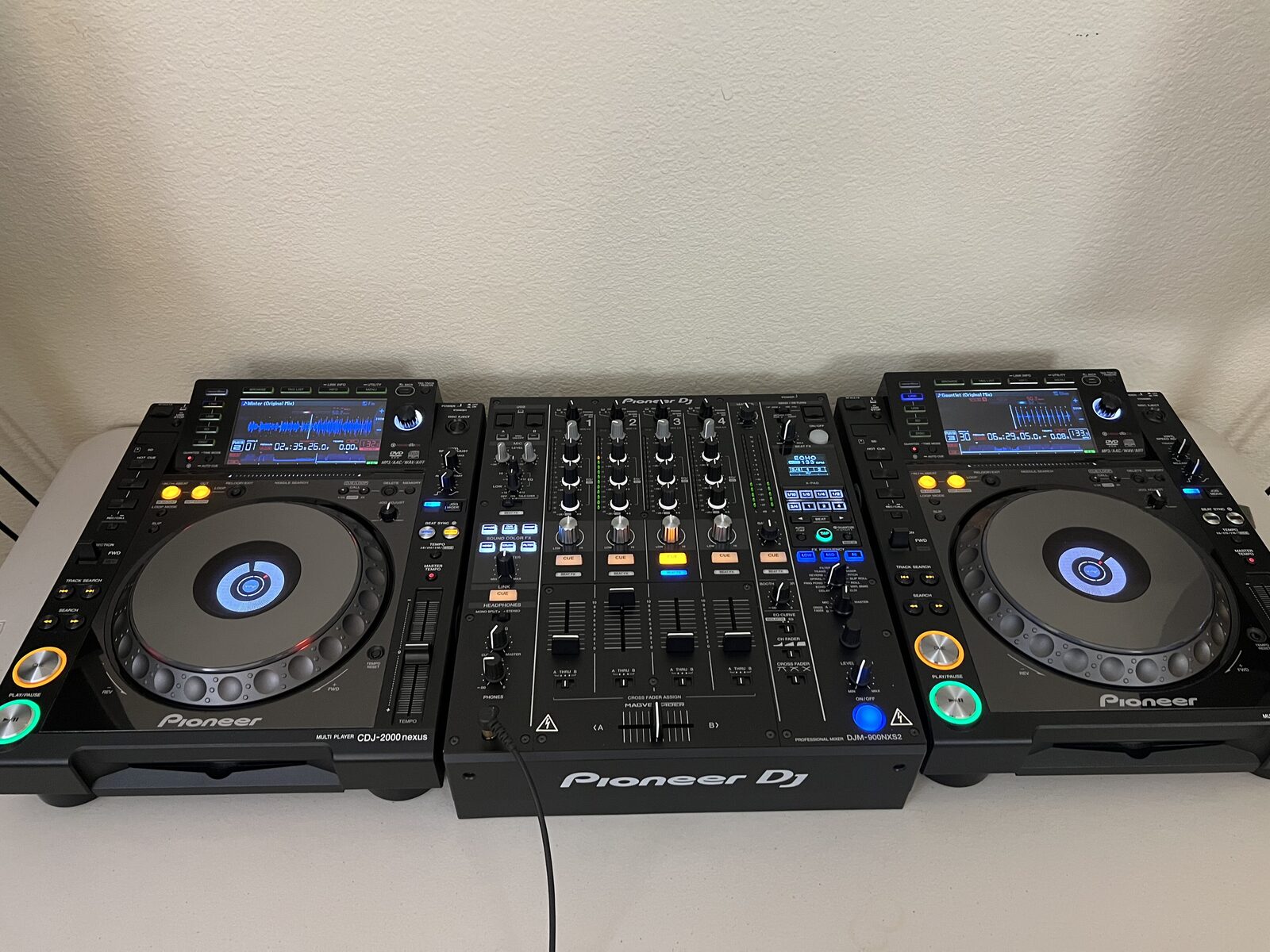
Techno typically runs at about 125 to 140 BPM. In a catalogue of 44,531 techno tracks measured by tempo-analysis site Mixgraph on 15 October 2026, the median was 133 BPM and the middle half of tracks sat between 128 and 140. Wikipedia's wider definition stretches from 120 to 150 BPM to take in the subgenres, hard techno sits at roughly 145 to 160, and hardcore and gabber go to 200 or beyond.
That is the short answer. The longer one is that "what BPM is techno?" has no single number behind it, because the word covers a quiet dub techno record at 118 and a Rotterdam hardcore record at 190, and because the sources that publish ranges disagree with each other in small but instructive ways. This page lays out the ranges, shows where the sources conflict and which one we follow, summarises what our own earlier data work found, and then covers the practical side: how BPM is actually measured, how DJs cross between tempos, and how techno got from Detroit basements to 150-plus. If you want the analytical version of this story, our post on whether techno is really getting faster goes deeper on the trend. This is the reference version.
What are the tempo ranges by genre?
Most techno sits between 125 and 140 BPM, house between 120 and 130, trance between 130 and 145, drum and bass between 170 and 180, and hard techno between about 140 and 160. The table below gives the range we use for each style and what the sources we opened actually say.
Tempo ranges by genre
| Genre | Range we use (BPM) | What the sources say |
|---|---|---|
| Techno (general) | 125 to 140 | Native Instruments says 125 to 140; Wikipedia says 120 to 150; Future Proof Music School says 120 to 140; Mixgraph measures a median of 133 and a middle half of 128 to 140 |
| Minimal techno | 125 to 130 | Wikipedia gives an average of 125 to 130; Mixgraph's genre index gives 124 to 130 |
| Deep and dub techno | 118 to 125 | Wikipedia says dub techno typically runs 110 to 125; Mixgraph's index gives 118 to 128 for dub techno. The two overlap at 118 to 125 |
| Detroit techno | 125 to 135 | Mixgraph's index gives 125 to 135. The Wikipedia article on Detroit techno states no tempo |
| Melodic techno | 120 to 128 | Native Instruments says 120 to 130; Mixgraph's index gives 120 to 128 |
| Acid techno | 130 to 140 | Mixgraph's index gives 130 to 140. The Wikipedia article on acid techno states no tempo |
| Peak-time techno | 126 to 132 | A Beatportal production guide from December 2024 says the style thrives at 126 to 132 and suggests starting at 128 |
| Industrial and dark techno | 130 to 145 | Mixgraph's index gives 130 to 145 for industrial techno; Native Instruments says dark techno is generally 120 to 150, a different label with a wider net |
| Hard techno | 140 to 160 | Future Proof says 145 to 160 with some subgenres higher; Mixgraph's index says 140 to 160; Mixgraph's measured data has a median of 146 and a middle half of 136 to 155 |
| Schranz | 140 to 150 | Mixmag (March 2026) says schranz typically sits between 140 and 150 |
| Hardcore and gabber | 160 to 200 | Wikipedia on gabber says generally 140 to 190; Wikipedia on hardcore says 160 to 200 or more; Mixgraph's index says 160 to 200; speedcore is usually classed at 300 and up |
| House | 120 to 130 | Wikipedia says 120 to 130 for the most typical form and 115 to 130 in its intro; Native Instruments says 120 to 130; Mixgraph measures a median of 125 |
| Tech house | 122 to 130 | Mixgraph's index gives 122 to 130; a Native Instruments tutorial sets its project to 130 but states no range |
| Trance | 130 to 145 | Wikipedia says 120 to 150 in its lead and 125 to 150 in its production section; Native Instruments says 125 to 150 and 130 to 150; Mixgraph measures a median of 138 |
| Drum and bass | 170 to 180 | Wikipedia says 160 to 180 overall and mostly 170 to 180 since about 1996; Mixgraph measures a median of 174 |
| UK garage | 130 to 138 | Wikipedia says usually around 130, with 130 to 138 for the early 2000s remixes; Mixgraph's index gives 130 to 138 |
| Breakbeat | 130 to 150 | Wikipedia says breaks tracks range from 110 to 175; Mixgraph's index gives 130 to 150 |
| Ambient | No dance tempo | The Wikipedia article on ambient music states no BPM; Mixgraph's index lists 60 to 100, which is a catalogue label, not a rule |
Three caveats apply. First, ranges that come from Mixgraph's genre index are one catalogue's view of its own tags, and where we write "measured" we mean the median and quartiles Mixgraph computed from its tracks on 15 October 2026. Second, the sources do not agree on what a genre label covers, so a range for "techno" and a range for "peak-time techno" are not the same sort of claim. Third, we found no usable numeric tempo range from Beatport or from AlphaTheta (the company behind Pioneer DJ), and we say why in the next section.
Why do sources disagree about techno's BPM?
They disagree because they are answering different questions: a definition (what can still be called techno), a typical range (where most tracks fall), and a producer's rule of thumb (where to set your project). Wikipedia's 120 to 150 is a definition, Native Instruments' 125 to 140 is a producer's guide, and Mixgraph's 128 to 140 is a measured spread.
| Source | Stated techno range (BPM) | Kind of claim |
|---|---|---|
| Wikipedia | 120 to 150 | Encyclopaedic definition, includes subgenres |
| Future Proof Music School | 120 to 140 | Educator's rule of thumb |
| Native Instruments | 125 to 140 | Production guide |
| Mixgraph genre index | 130 to 140 | Catalogue tag range |
| Mixgraph measured, middle half | 128 to 140 | Computed from 44,531 tracks, 15 October 2026 |
| Mixgraph measured, 9 in 10 tracks | 126 to 146 | Computed from the same tracks |
We use two figures together. For the headline, we quote the measured middle half (128 to 140) because it describes what techno records actually are, and we round the outer edge to Native Instruments' 125 to 140 because it matches the producer's rule and sits inside the 9-in-10 band of 126 to 146. We treat Wikipedia's 120 to 150 as the outer envelope, the point at which a track stops being a reasonable answer to the question. Where a genre has only one source, as with Detroit techno or acid techno, we say so in the table instead of presenting it as consensus.
Two of the sources people expect to see here are missing. Beatport's own support and genre pages would not load for us (the pages returned an access error), and the Beatportal piece announcing its split of the techno category in February 2020 into Peak Time, Driving and Hard on one side and Raw, Deep and Hypnotic on the other names no tempo bands at all. That is worth noting in itself: the biggest store for DJ music sorts techno by feel, not by BPM. Likewise, the AlphaTheta (Pioneer DJ) product pages we opened describe hardware, not genre tempos, so we cite them only for what they say about equipment.
What does our data show about techno BPM?
Our earlier analysis found that general techno's median tempo climbed from 128 to 138 BPM between 1991 and 2026, while hard techno's median stayed roughly flat. Both findings come from Mixgraph's catalogue and carry caveats, which we repeat here without extending them.
The details, from our dataset post as measured on 27 September 2026: Mixgraph analysed 43,989 techno tracks in total, with its 1991 to 2026 year-by-year chart covering 9,735 of them. It removed 2,971 tempo outliers using a Tukey IQR fence, corrected 1,874 tracks that automated detection had flagged as running at half their real tempo, and left in 4,008 tracks (9.1%) that it had flagged for manual review. The highest yearly median was 140 BPM in 2025 and the lowest was 126 BPM in 2013. For hard techno, 9,941 tracks went through the same cleaning, with 162 outliers removed, 764 half-tempo corrections and 1,789 tracks (18.0%) flagged but included. The middle half of hard techno tracks sat between 136 and 155 BPM, the highest yearly median was 155 BPM back in 2012, and the lowest was 128 BPM in 2016.
We re-read both Mixgraph pages on 16 October 2026, and both show a 15 October measurement date. The catalogue has grown a little, as catalogues do: the techno page now reports 44,531 tracks, a median of 133 BPM, a mean of 135 and a 128 to 140 middle half, and the hard techno page reports 9,988 tracks, a median of 146, a mean of 145 and a 136 to 155 middle half. The headline findings are unchanged, but the track counts differ from our September post for exactly that reason.
Those caveats are real. This is one catalogue, its genre tags are not ours, nearly one in five hard techno tracks was flagged for tempo review, and a single snapshot is not the final word on any genre's history. Note also why the overall median (133) sits between the first and last yearly medians (128 and 138): the overall figure pools every year, while the endpoint figures describe single years.
How is BPM measured, and why is "average" slippery?
BPM is the number of beats in a minute, so 60 BPM means one beat per second, and every figure in this article depends on software deciding where the beats are. Wikipedia's article on tempo defines it that way and adds that even the classical Italian tempo terms map only to very rough BPM values, which is a useful reminder that tempo labels have always been approximate.
Automatic detection is where most trouble starts. Ableton's Live manual warns that the BPM field may show a tempo twice as fast or half as slow as the real one, and it provides buttons to double or halve the value. AlphaTheta's own CDJ-3000X page lists the same fix, editing a track's BPM to half or double from the screen. Mixgraph reports the same problem at catalogue scale: it corrected 1,909 half-tempo tracks in its current techno page and 765 in hard techno. When a tool cannot decide whether a track is at 70 or 140, any "average" computed from its output inherits that doubt.
Half-time feel makes this worse, because the written tempo and the felt tempo can differ on purpose. Wikipedia's article on half-time describes it as a groove that spreads a pattern over twice the length while the underlying tempo stays fixed. Native Instruments notes that trap's kick and snare programming gives it a half-time sound, and Mixgraph writes dubstep and trap ranges at double the felt speed and marks them as half-time. A 140 BPM dubstep track therefore feels like 70 to many listeners, while a 140 BPM techno track feels like 140.
The word "average" hides three more problems:
- Mean, median and range answer different questions. Mixgraph's current techno mean is 135 and median 133. Neither tells you how wide the spread is, which is why we quote quartiles.
- Tracks are not sets. A DJ who opens at 134 and finishes at 145 plays a set whose tempo drifts, and our data covers released tracks, not what anyone played. We know of no published dataset of tempos played live, so we do not claim one. Beatportal's December 2019 reporting quotes Perc saying that his own 134 to 135 BPM tracks had become the start of a set, which is anecdotal evidence of exactly this drift.
- Pitch changes the number. On vinyl, Wikipedia's beatmatching article explains, spinning a record 5% faster raises both pitch and tempo by 5%, and modern software can change them independently. The BPM a DJ plays is rarely the BPM on the label.
If you want to check a track yourself, tap tempo is the low-tech answer. Ableton's manual notes that the more you tap, the more accurate the result, and it is a reliable way to settle a half-or-double dispute by ear.
How do you mix across tempos and choose a production BPM?
You can blend any two genres that sit within your players' pitch range, and you choose a production tempo by deciding which DJ sets you want the track to sit in. A tempo gap larger than the pitch range needs either a jump or a half-time bridge.
On the hardware side, our sources state these ranges:
| Equipment | Pitch or tempo range | Source |
|---|---|---|
| Technics SL-1200 (MK5G) | Plus or minus 8%, with a plus or minus 16% button | Wikipedia |
| AlphaTheta CDJ-3000X | Plus or minus 6%, 10%, 16%, and a 100% setting | VirtualDJ manual |
The arithmetic is ours. A 128 BPM record pitched up 6% plays at about 135.7 BPM, at 10% about 140.8, and at 16% about 148.5. To reach a 150 BPM hard techno record from 128 you need a 17% change, which is outside the 16% range and needs the wider setting or a different transition. A semitone is a frequency ratio of about 1.0595, so a 6% move without key lock shifts the key by roughly a semitone. The CDJ manual describes Master Tempo as the setting that stops pitch or tempo changes from affecting a track's key, and Wikipedia's beatmatching article describes the same idea as a feature on modern gear. Key lock also matters for harmonic mixing, which Wikipedia describes as matching the musical key of tracks, and which software such as Mixed In Key (first released on 25 March 2006) automates by detecting key. We cover how stem tools and sync are changing booths in our piece on AI stem separation.
A few practical lanes follow from the numbers above:
- House into techno: 126 to 128 BPM sits in both ranges. This is the easiest handoff in the table.
- Techno into trance: both genres overlap between 130 and 140, and Mixgraph's 2025 yearly techno median (140) and its overall trance median (138) are only two BPM apart.
- Techno into hard techno: a 128 to 140 BPM set meets a 145 to 155 record through a pitch push, a jump, or a bridge at about 140.
- Techno into dubstep or similar half-time styles: Mixgraph's index lists dubstep at 138 to 142 in half-time, so the written numbers match even though the feel does not.
For producers, the guides we opened pick starting tempos rather than rules: 127 for general techno, 122 for melodic techno and 135 for dark techno from Native Instruments, 130 for tech house, and 128 as the Beatportal suggestion for peak-time techno. Our advice, based on the measured spread, is to start at 128 to 135 if you want your track playable in the widest range of sets, and to go lower or higher only on purpose. Ableton's manual also notes that Live's default Beats warp mode suits rhythmic dance music, which is useful if you are building sets from audio loops. The company's wider approach to hardware and software is a subject we covered in our look at Ableton at 25.
How did techno's tempo change from the 1980s to the 2020s?
Techno started in Detroit in the 1980s with no sourced tempo of its own, spread to Berlin and Europe by 1991, got faster and harder through the early 1990s, and in the 2010s and 2020s produced a hard techno scene that regularly plays at 145 and above. We can date the events well. We cannot attach reliable BPM figures to the 1980s records, because none of the Detroit sources we opened state any.
What the sources do date:
- 1981 to 1985: Cybotron recorded "Alleys of Your Mind" in 1981, and Juan Atkins began recording as Model 500 on his Metroplex label in 1985, with "No UFO's" generally considered the first techno production, according to Wikipedia's Detroit techno and techno articles. Native Instruments also dates Rhythim Is Rhythim's "Strings of Life" to 1987.
- 1988 to 1989: The UK compilation Techno! The New Dance Sound of Detroit appeared in mid-1988 and helped make the word common in Britain. The first wave of Detroit techno peaked in 1988 and 1989, and the first Love Parade took place in West Berlin in July 1989, months before the Wall fell. Our Detroit Movement feature covers that lineage.
- 1991: Tresor opened in Berlin in March 1991, and German DJs began intensifying the speed and abrasiveness of the sound, according to Wikipedia's techno article and its Tresor article. Our current Berlin club guide lists where that history survives.
- 1991 to 1993: In Rotterdam, gabber developed from house and techno in the early 1990s; the track "Anasthasia" dates to 1991, and Wikipedia says the style was clearly defined as hardcore around 1993. In drum and bass, early forms ran around 130 BPM in 1990 and 1991 and have mostly sat at 170 to 180 since about 1996, a reminder that tempo inflation was not unique to techno.
- 1995: Muzik magazine described UK techno as too hard and too fast, which tells us the speed debate is at least three decades old.
- 2018 to 2022: Future Proof's founder, a producer and DJ since the late 1990s, argues that hard techno consolidated in those years as scenes in Berlin and Tbilisi combined Detroit speed, gabber distortion and Berlin texture. That is one practitioner's view, not a measurement.
- 2019: Beatportal reported on 4 December 2019 that BPMs were creeping into the 140s and beyond at parties worldwide, and that some DJs were opening sets at 150 to 160. That is reporting, not a dataset.
- 2020: On 18 February 2020 Beatport split its techno category in two, again without tempo bands.
The hard numbers for the modern era are the ones above: hard techno's measured median of 146, a 136 to 155 middle half, and a catalogue that peaked at a yearly median of 155 in 2012. That fits a scene whose reputation for speed is older than its recent boom. Our report on hard techno's American boom separates the audience growth from the tempo claims, and the wider growth of electronic music in the US is a story about listeners, not BPM.
RTS.FM has broadcast underground house and techno from an artist-run, non-commercial studio network since 2006. Tune into the live stream and hear where the tempos actually sit.
What we make of it
This section is RTS.FM's own opinion, built on the sources above, and each point ends with the strongest argument against it.
- Quote a band and name the subgenre, never a single number. Techno is not one tempo, and the honest answer is "about 128 to 140, with the subgenre deciding the rest." A page or a DJ that says "techno is 130" is rounding away exactly the information a producer or booker needs. The strongest counter-argument: a single number is what most people searching actually want, and 130 is a fair shorthand for the middle of the distribution, so a band can look like hedging.
- Hard techno's "150" is a label and a feel more than a measurement. Mixgraph's median of 146, with 9 in 10 tracks between 128 and 160, suggests a lot of hard techno is slower than the name implies, and the genre's loudest peak-time moments are not its typical track. The strongest counter-argument: catalogue tags are noisy, 18.0% of hard techno tracks were flagged for tempo review, and club reporting like Beatportal's 2019 piece shows sets really do open at 150 or higher, so the median may understate what a dancefloor hears.
- Tempo is a weak proxy for intensity. Future Proof's point that attitude matters as much as BPM matches what we hear on the radio: kick design, distortion and groove move a record more than a few extra beats per minute do. The strongest counter-argument: tempo is the only dimension of a genre that can be measured cleanly, and DJs themselves describe a speed race in which opening sets keep creeping up, so BPM may matter more to the culture than we allow.
quick wins
- Techno typically runs about 125 to 140 BPM, with a measured middle half of 128 to 140 and a median of 133 in Mixgraph's 44,531-track catalogue on 15 October 2026.
- Wikipedia's definition of techno is wider (120 to 150 BPM) because it includes subgenres, so a number outside the typical band does not mean a track is not techno.
- Hard techno is usually placed at 145 to 160 BPM, but Mixgraph measures a median of 146 and a 136 to 155 middle half, and schranz sits at 140 to 150 according to Mixmag.
- House runs 120 to 130 BPM, trance 130 to 145, drum and bass 170 to 180 and hardcore and gabber 160 to 200 or more, so a tempo alone rarely identifies a genre.
- Automatic BPM detection often reports half or double the real tempo, so check an unfamiliar track with tap tempo before you trust the number.
- CDJ-3000X pitch ranges are 6%, 10% and 16% plus a wide setting, so a 128 BPM track tops out around 148.5 BPM at 16%, short of a 150 BPM hard techno record.
Frequently Asked Questions
What BPM is techno?
Techno typically runs about 125 to 140 BPM. In a catalogue of 44,531 tracks measured on 15 October 2026, the median was 133 BPM and half of all tracks fell between 128 and 140. Wikipedia's broader definition runs from 120 to 150 BPM to include the subgenres.
What is the techno BPM range?
The common range is about 125 to 140 BPM, and the full range of what is called techno is roughly 120 to 150. Nine in ten tracks in the Mixgraph catalogue fall between 126 and 146 BPM. Subgenres sit lower (dub techno near 118 to 125) or higher (hard techno at 140 to 160).
What is the average BPM of techno?
The median techno track in Mixgraph's catalogue is 133 BPM and the mean is 135 BPM. The average depends on the years measured: the yearly median rose from 128 BPM in 1991 to 138 BPM in 2026, with a high of 140 BPM in 2025. Half-tempo detection errors and mixed subgenres also move any average.
What tempo is techno?
Techno is a dance music most often played between 125 and 140 beats per minute. That sits just above house at 120 to 130 and below hard techno at 145 to 160. Tempo alone does not define the genre, and sound design and groove matter as much.
What is the hard techno BPM range?
Hard techno is usually placed at 145 to 160 BPM, with some subgenres going higher, and Mixgraph's genre index gives 140 to 160. Measured across 9,988 tracks, the median is 146 BPM, half of tracks sit between 136 and 155, and nine in ten fall between 128 and 160.
What BPM is hard techno?
Most hard techno is between about 140 and 160 BPM, and a typical track is around 146 BPM by Mixgraph's measurement. Peak-time sets are often reported at 150 BPM or faster. Faster relatives are classed separately, with hardcore and gabber at 160 to 200 or more.
What tempo is house music?
House music typically runs at 120 to 130 BPM, and Wikipedia gives 115 to 130 BPM as the broader range. Mixgraph measures a median of 125 BPM across 20,936 house tracks, with half of them between 124 and 128 BPM. Tech house is usually listed at 122 to 130 BPM.
What BPM is trance?
Trance is usually listed at 130 to 145 BPM, though Wikipedia gives 120 to 150 and Native Instruments gives 125 to 150. Mixgraph measures a median of 138 BPM across 25,017 tracks, with half of them between 130 and 140 BPM. Recent styles tend to sit closer to house tempos.
Is techno getting faster?
Techno as a whole has gotten faster in a modest way: Mixgraph's yearly median rose from 128 BPM in 1991 to 138 BPM in 2026, peaking at 140 BPM in 2025. Hard techno has not shown the same climb in the same data, with its highest yearly median in 2012 at 155 BPM. These are single-catalogue figures with stated caveats.
How many beats per minute is techno?
A beat per minute count tells you how many beats occur in 60 seconds, so 130 BPM is just over two beats every second. Techno usually falls between 125 and 140 of them, which is about 2.1 to 2.3 beats each second. Hard techno at 150 BPM is exactly two and a half beats per second.