DJ & Producer · Detroit, Michigan, USA
Robert Hood
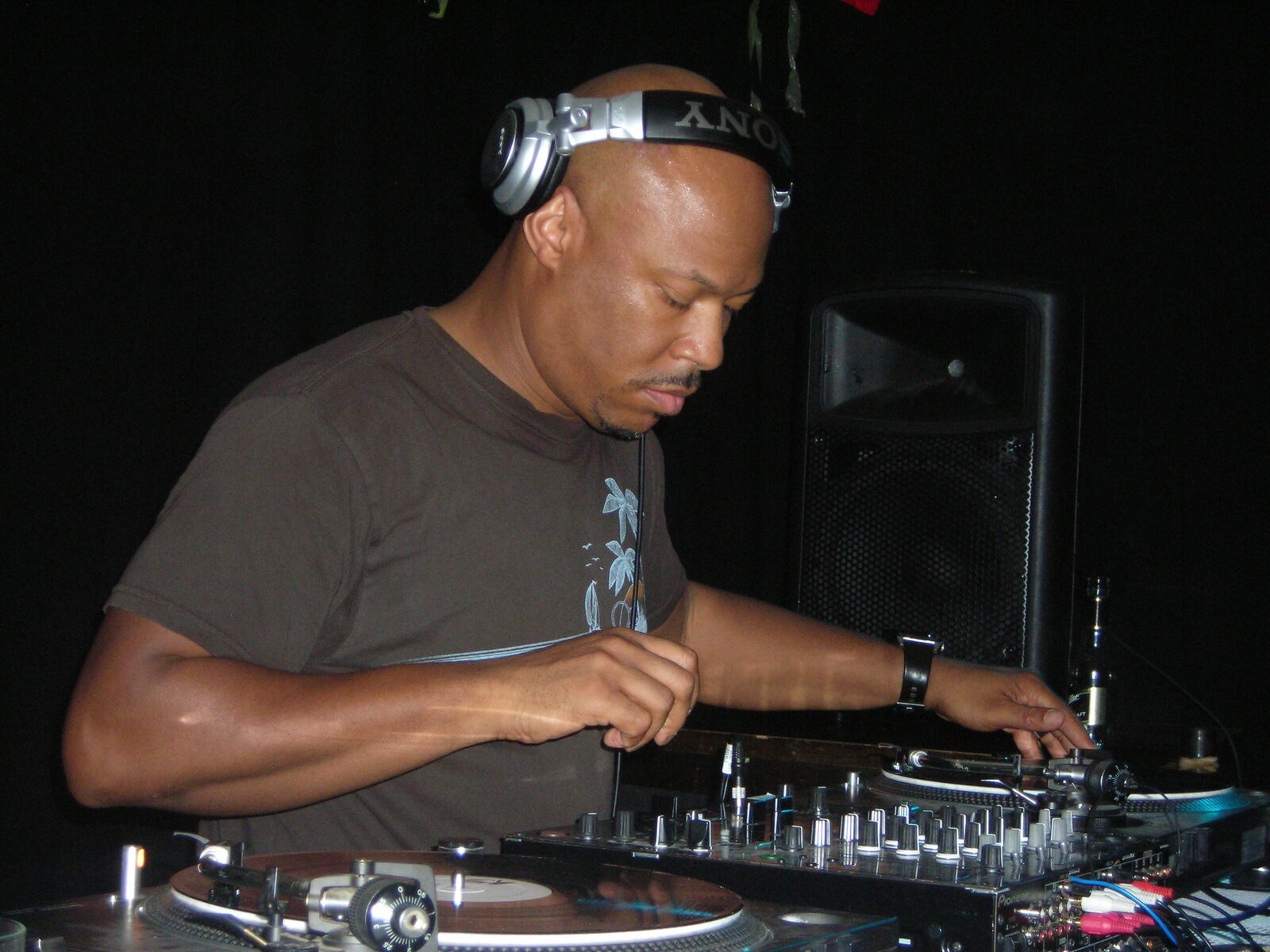
Robert Hood is the Detroit producer behind 1994's Minimal Nation, an early Underground Resistance member and founder of M-Plant, and the Floorplan project.
quick facts
- Real name
- Robert Artis Hood
- Also known as
- Floorplan, Monobox, The Vision, Inner Sanctum, The Mathematic Assassins
- Born
- 1965
- Birthplace
- Detroit, Michigan, USA
- Nationality
- American
- Active since
- 1991
- Labels
- M-Plant, Drama, Duet
- Genres
- Techno, Minimal Techno, Detroit Techno
Sources: en.wikipedia.org, de.wikipedia.org, discogs.com
When producers argue about where minimal techno started, they usually end up at one record: Robert Hood's Minimal Nation, released in 1994. Hood arrived at it by an unlikely route, from a bedroom demo tape to a job at the heart of Underground Resistance and then to New York, and what he came back with was a sound built almost entirely from a kick, a hi-hat and one chord. He has since split his output between the hard, stripped-back techno that made his name and Floorplan, a disco, house and gospel project that sounds like another artist entirely.
Early Life and Path Into Music
Hood was born in Detroit in 1965, according to German Wikipedia, and grew up on Motown. In a Red Bull Music Academy interview he recalls a musical family and picking up the trumpet in the school band before swapping it for records. A pawn shop provided his first basic equipment, and he began recording demos. An introduction through the musician Mike Clark, known as Agent X, led to a demo reaching Mike Banks, the figure at the centre of Underground Resistance.
Underground Resistance and the Move to New York
Hood came into the UR circle, by his own account, as an MC. He told RBMA that his first work with the collective was the 1991 EP Gyroscopic, released as The Vision, and that he rapped through a vocoder over productions by Banks and Jeff Mills before moving into production himself. Wikipedia lists him as a founding member with Banks and Mills, with the title Minister of Information, though Hood himself downplays that in the interview and describes a hands-on role running the label's daily business while the others travelled. Either way, the Detroit techno lineage that runs from the Belleville Three to UR's masked, anti-corporate second wave passes straight through him.
In 1992, Wikipedia reports, Hood left Detroit and UR with Mills. RBMA says the two moved to New York and set up Axis Records, with Hood making records as H&M and X-103 in the following years.
Minimal Nation and M-Plant
Minimal Nation came out in 1994 on Mills's Axis label, according to Wikipedia's article on the album, which calls it a landmark of the genre and one of minimal techno's key founding documents. Hood told RBMA that his signature sound came from a chord he hit on a Roland Juno 2, a sound he thought was unique yet still very Detroit, and that Mills heard it and wanted a lacquer of it immediately. He also describes the record as a protest against techno turning into one huge sample, a reading quoted on the same Wikipedia page.
In the same year he founded M-Plant, the label through which he released most of his solo work. Discogs lists two sub-labels, Drama and Duet. M-Plant later reissued Minimal Nation itself as a triple LP in 2015, per Wikipedia.
Sound and Style
The classic Hood record is spare in the way a good drum machine program is spare: kick, snare, hi-hat, a bassline and not much else, with titles that are meant to tell a story. He told RBMA that this is storytelling, and that the hi-hats have to sing. The point he stresses is that minimal does not mean empty, and that he did not want to be seen only as a minimal producer. After Minimal Nation he released Internal Empire, a more personal statement, then the jazz- and melody-led Nighttime World sessions that Mills encouraged him to try, with Hood citing Yellow Magic Orchestra, George Clinton, Stevie Wonder and Patrice Rushen as reference points.
Floorplan and the Gospel Turn
Floorplan began with the 1996 record Funky Souls, which Hood describes as the start of a disco-fied techno, house and gospel fusion. Wikipedia reports that "We Magnify His Name" was the first gospel-inspired Floorplan track and that the project later expanded to include vocalist Lyric Hood from 2016. Wikipedia lists the Floorplan albums Paradise and Victorious on M-Plant, and the project sits alongside his other aliases, among them Monobox, The Vision and Inner Sanctum.
Career Highlights
On the mixing side, Wikipedia lists a Fabric mix, Fabric 039, from March 2008, and a DJ-Kicks instalment for !K7 in November 2018. His remix credits, also listed there, include Ben Klock's "Goodly Sin" on Ostgut Ton in 2009. The same discography lists the Shonky In The Hood EP on Freak n' Chic. His shows today are listed on his Bandcamp page, which gives his base as Detroit.
FAQ
Who is Robert Hood?
Robert Hood is an American DJ and producer from Detroit, a former Underground Resistance member and the founder of M-Plant. His 1994 album Minimal Nation is widely cited as a founding record of minimal techno.
How old is Robert Hood?
Robert Hood was born in 1965, according to Wikipedia and German Wikipedia, which would make him about 61 (age 61 as of October 2026). He has not published a full birth date.
Where is Robert Hood from?
He is from Detroit, Michigan, where he was born. His Bandcamp page lists Detroit as his base.
What genre does Robert Hood play?
Robert Hood plays techno, and is best known for minimal techno. His Floorplan project blends house, disco, techno and gospel.
What is Robert Hood's real name?
Discogs gives his full name as Robert Artis Hood. He records under that name and under aliases including Floorplan, Monobox, The Vision and Inner Sanctum.
What is Robert Hood's most famous album?
Minimal Nation, released in 1994 on Axis Records, is his best-known work and is regarded as a landmark of minimal techno.
What is Floorplan?
Floorplan is Hood's disco, house and gospel project, which began with the 1996 record Funky Souls and later expanded to include Lyric Hood.
Was Robert Hood in Underground Resistance?
Yes. He worked with the collective in the early 1990s, releasing as The Vision, and left in 1992 with Jeff Mills before founding M-Plant in 1994.