Turin, Italy · 2-4 JUL 2027
Kappa FuturFestival
A three-day techno and house festival in Turin's Parco Dora, built around a former steel plant, regularly among Europe's earliest sellouts.
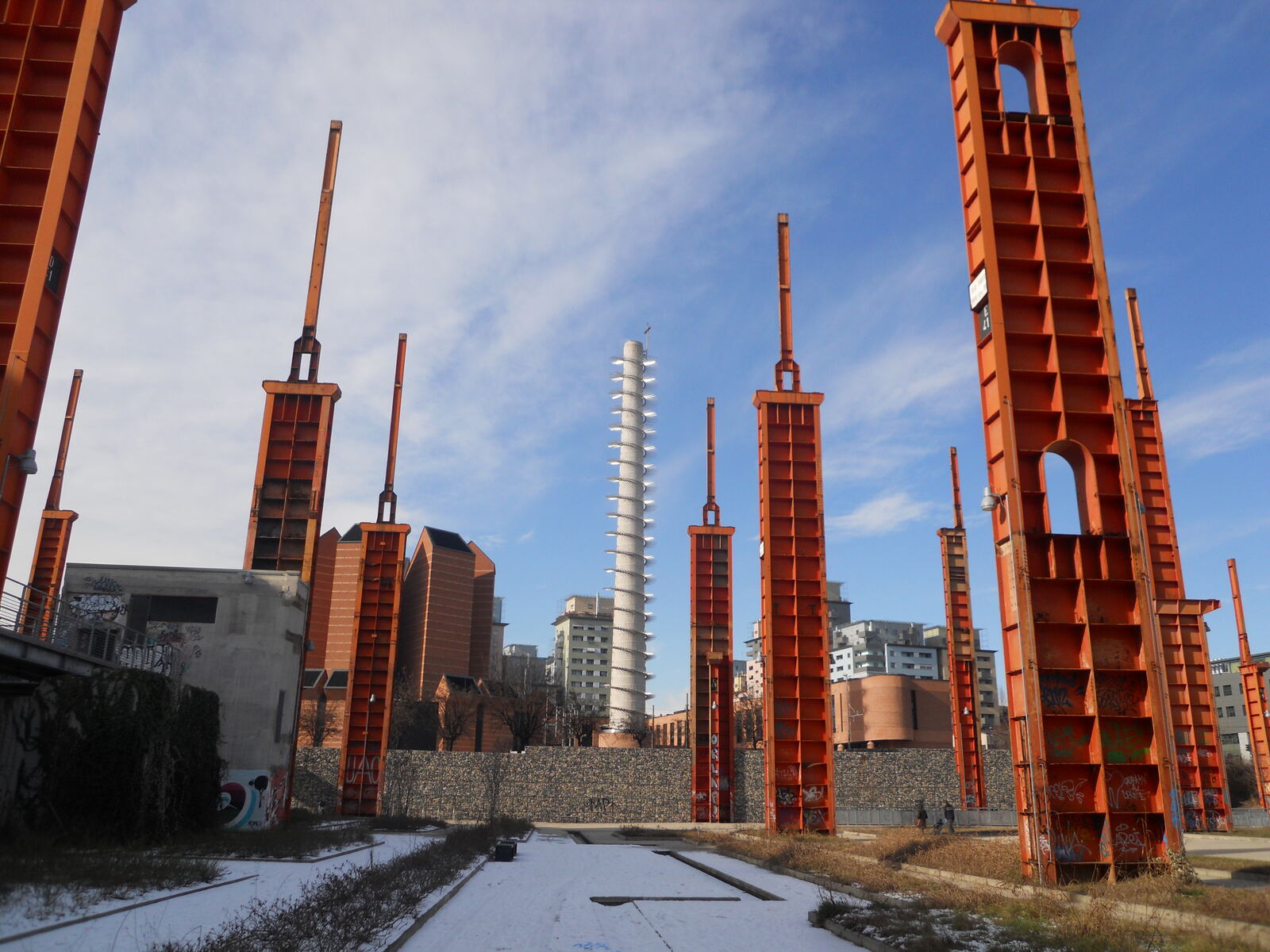
Where is Kappa FuturFestival?
Kappa FuturFestival is a techno and house festival held at Parco Dora, a former steelworks turned public park in Turin, Italy. The 2027 edition runs from Friday 2 to Sunday 4 July 2027, and as of 16 October 2026 the official ticket page reads sold out for every category, with a waiting list for the next release. The festival's official site credits it as a project by Movement Entertainment and Associazione Suoni e Colori.
History
Kappa FuturFestival started small, as a one-off event in one of Turin's city squares in 2009, timed to the centennial of Futurismo, the early-20th-century Italian art movement that embraced machines, speed, and technology over tradition. The pairing made a certain sense: a festival built around electronic music, itself largely machine-made, honoring a movement that had spent a century celebrating exactly that. Maurizio "Juni" Vitale, who also works in tourism promotion for the city of Turin, was behind the idea from the start, and stayed on as founder and lead organizer as it grew. The Fader's 2026 recap calls Gian Luca Brignone "Partner and Chief Innovation Officer" and names Juni Vitale as one of the festival's three partners, and Paper's 2025 coverage describes Gigi Mazzoleni as one of the festival founders and its artistic director.
The event took its current name and format in June 2012, when it became Italy's first daytime summer festival for electronic music, and took on sponsorship from Kappa, the Turin-founded sportswear brand. According to organizers, it was Kappa's own president who suggested the festival's future home: Parco Dora, a public park built on the site of Turin's former Fiat and Michelin steel and ironworks. The festival moved into the park's Vitali lot in 2013 and has stayed there since, using the rust-orange support towers left standing from the old steel mill, structures preserved when landscape architect Peter Latz and architect Giulio Desiderio converted the decommissioned industrial site into parkland that opened to the public in 2011, as the festival's most recognizable backdrop.
Kappa FuturFestival now runs three days, noon to midnight, and the crowds have grown quickly since it went to a three-day format. The festival's own site cites 85,000 people from 105 countries for 2022 and 100,000 from 118 countries for 2023, and Italian press reported 125,000 people from 152 countries for the 2026 edition (July 3 to 5), with an estimated 50 million euros for Turin's economy. According to organizers, a crew of around 1,000 workers and about fourteen months of planning sit behind each edition. The 2023 bill included Peggy Gou, Fatboy Slim, Swedish House Mafia, Carl Craig, and Derrick Carter.
The bookings lean wide, from house and disco to the hardest end of techno. Nina Kraviz is listed on the 2016, 2017, 2019, 2024 and 2025 bills, Sven Väth on 2015, 2016, 2017 and the 2026 line-up, and Amelie Lens on 2018, 2019, 2022 and 2026. Charlotte de Witte appears in 2019, 2025 and 2026, and the 2026 line-up on the festival's own site also names Batu. Further back and further sideways, the archive lists Motor City Drum Ensemble (2019), Chris Stussy (2023), Jeff Mills and Sara Landry (2024), Anyma (2024 and 2025), Donato Dozzy and Surgeon (2025), and Nastia (2016). Home-turf bookings have become part of the identity too: Marco Carola has been one of the festival's regular Italian headliners over the years (2013, 2014, 2016 and 2018 line-ups), alongside fellow Italian Joseph Capriati, who is listed in 2013, 2015, 2018, 2022 and 2025 and was booked in 2026 for a three-way back to back with Jamie Jones and Seth Troxler. Luciano turns up on the 2013, 2018 and 2019 bills. Tickets for the festival sell out early almost every year, a reputation that's made it one of the most anticipated dates on Europe's summer techno calendar despite, or maybe because of, staying rooted in a single city park. For 2027, the official site already lists tickets as sold out and points buyers to a waiting list.
festival facts
- Founded: 2009, as a one-off city-square event tied to Futurismo's centennial; became Kappa FuturFestival in its current daytime format in 2012
- Founders/Organizers: a project by Movement Entertainment and Associazione Suoni e Colori per the official site; Juni Vitale, Gian Luca Brignone (partner and chief innovation officer) and Gigi Mazzoleni (founder and artistic director) are named in press coverage
- Venue: Parco Dora's Vitali lot (Corso Mortara, 10149 Turin), a former Fiat and Michelin steelworks turned public park in 2011, used by the festival since 2013
- Format: three days, noon to midnight; 2027 edition on July 2 to 4; about 125,000 attendees reported for 2026
Getting there and practical info
Parco Dora is a public park inside Turin itself, in the Spina 3 district, so getting there means city transport rather than a remote site transfer. The festival points visitors to high-speed rail and Turin's airport for the long leg.
- Venue: Parco Dora, Vitali area, Corso Mortara, 10149 Turin, as listed by Turismo Torino. The festival's own entrances are labelled Gate A and Gate B, plus a separate VIP entrance.
- By rail: the official site points to direct high-speed trains to Turin from Paris, Lyon, Chambery, Rome, Milan and Venice. Turin's main stations are Porta Nuova and Porta Susa, the latter being the high-speed hub. Frecciarossa was the official train partner of the 2026 edition, with a festival offer of discounts of up to 75 percent.
- By air: the festival points to Turin Airport, which it says has direct flights from more than 50 destinations in over 20 countries. It is commonly known as Turin Caselle.
- Local transport: in the festival's travel information for recent editions, trams 3 and 9 (stop Piero della Francesca) serve Gate A, buses 60, 72 and the W60 (stop Mortara) serve the VIP entrance and Gate B, and lines 52 and 67 stop at Livorno. The same information lists taxi and shared bike and scooter areas near the gates, and the festival's app carries the official map and taxi pick-up points.
- By car: the festival's recent travel information suggests parking at the Dora shopping center, entered from Salita Michelangelo Garove at the corner of Via Livorno.
- Shuttles: a VIP shuttle from the center of Turin is sold as an extra to VIP tickets, and the Gold Experience ticket includes free transport between the center of Turin and the festival.
- Where to stay: the festival runs a hotel portal with partner hotels (hotel.kappafuturfestival.it). In 2026 it also offered a free guided Welcome Tour of Turin's historic center through Turismo Torino.
- Age and entry: the minimum age is 18, and a valid ID and your ticket are required. Doors run noon to midnight each day, there is no re-entry once you leave, and lockers can be reserved in advance.
- Tickets: sold through the festival's official ticket store, with Klarna instalments offered at checkout. The 2027 ticket page currently reads sold out, with a waiting list sign-up for the next release. The FAQ lists a ticket resale and name-change window from May 31 to June 25, 2027.
- What sets the logistics apart: payments on site run on a cashless wristband, and the festival sits inside a public park, so the ground in some areas can be uneven in the rain.
FAQ
Why is it called Kappa FuturFestival?
It takes its name from Kappa, the Turin-founded sportswear brand that sponsored the event when it became a full daytime festival in 2012; organizers say it was Kappa's own president who suggested Parco Dora as the venue. The "Futur" nods to Futurismo, the Italian art movement whose 2009 centennial inspired the festival's original one-off edition.
What's the story behind the venue?
Parco Dora sits on the site of Turin's former Fiat and Michelin steel and ironworks, decommissioned in the 1990s and redeveloped into public parkland that opened in 2011. The festival's Vitali lot section still has the orange support towers from the old steel mill standing over the crowd.
Does Kappa FuturFestival sell out every year?
It's built a reputation as one of Europe's earliest festival sellouts each season. As of October 2026, the official site lists tickets for the 2027 edition as sold out and offers a waiting list for future releases.
When is Kappa FuturFestival 2027?
The 2027 edition runs from July 2 to 4 at Parco Dora in Turin, with doors from noon to midnight each day. Italian press reported about 125,000 attendees for the 2026 edition.
How do I get to Parco Dora?
Turin has high-speed rail links and an airport at Caselle, and the park is reached from the center by tram lines 3 and 9 (stop Piero della Francesca) or by bus. Taxis and the festival's own app help with the last stretch, and Gold Experience tickets include transport from the center of Turin.
What is the minimum age for Kappa FuturFestival?
You must be 18 to enter, and you need a valid ID along with your ticket. There is no re-entry once you leave the festival.
Where can I stay for Kappa FuturFestival?
The official site's accommodation offer is a hotel portal with partner hotels, plus a free guided Welcome Tour of Turin's historic center that ran in 2026. The festival itself is held in a public park inside the city.
Where is Kappa FuturFestival held?
Kappa FuturFestival is held at Parco Dora, Vitali area, Corso Mortara, 10149 Turin (Torino), Italy, a public park inside the city on the site of a former steelworks. The 2027 edition runs from 2 to 4 July 2027.
What is the Turin techno festival?
Kappa FuturFestival is the large summer techno and house festival in Turin, held over three days at Parco Dora. Italian press reported about 125,000 attendees for the 2026 edition, and the 2027 edition on 2 to 4 July 2027 is listed as sold out on the official ticket page as of 16 October 2026.
Who is Gigi Mazzoleni?
Gigi Mazzoleni is described in Paper magazine's 2025 coverage as one of the founders of Kappa FuturFestival and its artistic director. The official festival site does not list individual team members.
Who is Gianluca Brignone?
The Fader's 2026 recap of Kappa FuturFestival calls Gian Luca Brignone a partner and Chief Innovation Officer at the festival. The official festival site does not list individual team members.
RTS.FM artists connected to this festival
- Amelie Lens
- Anyma
- Batu
- Charlotte de Witte
- Chris Stussy
- Donato Dozzy
- Jeff Mills
- Joseph Capriati
- Luciano
- Marco Carola
- Motor City Drum Ensemble
- Nastia
- Nina Kraviz
- Sara Landry
- Surgeon
- Sven Väth
Only sourced appearances at past editions or on announced lineups are listed.
More: 2027 festival calendar